Keeping Players Engaged During Practice
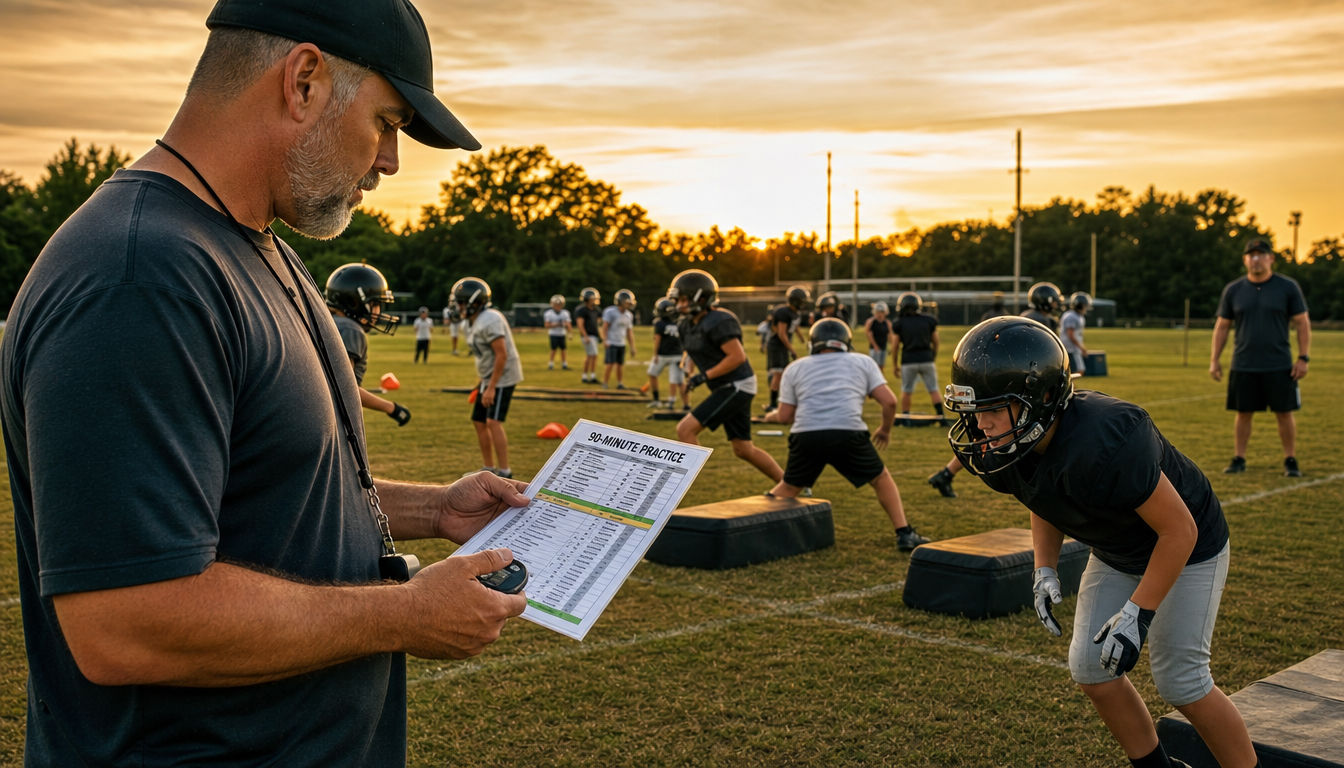
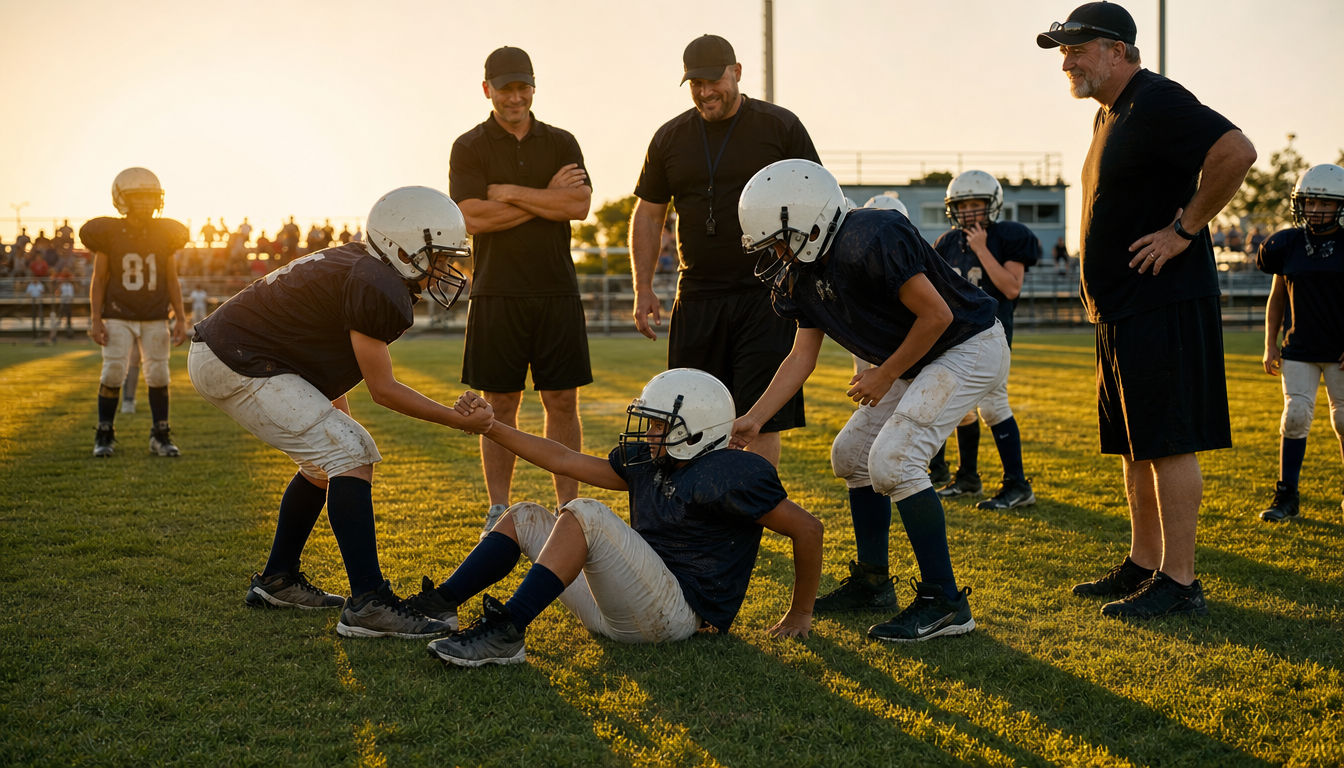
Every youth football coach has experienced it. A drill slows down, players begin talking, helmets start turning toward the parking lot, and the energy of practice disappears. The problem usually is not a lack of effort—it is a lack of engagement.
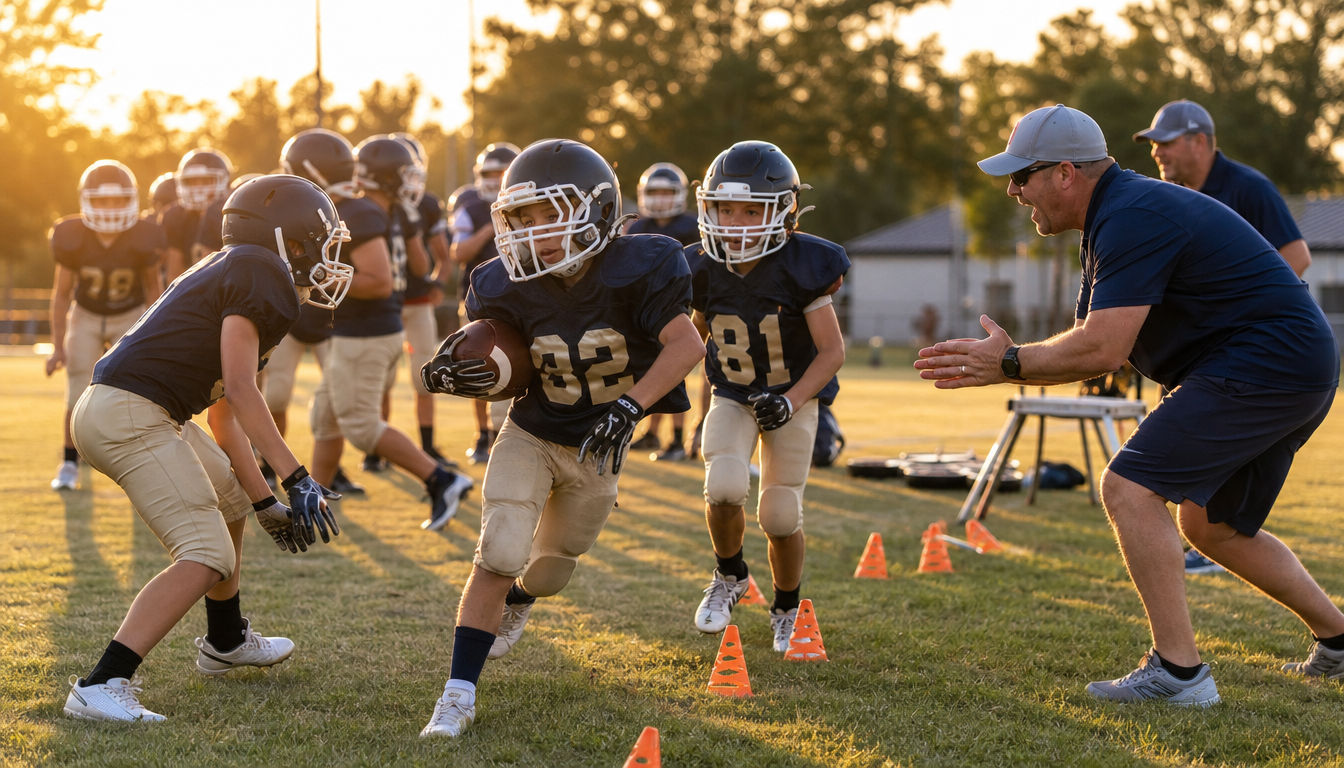
Great practices move with purpose. Players stay involved because they are constantly learning, competing, and receiving meaningful repetitions.
Understand Why Players Lose Focus
Young athletes have short attention spans, especially after a full day of school.
Players often become disengaged when:
- They spend too much time standing in line.
- Coaches talk for several minutes without demonstrating.
- Drills move too slowly.
- The same activity continues too long.
- They are unsure what they should be doing.
Recognizing these situations allows you to correct them before they affect the entire team.
Keep Instruction Brief
A simple coaching rule is:
Explain. Demonstrate. Practice.
Try to keep most teaching periods under two minutes before players begin moving again.
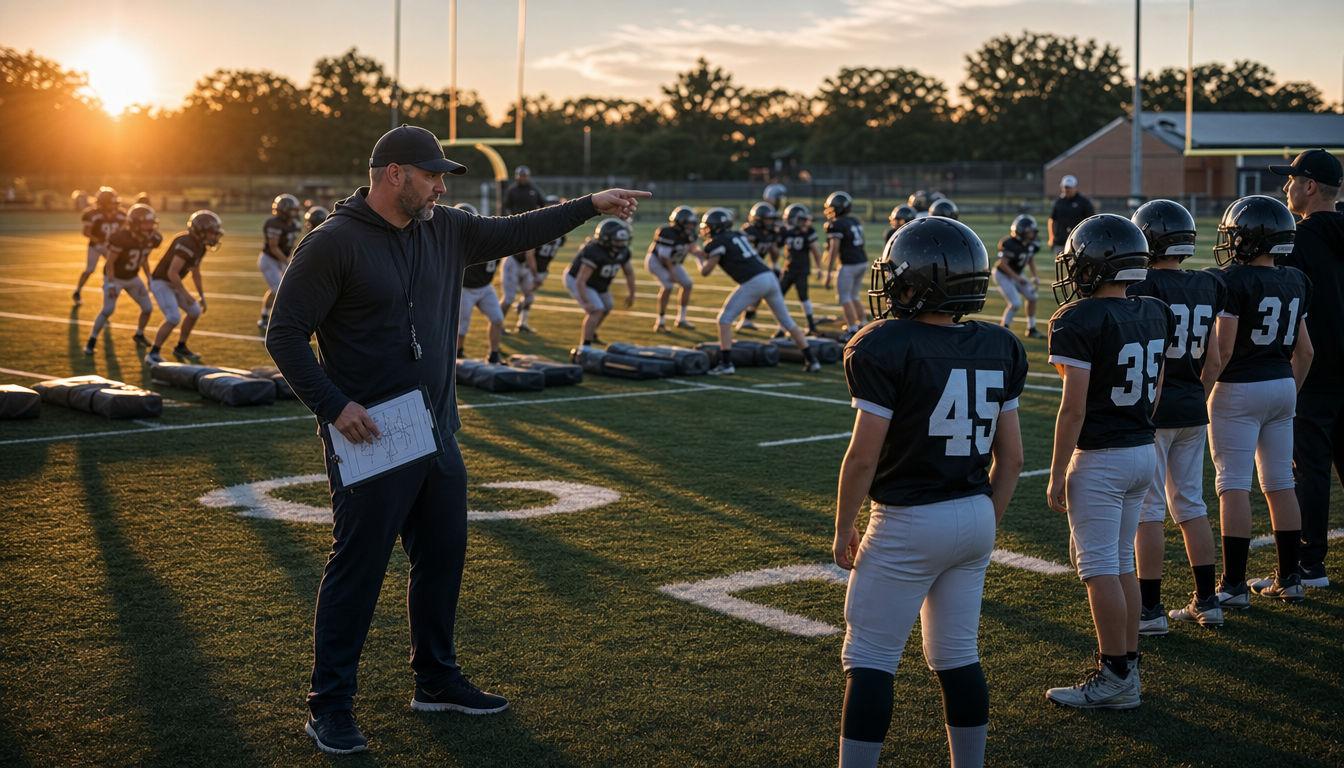
If additional coaching is needed, pause briefly, make one correction, and continue the drill.
Reduce Standing in Line
Players improve by performing skills, not by watching others perform them.
Whenever possible:
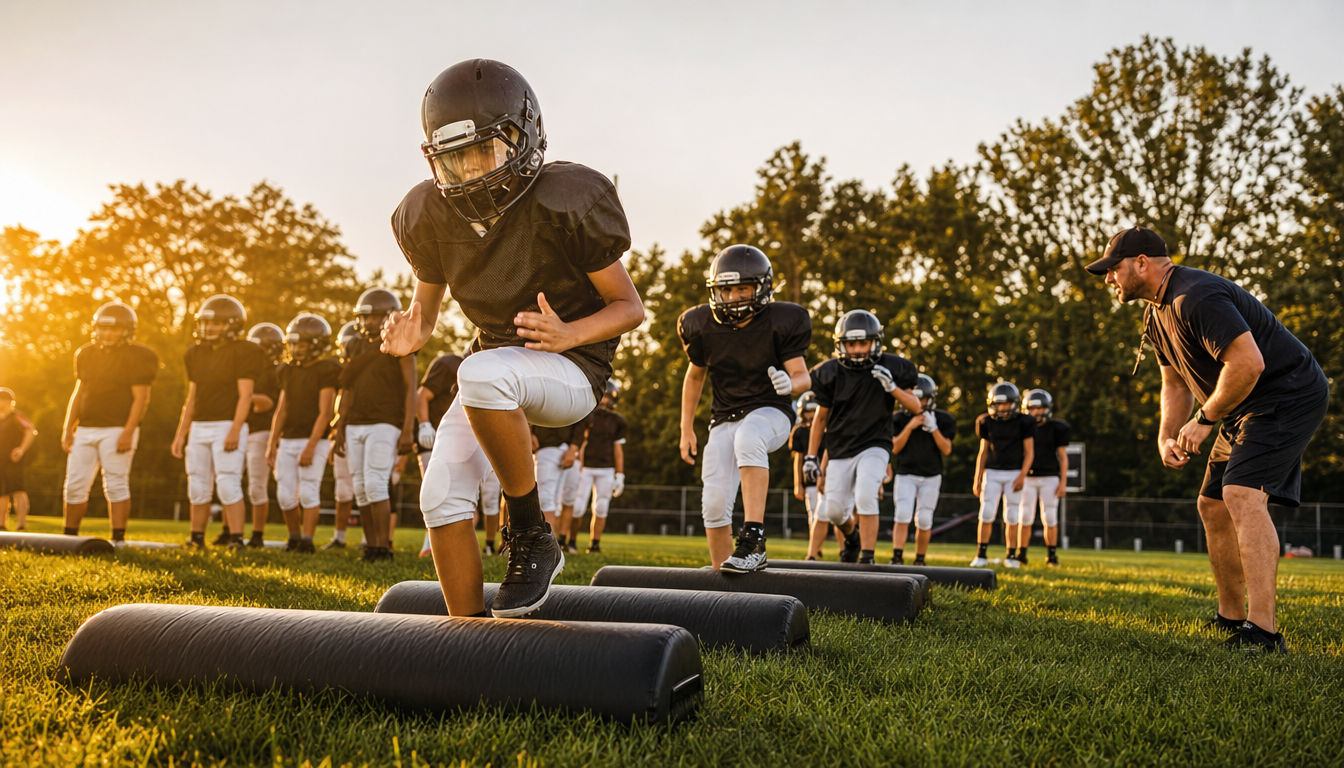
- Split into smaller groups.
- Create multiple stations.
- Use assistant coaches.
- Run identical drills on both sides of the field.
- Rotate frequently.
More repetitions almost always produce faster improvement.
Change the Pace
Young players enjoy variety.
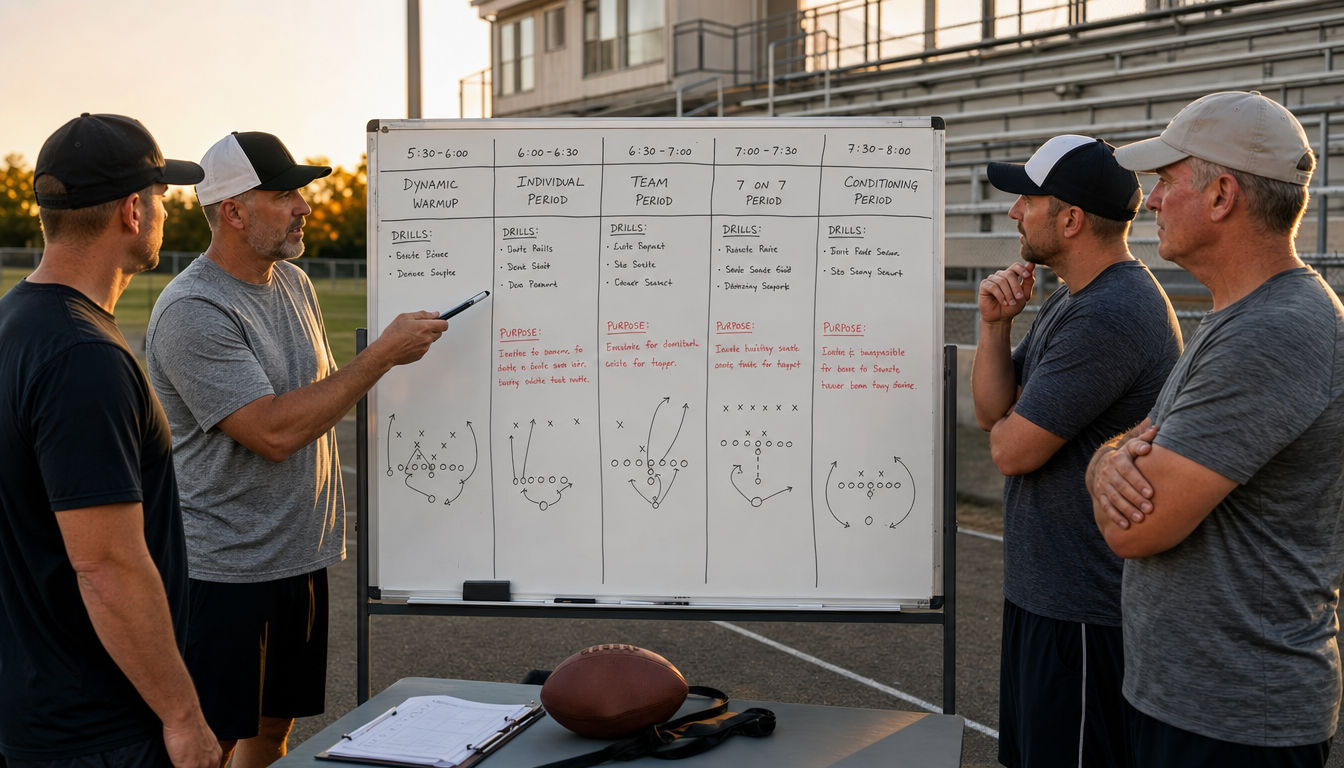
Alternate between:
- Individual drills.
- Partner drills.
- Small group competitions.
- Team periods.
Changing the pace helps players stay mentally engaged throughout practice.
Build Competition into Drills
Friendly competition creates excitement.
Examples include:
- Which group completes the cleanest handoffs?
- Which line finishes every rep with proper technique?
- Which defense pursues the ball the fastest?
Reward good execution rather than simply choosing winners.
Involve Every Player
Avoid drills where only one or two players are active.
Look for ways to give everyone a job, even while waiting for their turn.
Examples include:
- Reviewing assignments.
- Watching for coaching points.
- Encouraging teammates.
- Preparing for the next repetition.
An engaged player learns even when not carrying the football.
Watch Energy Levels
Players who become tired stop learning efficiently.
Schedule:
- Water breaks.
- Short transitions.
- Higher-energy drills after slower teaching periods.
Maintaining energy often produces better practices than extending them.
Finish with Success
The final few minutes of practice influence how players remember the day.
End with:
- A fun competitive drill.
- Team recognition.
- A review of what improved.
- A preview of the next practice.
Players who leave excited are more likely to return motivated.
Frequently Asked Questions
How long should a drill last?
Most youth drills work best when they last between five and ten minutes before rotating to something new.
Is competition good for young players?
Yes, when it emphasizes effort, teamwork, and technique instead of embarrassing players.
What should I do if players stop paying attention?
Shorten explanations, increase movement, and make sure every player is actively involved.
Key Takeaways
- Keep players moving.
- Teach with short, clear instructions.
- Minimize waiting in line.
- Use competition to increase engagement.
- Give every player meaningful repetitions.
- Finish practice with positive energy.
Related Articles
Published by CoachYouths Staff on 07/15/2026
You are NOT currently logged in, you may login or signup for FREE at any time: