Football Warm-Up Drills Every Team Should Use
A good warm-up does much more than get players moving. It prepares muscles for activity, reinforces athletic movement, reduces the risk of injury, and helps players mentally transition from school or home into football practice.
One of the most common mistakes volunteer coaches make is turning warm-ups into long conditioning sessions. A warm-up should prepare players to practice—not wear them out before practice begins.
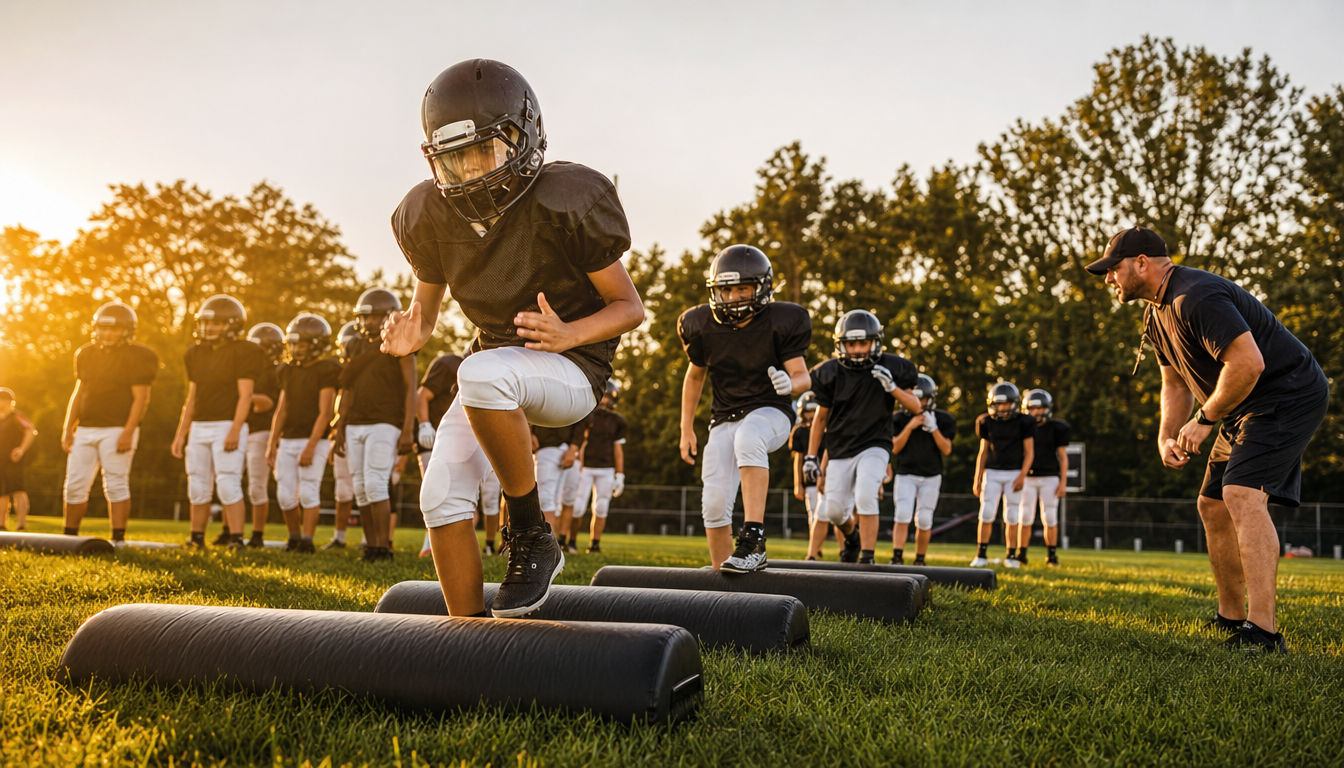
Why Warm-Ups Matter
An effective warm-up helps players:
- Increase body temperature.
- Improve mobility.
- Activate key muscle groups.
- Practice athletic movement.
- Focus on the upcoming practice.
Keep the pace steady and purposeful.
Start with Light Movement
Begin with two or three minutes of easy movement.
Examples include:
- Light jogging.
- Side shuffles.
- Backpedaling.
- Carioca.
- High knees.
Avoid sprinting immediately after players arrive.
Add Dynamic Stretching
Dynamic stretching prepares the body while keeping players active.
Include movements such as:
- Walking lunges.
- Leg swings.
- Arm circles.
- Hip openers.
- Inchworms.
Dynamic movements are generally more effective before activity than long static stretches.
Reinforce Football Movement
Transition into football-specific actions.
Practice:
- Athletic stance.
- Short bursts.
- Change of direction.
- Controlled acceleration.
- Proper footwork.
These movements prepare players for the drills that follow.
Keep It Short
A quality warm-up usually takes about 10 minutes.
If your warm-up lasts 20 minutes, you’re likely taking valuable teaching time away from the rest of practice.
Use the Same Routine
Young athletes benefit from consistency.
Using a familiar warm-up each practice allows players to:
- Learn the routine.
- Move confidently.
- Stay focused.
- Transition quickly into football activities.
Small adjustments can be made throughout the season, but the overall structure should remain familiar.
Avoid Common Mistakes
Avoid:
- Long static stretching before activity.
- Using conditioning as the warm-up.
- Standing in long lines.
- Complicated drills.
- Excessive talking between exercises.
Warm-ups should be active from beginning to end.
Frequently Asked Questions
How long should a football warm-up last?
Most youth teams can complete an effective warm-up in about 10 minutes.
Should we stretch every practice?
Yes, but emphasize dynamic movements before activity. Save longer static stretching for after practice if desired.
Can warm-ups include football skills?
Absolutely. Footwork, stance, and movement drills fit naturally into a football warm-up.
Key Takeaways
- Warm up with purpose.
- Use light movement before faster drills.
- Choose dynamic stretching over long static stretching.
- Reinforce football movement patterns.
- Keep the routine active, efficient, and consistent.
Related Articles
Published by CoachYouths Staff on 07/15/2026
You are NOT currently logged in, you may login or signup for FREE at any time: