Building an Effective Practice Schedule
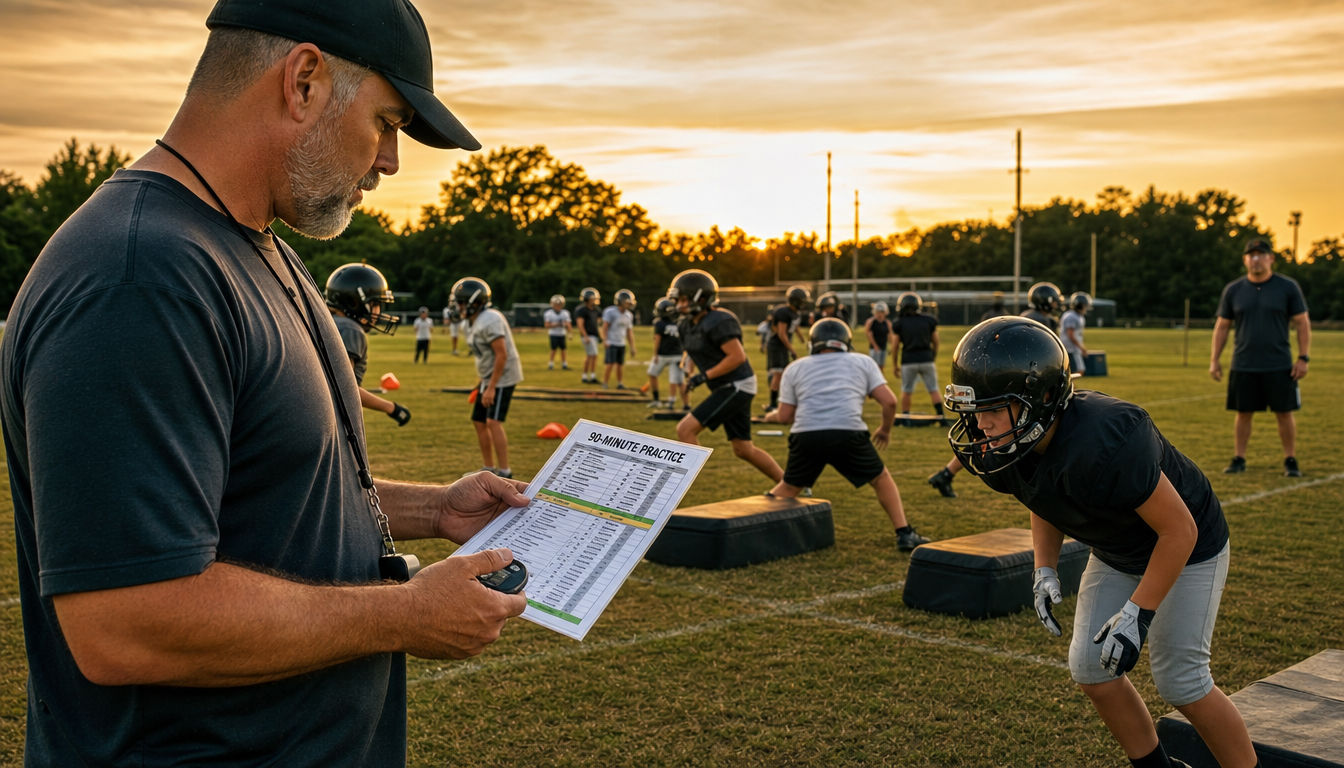
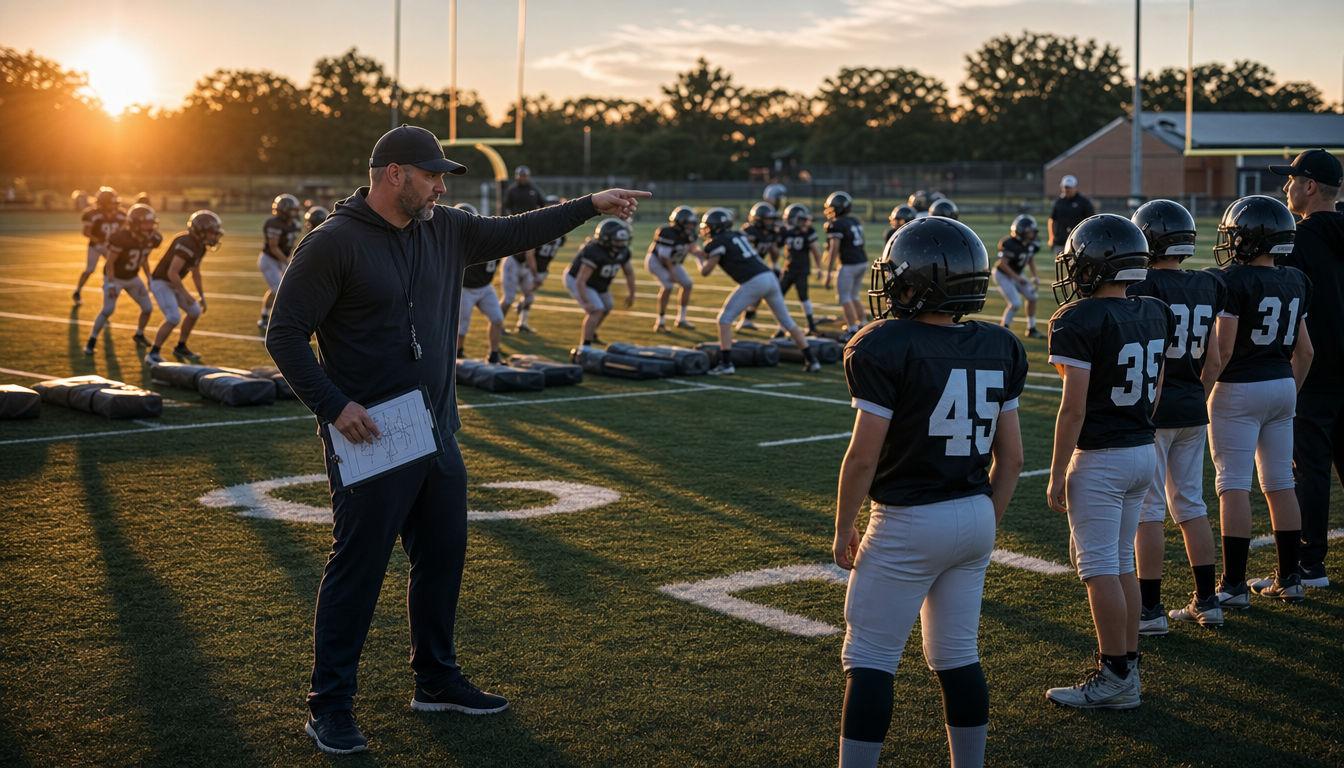
A great practice rarely happens by accident. The most successful volunteer coaches arrive with a written plan, know exactly what they want to accomplish, and make the most of every minute on the field. An effective practice schedule keeps players active, reduces downtime, and helps the team improve consistently throughout the season.
Your schedule should be a guide, not a rigid script. Be prepared to adjust when players need additional instruction or when weather and field conditions change.
Start with a Clear Objective
Every practice should answer one simple question:
What is the most important thing we need to improve today?
Examples include:
- Better tackling technique.
- Cleaner handoffs.
- Blocking fundamentals.
- Defensive pursuit.
- Offensive execution.
When you identify one primary objective, it becomes much easier to organize the rest of practice.
Follow a Consistent Structure
Young athletes learn faster when practices follow a familiar routine.
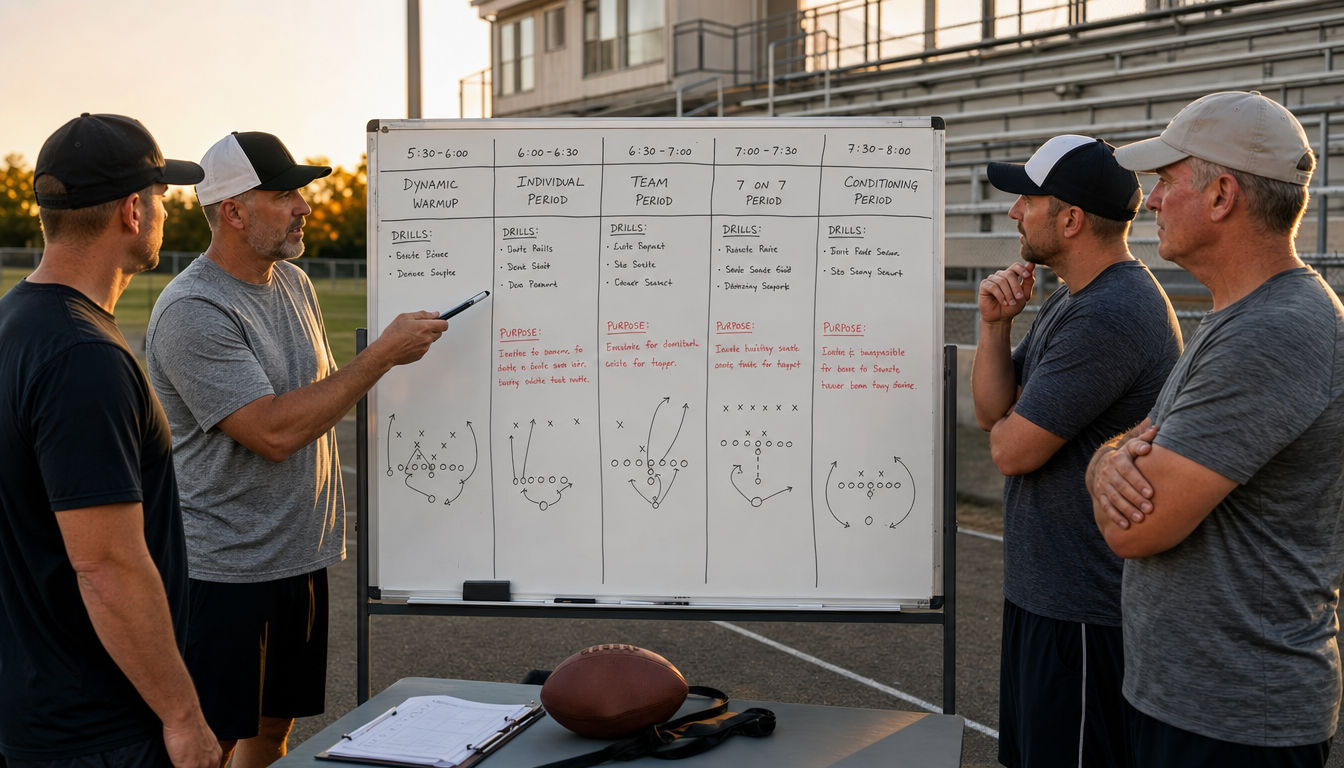
A simple structure might include:
- Team meeting.
- Dynamic warm-up.
- Individual fundamentals.
- Position drills.
- Group instruction.
- Team offense.
- Team defense.
- Conditioning or competitive finish.
- Team review.
Players quickly learn what comes next, allowing more time for coaching and less time for organizing.
Match the Schedule to Your Team
A first-year team usually needs more time on fundamentals.
An experienced team may spend more time on execution, game situations, and correcting mistakes from the previous game.
Avoid using the same schedule every week without considering what your players actually need.
Budget Your Time
One of the most common mistakes is spending too much time on one drill.
Before practice begins, assign an approximate time to every activity.
If a drill runs long, adjust the remaining schedule rather than eliminating important fundamentals.
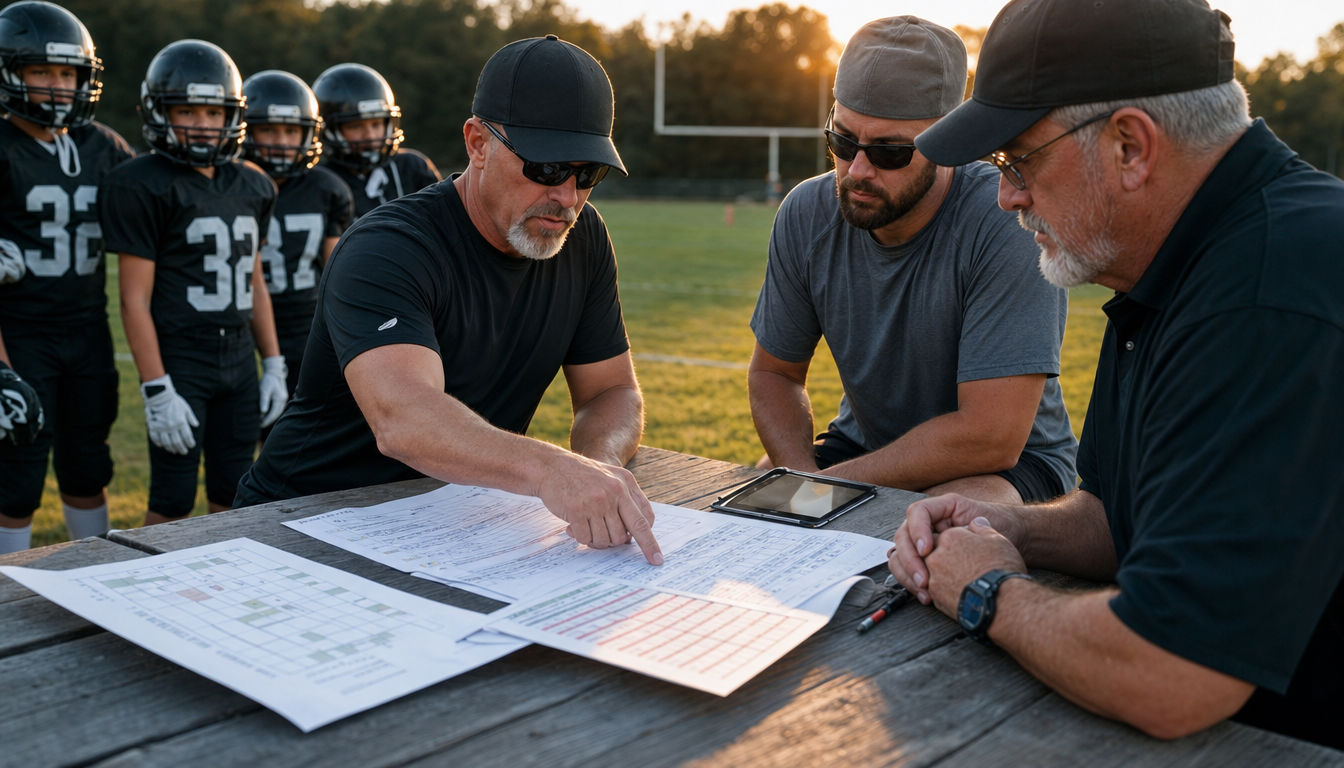
A written schedule also helps assistant coaches stay organized.
Plan Transitions
Practice often slows down between drills instead of during drills.
Think about how players will move from one activity to the next.
To reduce wasted time:
- Set up equipment before practice.
- Explain the next drill while players are gathering.
- Assign assistant coaches to different stations.
- Rotate groups in the same direction each time.
Saving thirty seconds between drills adds up over an entire season.
Leave Room for Review
Do not schedule every minute.
Leave a few extra minutes for:
- Questions.
- Water breaks.
- Correcting a drill.
- Reviewing key coaching points.
A small buffer keeps practice from feeling rushed.
Evaluate After Every Practice
Ask yourself:
- Did we accomplish today’s objective?
- Which drills worked well?
- Where did players struggle?
- What should we review next practice?
The answers become the starting point for your next schedule.
Frequently Asked Questions
Should I write every practice plan down?
Yes. Even experienced coaches benefit from having a written schedule.
How often should my practice schedule change?
Keep the overall structure consistent while adjusting the emphasis based on your team’s progress.
What if we do not finish everything?
That’s okay. Focus on quality instruction instead of rushing through every planned activity.
Key Takeaways
- Start every practice with one clear objective.
- Use a consistent structure.
- Match the schedule to your team’s needs.
- Budget time for every activity.
- Reduce downtime between drills.
- Leave room for adjustments and review.
Related Articles
Published by CoachYouths Staff on 07/15/2026
You are NOT currently logged in, you may login or signup for FREE at any time: