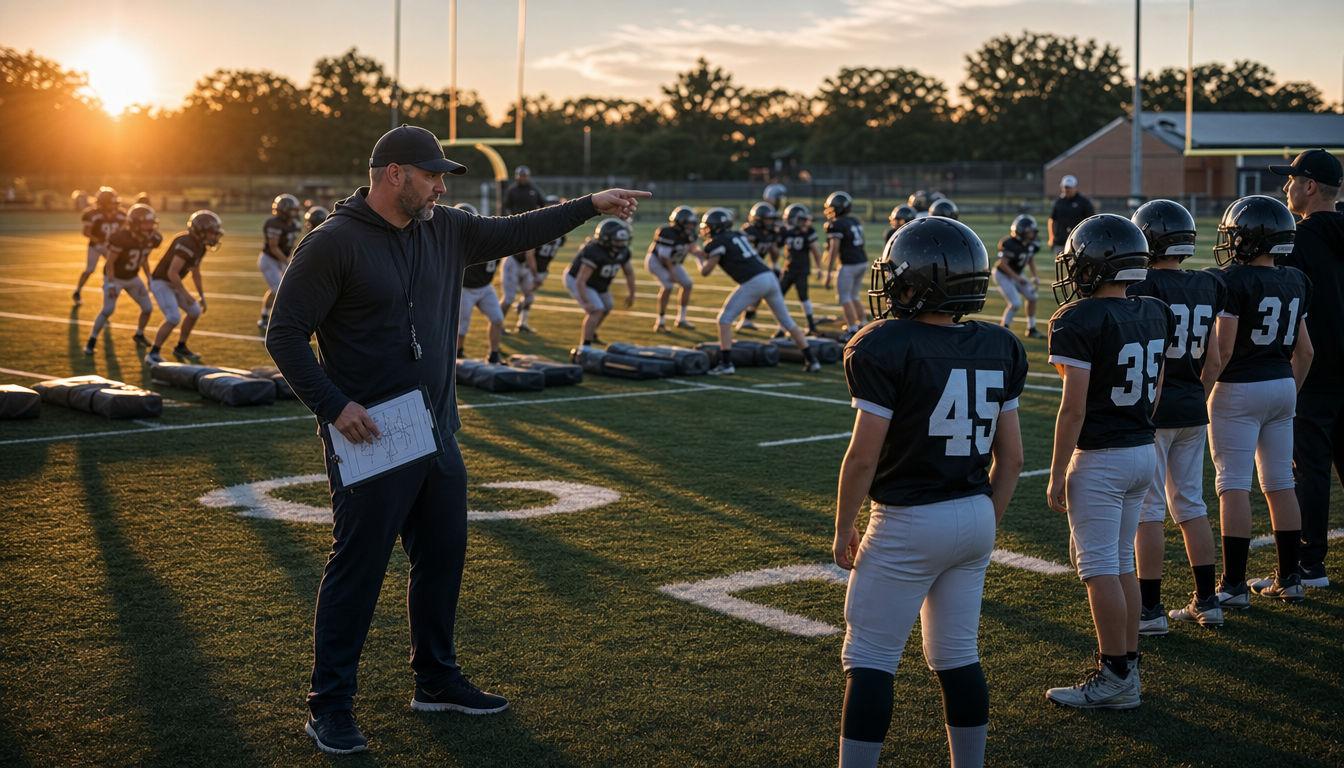
How to Plan a 90-Minute Youth Football Practice
One of the fastest ways to improve a youth football team is not adding more plays—it’s running better practices. A well-planned 90-minute practice keeps players active, maximizes repetitions, and teaches fundamentals without wasting valuable time.
The goal is for players to spend most of practice moving, learning, and receiving coaching rather than standing in lines listening to long explanations.
Start with One Primary Goal
Before writing your practice plan, decide what you want players to leave having learned.
Examples include:
- Improving tackling fundamentals.
- Installing a new running play.
- Better offensive line footwork.
- Defensive pursuit.
- Ball security.
Everything else should support that primary objective.
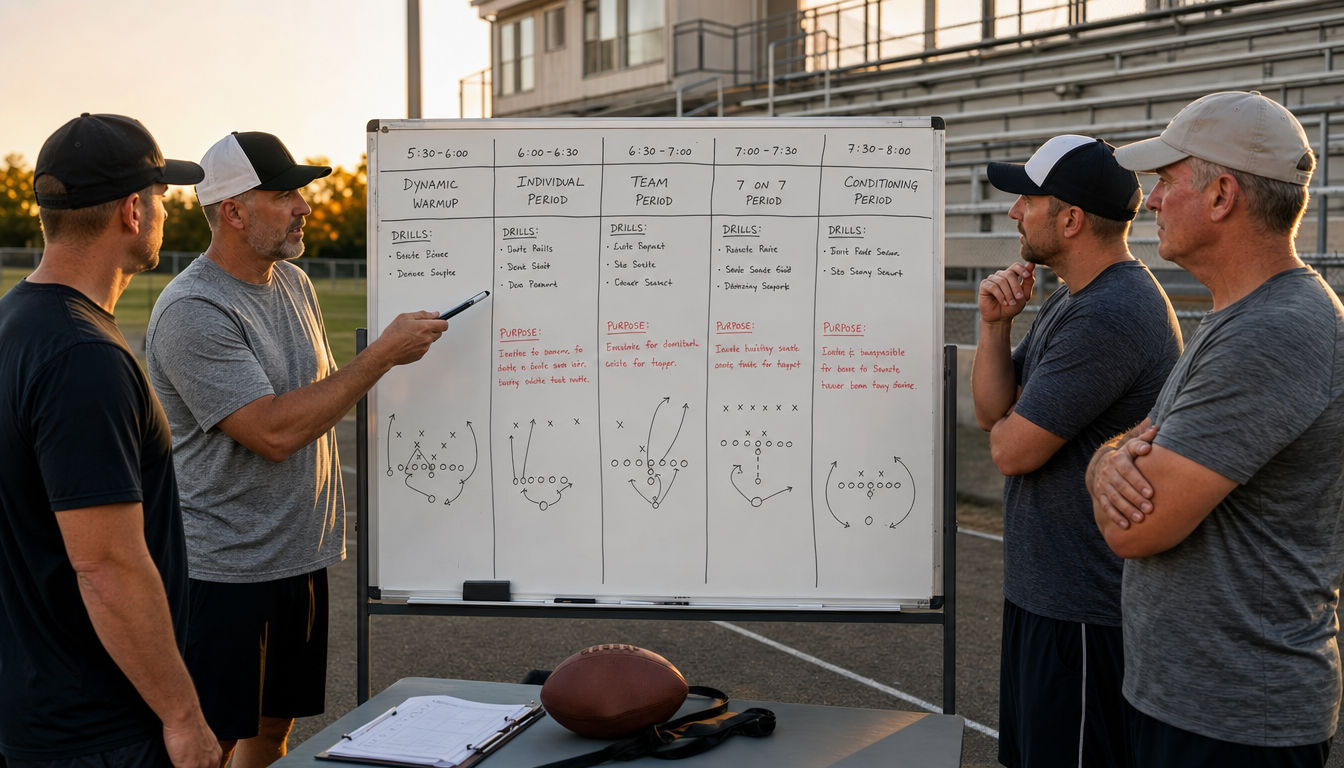
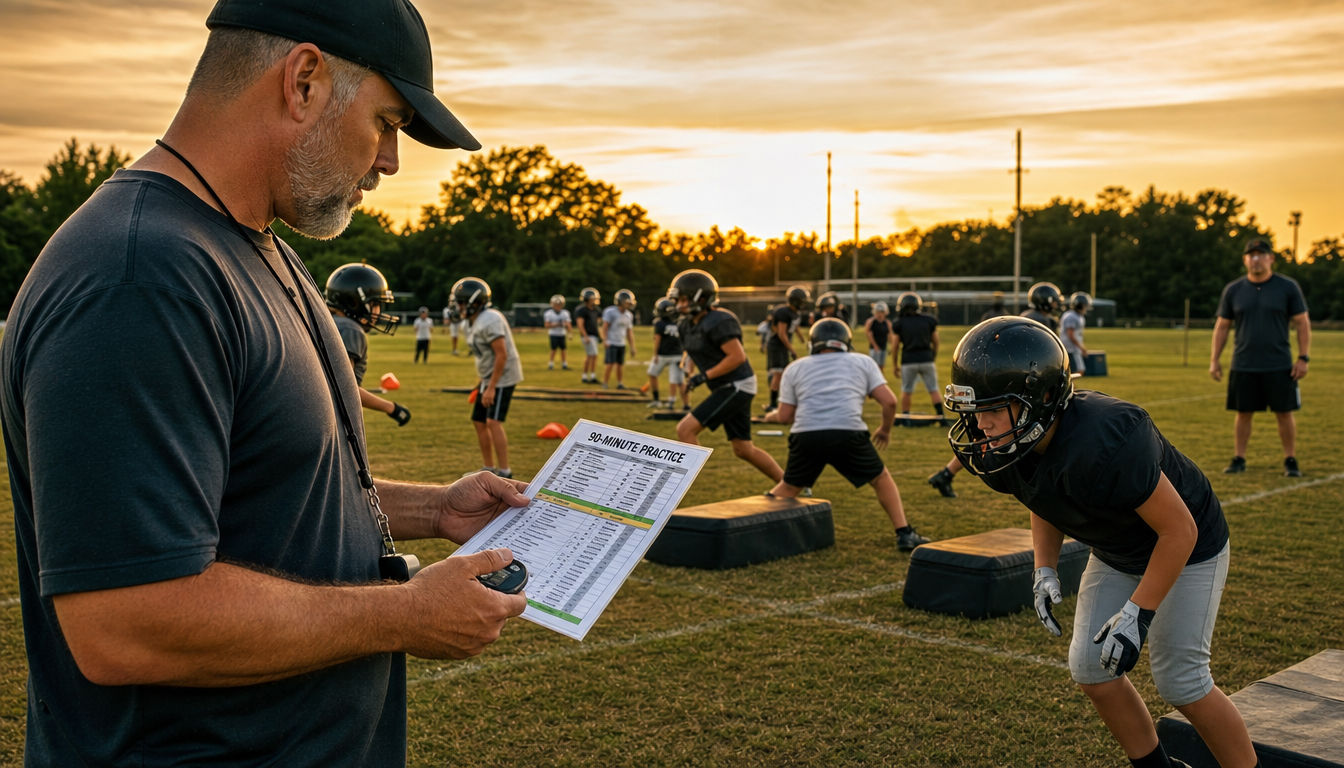
Sample 90-Minute Practice Schedule
A balanced practice might look like this:
- Team meeting (5 minutes)
- Dynamic warm-up (10 minutes)
- Individual position drills (20 minutes)
- Group fundamentals (15 minutes)
- Team offense (15 minutes)
- Team defense (15 minutes)
- Conditioning and review (10 minutes)
Adjust the schedule based on player age, league rules, and time of year.
Keep Players Moving
Nothing hurts practice more than long lines.
Whenever possible:
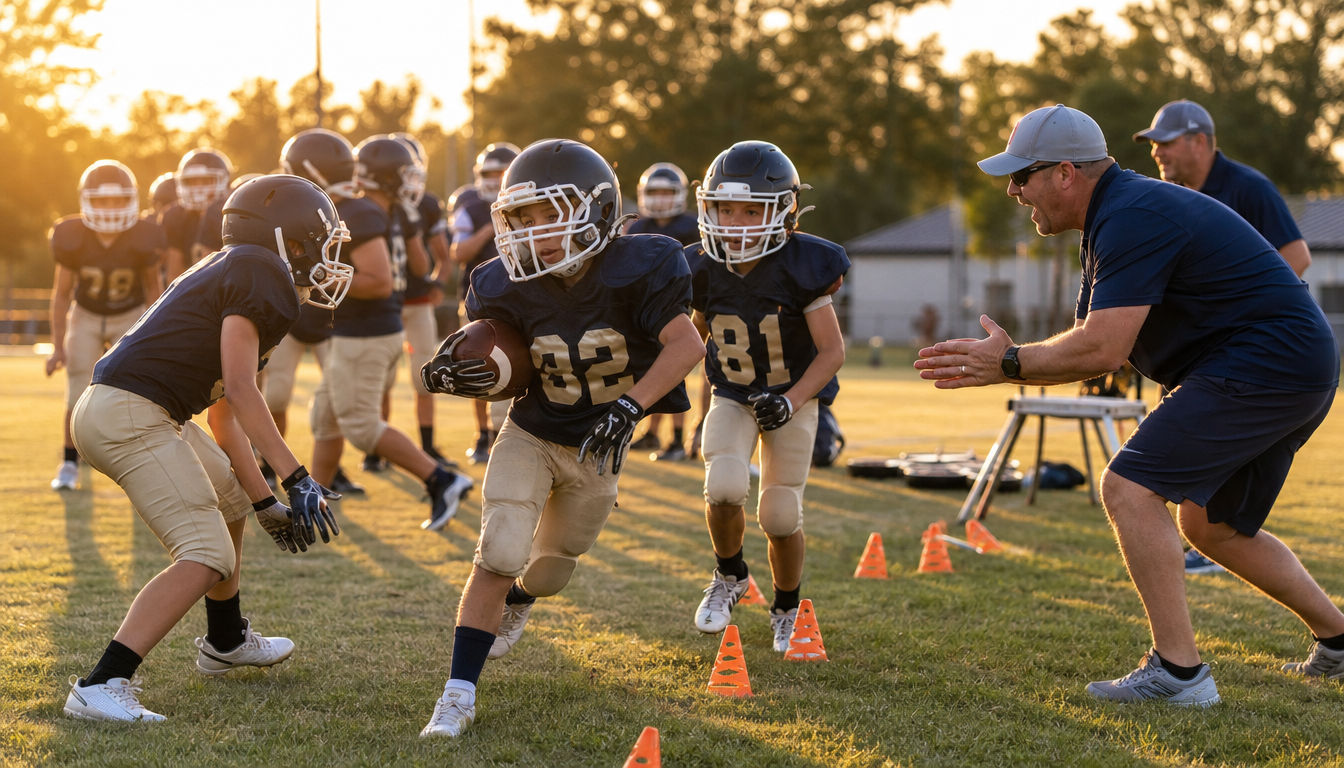
- Create multiple drill stations.
- Split into small groups.
- Use assistant coaches.
- Rotate frequently.
- Keep explanations under two minutes.
The more quality repetitions players receive, the faster they improve.
Teach Before You Test
Introduce new skills at a slower pace before expecting players to execute them at game speed.
A simple progression is:
- Explain.
- Demonstrate.
- Walk through.
- Practice at half speed.
- Practice at full speed.
This builds confidence while reducing frustration.
Spend Most of Your Time on Fundamentals
Many new coaches devote too much practice time to memorizing plays.
Instead, emphasize:
- Proper stance.
- Ball security.
- Blocking.
- Tackling.
- Footwork.
- Pursuit angles.
- Communication.
Teams with strong fundamentals usually outperform teams with more complicated playbooks.
Build Repetition into Every Practice
Players learn through repetition.
Instead of introducing five new skills in one practice, repeat the same core techniques until players begin performing them naturally.
Consistency creates confidence.
Finish Strong
End every practice with purpose.
Review:
- What the team learned.
- Areas that improved.
- One or two goals for the next practice.
Finish on a positive note so players leave excited to return.
Common Practice Planning Mistakes
Avoid these common errors:
- Installing too much at once.
- Spending too much time talking.
- Running drills without a clear objective.
- Forgetting water breaks.
- Ignoring fundamentals.
- Ending practice without a review.
Small improvements in organization often produce big improvements on the field.
Frequently Asked Questions
How much time should I spend installing new plays?
Only a small portion of practice. Most of your time should reinforce fundamentals and execution.
How many drills should I include?
Choose a handful of purposeful drills that support your practice goal instead of trying to cover everything.
Should every practice follow the same schedule?
The overall structure should remain familiar, but the emphasis can change depending on your team’s needs.
Key Takeaways
- Every practice should have one primary objective.
- Keep players active with short instruction and frequent repetitions.
- Focus on fundamentals before adding complexity.
- Organize drills to minimize standing in line.
- End each practice with a review and positive encouragement.
Related Articles
Published by CoachYouths Staff on 07/15/2026
You are NOT currently logged in, you may login or signup for FREE at any time: