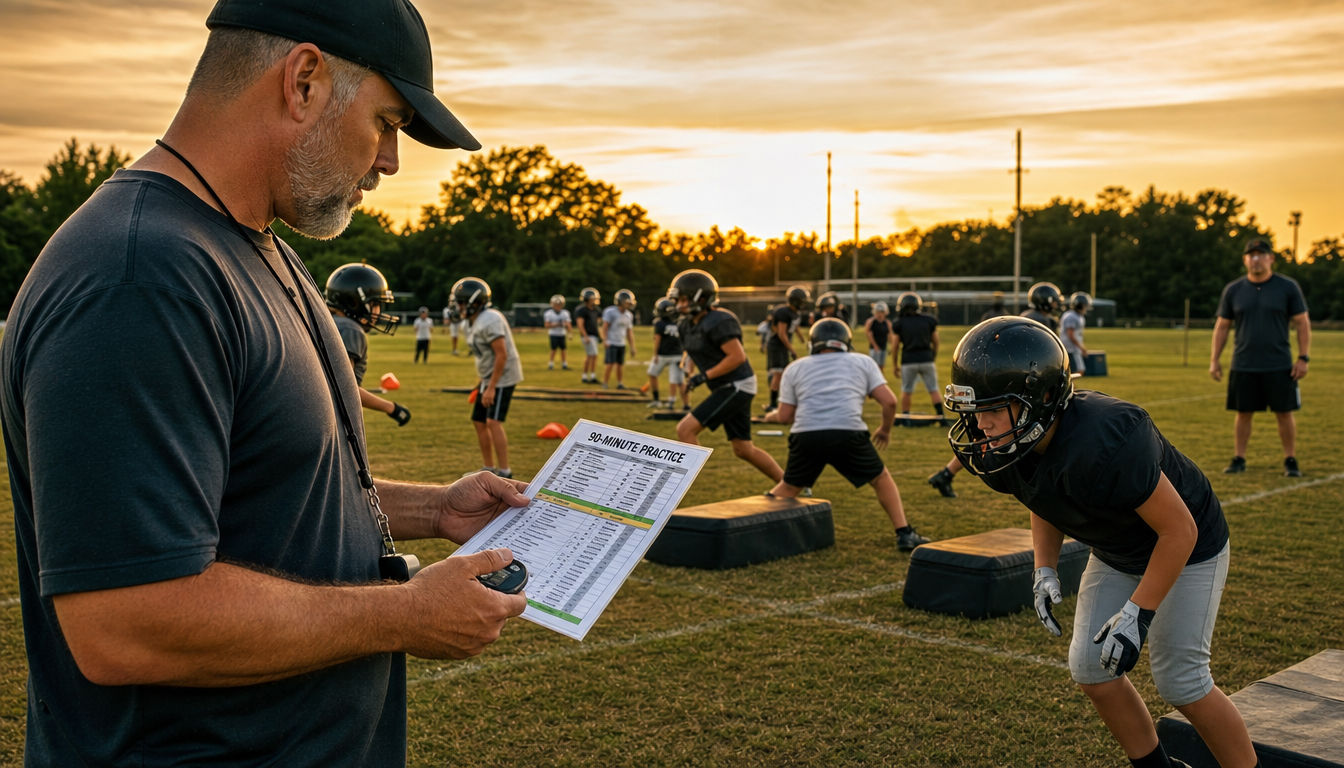
First-Time Youth Football Coach's Guide
Coaching youth football for the first time can feel overwhelming. Many volunteer coaches begin the season with little or no coaching experience, yet they quickly discover that their players look to them for leadership, encouragement, and instruction. The good news is that you do not need decades of football knowledge to have a successful season. Young athletes benefit most from coaches who are organized, patient, enthusiastic, and committed to helping every player improve.
Your Most Important Job
Winning games is exciting, but it should never be your primary goal.
Your first responsibility is to create an environment where players:
- Have fun.
- Learn the fundamentals of football.
- Improve every week.
- Build confidence.
- Develop teamwork.
- Stay safe.
If your players finish the season wanting to play football again next year, you have already accomplished something meaningful.
Learn the Rules of Your League
Every youth football league has its own rules.
Before your first practice, understand:
- Age divisions.
- Weight restrictions, if applicable.
- Minimum play requirements.
- Practice limitations.
- Equipment requirements.
- Overtime procedures.
- Special safety rules.
- Clock rules.
Never assume your league follows high school, college, or NFL rules.
Plan Before the Season Begins
Preparation makes coaching much easier.
Before your first practice:
- Review your roster.
- Learn each player’s name.
- Create a basic season calendar.
- Prepare your first three practices.
- Organize your coaching equipment.
- Meet with assistant coaches.
- Review league expectations.
Trying to plan practices at the field usually results in wasted time and frustrated players.
Keep Your Playbook Simple
One of the biggest mistakes new coaches make is installing too many plays.
A small playbook that players execute well is far more effective than a large playbook they cannot remember.
A good beginner playbook might include:
- Two running formations.
- Five or six running plays.
- Two passing plays.
- One extra point play.
- One goal line package.
As players improve, you can always add more.
Focus on Fundamentals
Championship youth football teams are built on fundamentals.
Spend more practice time teaching:
- Proper stance.
- Ball security.
- Blocking technique.
- Tackling fundamentals.
- Pursuit angles.
- Proper footwork.
- Good communication.
Great execution of simple fundamentals usually beats complicated schemes.
Organize Every Practice
Players stay engaged when practices move at a steady pace.
- Team meeting.
- Dynamic warm-up.
- Individual position drills.
- Fundamental instruction.
- Group drills.
- Team offense.
- Team defense.
- Special teams.
- Conditioning.
- Team review.
Build Relationships
Learn every player’s name, strengths, areas for improvement, personality, and confidence level. A few encouraging words after a good effort often mean more than a long speech.
Communicate with Parents
Hold a parent meeting before the season begins and discuss the practice schedule, game schedule, expectations, playing time policies, communication methods, volunteer opportunities, and equipment responsibilities.
Coach Every Player
Every player develops at a different pace. Focus on helping each athlete improve from where they started instead of comparing players to one another.
Make Safety Your Highest Priority
Always emphasize proper tackling, proper blocking, hydration, stretching, safe practice habits, and reporting injuries immediately.
Keep Practices Positive
Correct mistakes by explaining the issue, demonstrating the correct technique, allowing another attempt, and praising improvement.
Expect Mistakes
Every first-year coach makes mistakes. Learn from them and continue improving throughout the season.
Measuring Success
A successful season is about much more than wins and losses. Measure success by player improvement, enjoyment, teamwork, sportsmanship, safety, and whether they want to play again next season.
Frequently Asked Questions
Do I need football experience to coach youth football?
No. Organization, preparation, patience, and a willingness to learn are often more important than advanced football knowledge.
How many plays should a beginner team learn?
Start with a small playbook that your players can execute confidently.
Should winning be my primary goal?
No. Focus first on player development, safety, teamwork, and creating a positive experience.
How long should practices be?
Most youth football practices are between 90 and 120 minutes depending on league rules and player age.
What is the biggest mistake new coaches make?
Trying to teach too much too quickly.
Key Takeaways
- Keep your playbook simple.
- Prioritize fundamentals.
- Create a positive team culture.
- Communicate clearly with parents.
- Focus on player development.
- Make safety your highest priority.
- Stay organized.
- Continue learning as a coach.
Related Articles
Published by CoachYouths Staff on 07/15/2026
You are NOT currently logged in, you may login or signup for FREE at any time: