Building a Simple Offensive Playbook
One of the biggest mistakes new youth football coaches make is believing that a larger playbook creates a better offense. In reality, the opposite is usually true. Youth teams improve faster when they execute a small number of plays with confidence than when they struggle to remember dozens of formations and assignments.
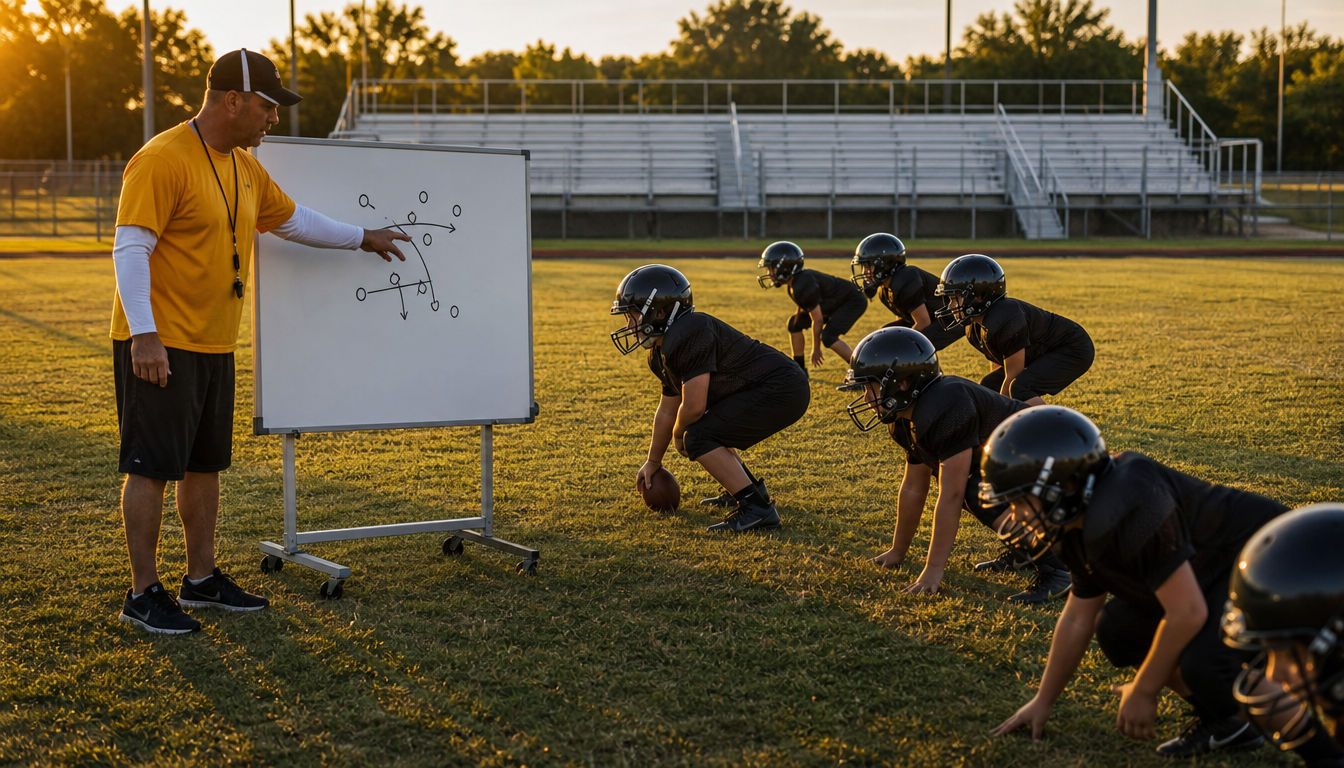
Your offensive playbook should be simple, organized, and easy for players to learn.
Start with Your Players
Build your offense around the athletes you actually have—not the team you wish you had.
Ask questions such as:
- Do we have a strong running back?
- Can our quarterback throw consistently?
- Is our offensive line experienced?
- Do we have team speed?
- Which players learn quickly?
Your answers should shape your playbook.
Choose One Base Formation
Resist the temptation to switch formations every few plays.
Instead, master one primary formation first.
Popular youth options include:
- I Formation.
- Single Wing.
- Double Wing.
- Wishbone.
- Shotgun.
Once players understand one formation, adding a second becomes much easier.
Build Around Core Plays
A complete youth offense does not require dozens of plays.
Many successful teams rely on:
- Four to six running plays.
- Two to four passing plays.
- One quarterback sneak.
- One short-yardage package.
- One goal line package.
Every play should have a clear purpose.
Teach Assignments Before Adjustments
Players should first understand:
- Where to line up.
- Their first step.
- Who they block.
- Where the ball is going.
Avoid introducing audibles, motion, or advanced adjustments until the basics become automatic.
Give Every Play a Reason
Every play should answer a specific need.
For example:
- Inside Run for short yardage.
- Sweep to attack the edge.
- Counter to punish overaggressive defenses.
- Quick Pass against crowded defensive fronts.
If two plays accomplish the same purpose, consider removing one.
Practice Your Best Plays
Do not divide practice equally among every play.
Spend the most time on the plays you expect to call most often.
When game day arrives, players should feel completely comfortable running your core offense.
Evaluate Throughout the Season
Your playbook should evolve gradually.
After each game, ask:
- Which plays consistently gained yards?
- Which plays caused confusion?
- Which concepts fit our personnel?
- What should we simplify?
Removing ineffective plays is often more valuable than adding new ones.
Frequently Asked Questions
How many plays should a first-year team have?
Most beginner teams can be very successful with fewer than ten total offensive plays.
Should I copy a high school or college offense?
Use those systems for ideas, but simplify them to match your players’ age and experience.
When should I add new plays?
Only after your existing plays are executed consistently in practice and games.
Key Takeaways
- Build your offense around your players.
- Master one formation before expanding.
- Keep the playbook small.
- Practice your best plays repeatedly.
- Remove unnecessary complexity.
- Let execution become your competitive advantage.
Related Articles
Published by CoachYouths Staff on 07/15/2026
You are NOT currently logged in, you may login or signup for FREE at any time: