Choosing the Right Offensive Formation
One of the first decisions every youth football coach makes is selecting an offensive formation. While it is easy to become distracted by the latest offensive trends, the best formation is not necessarily the most popular one—it is the formation your players can learn, execute, and run confidently.
A great formation makes football simpler for your players. A poor fit makes every play more difficult.

What Is an Offensive Formation?
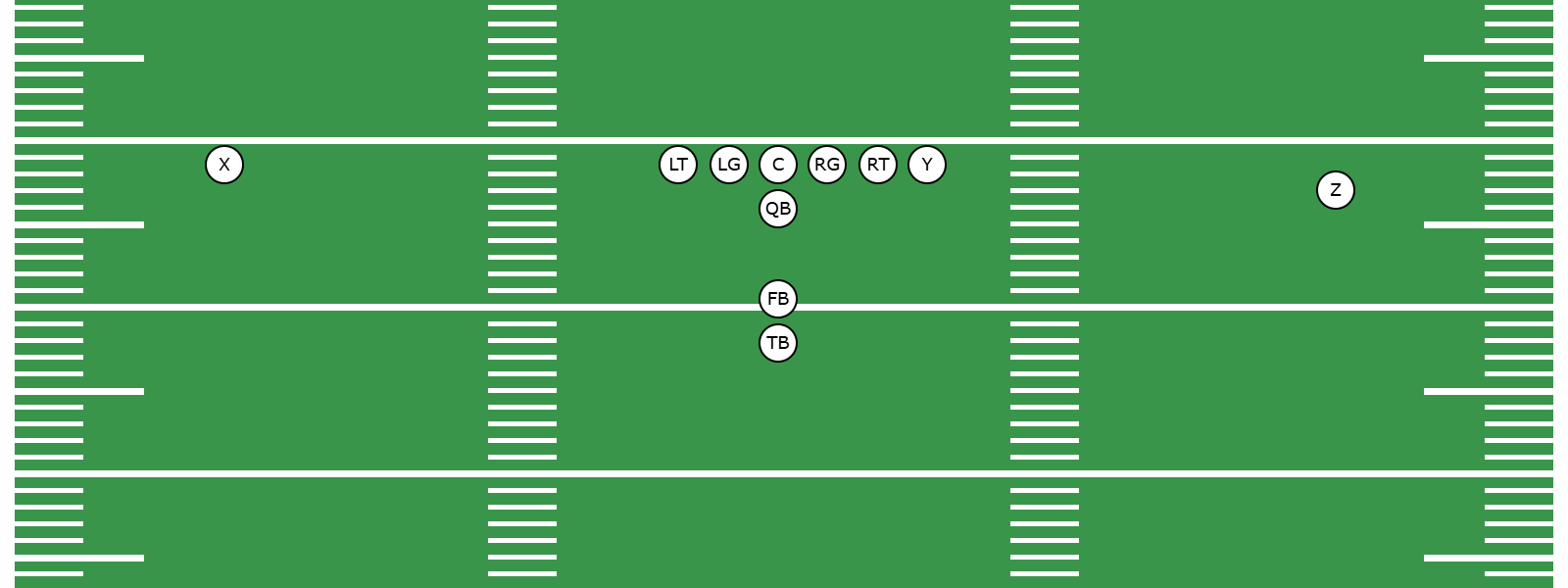
An offensive formation is how your players line up before the snap.
A formation determines:
- Player alignment.
- Backfield spacing.
- Blocking angles.
- Running lanes.
- Eligible receivers.
- How the defense is forced to align.
Every play in your playbook begins with a formation.
Start with Your Personnel
Before choosing a formation, evaluate your team honestly.
Consider:
- Team speed.
- Offensive line experience.
- Quarterback ability.
- Number of capable ball carriers.
- Overall football experience.
Your players should influence your system—not the other way around.
Common Youth Football Formations
Several formations have proven successful for volunteer youth coaches.
I Formation
A balanced offense with strong downhill running and simple backfield action.
Best for teams that want a traditional offense.
Single Wing
An excellent choice for teams built around a strong running game and misdirection.
Often popular at younger age levels.
Double Wing
Creates extra blocking angles and works well for physical, run-first teams.
Wishbone
Features multiple running threats and option possibilities but requires disciplined ball handling.
Shotgun
Provides better quarterback vision and can simplify certain passing concepts, though younger teams may need additional time mastering snaps.
Simplicity Wins
Changing formations every few plays often creates unnecessary confusion.
Most successful youth teams:
- Build around one primary formation.
- Add a complementary formation only after mastering the first.
- Practice formations until alignment becomes automatic.
Confidence comes from repetition.
Think Beyond the First Game
Choose a formation your players can continue improving throughout the season.
Ask yourself:
- Can beginners learn this?
- Will it still work in the playoffs?
- Does it support both running and passing?
- Can we adjust without rebuilding the offense?
A flexible formation often provides long-term benefits.
Avoid Common Mistakes
Avoid:
- Choosing a formation because a professional team uses it.
- Installing multiple formations too early.
- Ignoring your players’ strengths.
- Changing formations every week.
- Confusing players with unnecessary terminology.
Execution always beats complexity.
Frequently Asked Questions
Which formation is best for beginners?
There is no universal answer. Many first-year teams succeed with the I Formation, Single Wing, or Double Wing because they emphasize a strong running game.
How many formations should we have?
Most volunteer coaches can build a successful offense using one primary formation and one complementary formation.
When should we add another formation?
After players consistently execute your base offense without hesitation.
Key Takeaways
- Build your offense around your players.
- Master one formation before adding another.
- Keep alignments simple and consistent.
- Evaluate whether your formation supports your offensive goals.
- Prioritize execution over variety.
Published by CoachYouths Staff on 07/15/2026
You are NOT currently logged in, you may login or signup for FREE at any time: