Best Youth Football Running Plays
For most youth football teams, the running game is the foundation of the offense. Running plays are generally easier to teach, require fewer moving parts than passing plays, and help young players develop confidence while learning the game. A team that can consistently run the football will control the clock, reduce turnovers, and create opportunities for bigger plays later in the game.
The goal is not to have dozens of running plays. The goal is to execute a handful of plays extremely well.

Why Running Plays Matter
A strong running game helps your team:
- Control the pace of the game.
- Build player confidence.
- Reduce risky turnovers.
- Wear down the defense.
- Set up play-action passes.
For many volunteer coaches, a dependable running game is the quickest path to offensive success.
Start with Core Running Plays
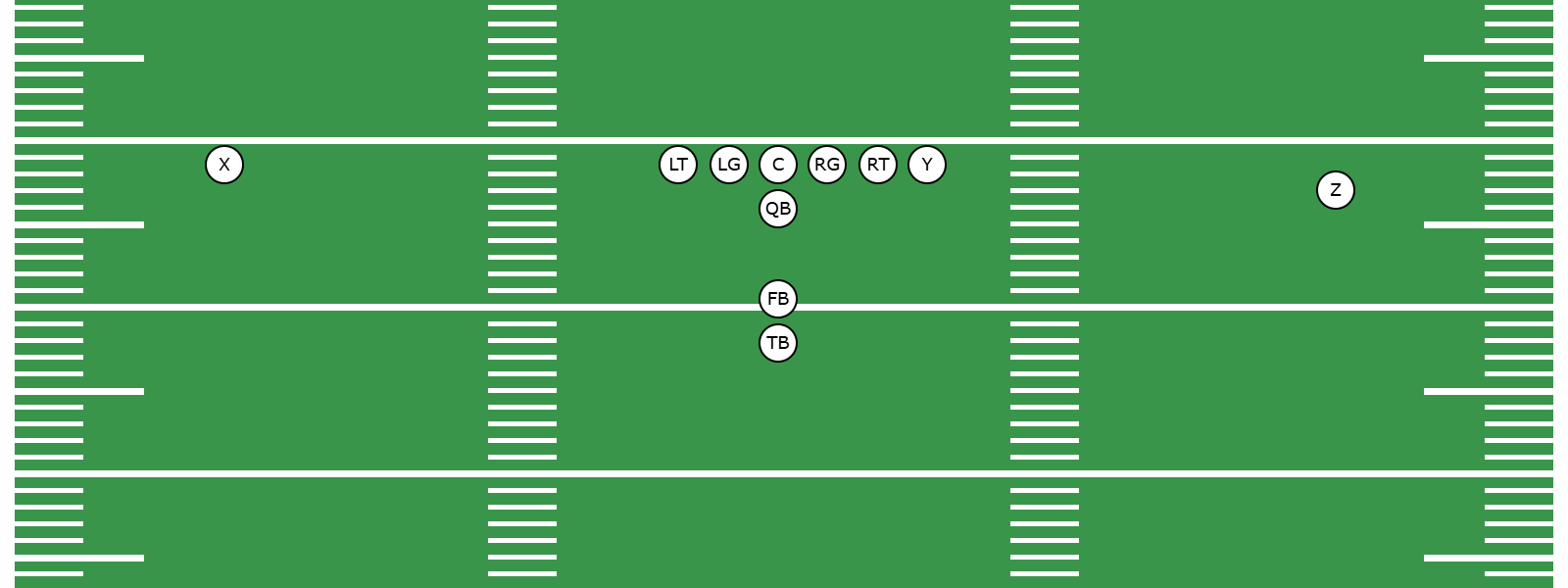
Instead of installing a large playbook, choose four to six plays that attack different areas of the defense.
A balanced youth running game often includes:
- Dive.
- Off-Tackle.
- Sweep.
- Counter.
- Reverse (used sparingly).
Master these before adding anything else.
Teach Every Play the Same Way
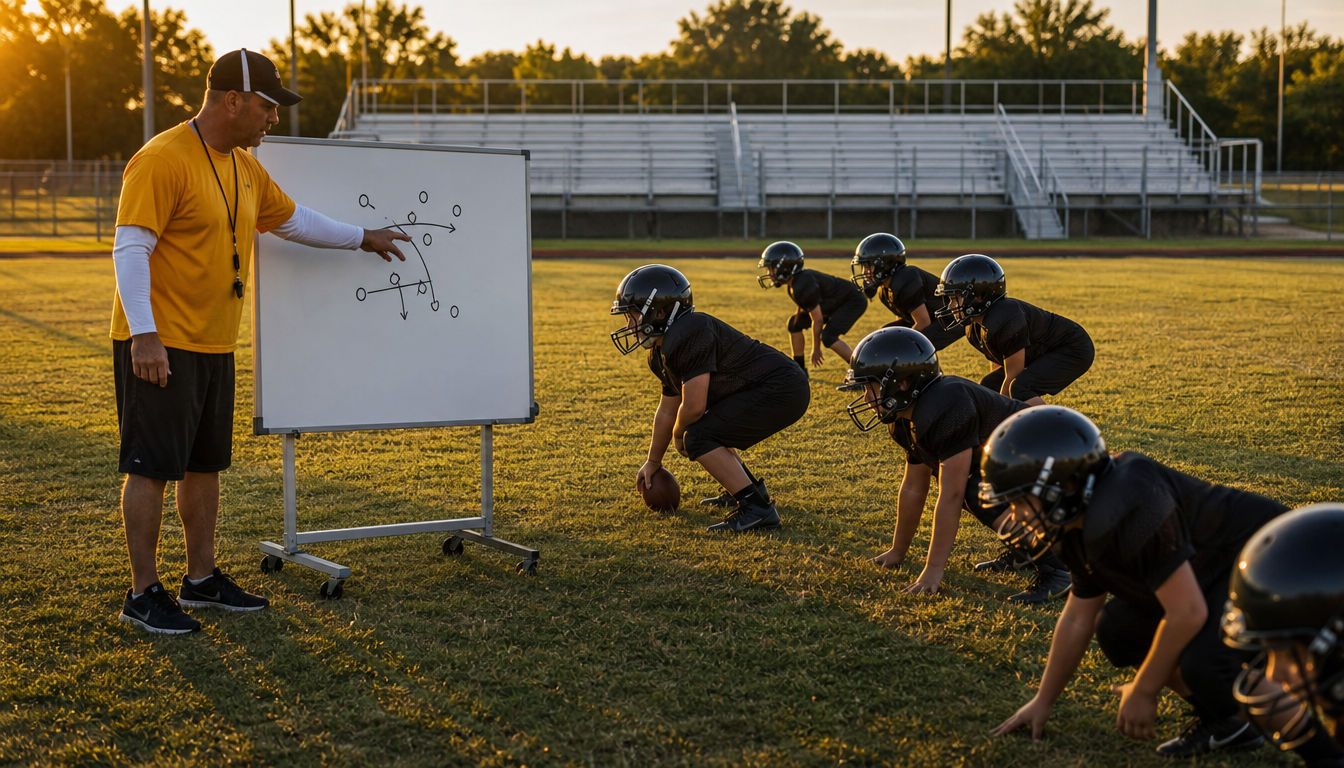
Players learn faster when every play follows a consistent teaching progression.
- Explain the objective.
- Walk through player assignments.
- Practice at half speed.
- Run against light defensive pressure.
- Execute at full speed.
Consistency reduces confusion and builds confidence.
Match Plays to Your Personnel
Do not force your players into an offense that doesn’t fit them.
Ask questions such as:
- Do we have a fast running back?
- Is our offensive line better at drive blocking or pulling?
- Do we have multiple ball carriers?
- Which plays do our players execute confidently?
Build your offense around your team’s strengths.
Resist Constant Changes
Many new coaches abandon a play after one unsuccessful attempt.
Instead, evaluate:
- Was the blocking correct?
- Did players line up properly?
- Was the handoff clean?
- Did everyone know their assignment?
Execution usually matters more than the play design itself.
Practice Against Different Defenses
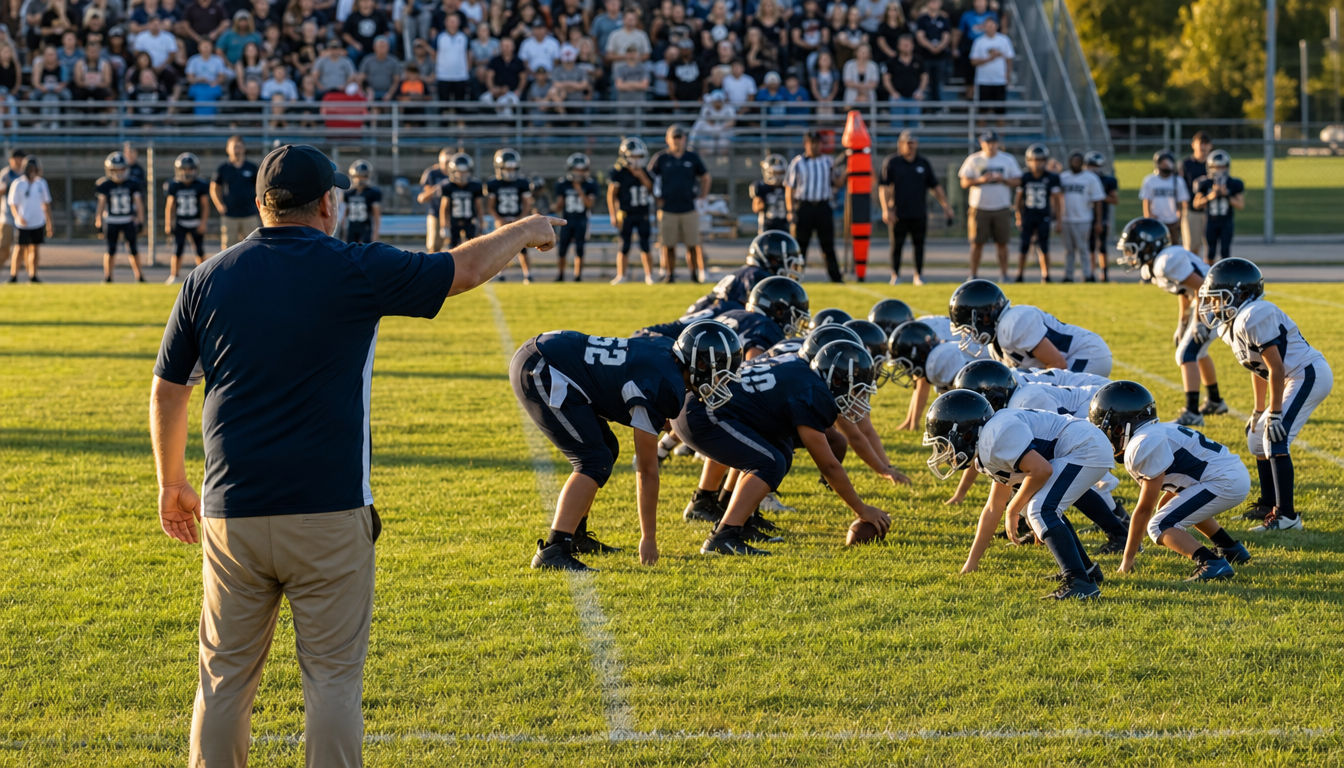
Once players understand a play, practice it against several defensive looks.
Help players recognize:
- Defensive alignment.
- Open running lanes.
- Proper timing.
- Ball security through traffic.
This prepares the team for game-day adjustments.
Common Mistakes
Avoid:
- Installing too many running plays.
- Calling plays your team has not mastered.
- Ignoring blocking fundamentals.
- Changing the playbook every week.
- Forgetting to practice ball security.
Simple, well-executed football wins many youth games.
Frequently Asked Questions
How many running plays should a beginner team have?
Four to six core running plays are enough for many first-year youth teams.
Which running play is best?
There is no universal best play. The best running play is the one your players execute consistently.
Should we run the same play more than once?
Absolutely. If a play is working, continue running it until the defense proves it can stop it.
Key Takeaways
- Build your offense around a small number of core running plays.
- Match the playbook to your players.
- Emphasize execution over complexity.
- Practice against multiple defensive fronts.
- Continue reinforcing blocking and ball security.
Related Articles
Published by CoachYouths Staff on 07/15/2026
You are NOT currently logged in, you may login or signup for FREE at any time: