What Is the I Formation?
The I Formation is one of football’s most recognizable offensive formations. Named for the straight-line alignment of the quarterback, fullback, and running back, it has been a foundation of successful offenses for decades. Its simplicity, physical style of play, and balanced attack make it a popular choice from youth football through the professional ranks.
The formation is best known for creating a powerful running game while naturally complementing play-action passing. For coaches building an offense around discipline, execution, and physical football, the I Formation remains a proven option.
History
The I Formation became popular because it combined a downhill rushing attack with an effective play-action passing game. By placing a fullback directly in front of the tailback, offenses gained a natural lead blocker while preserving offensive balance.
Although modern offenses often feature shotgun alignments, the I Formation continues to be used because its core principles—power, balance, and ball control—remain effective.
Alignment
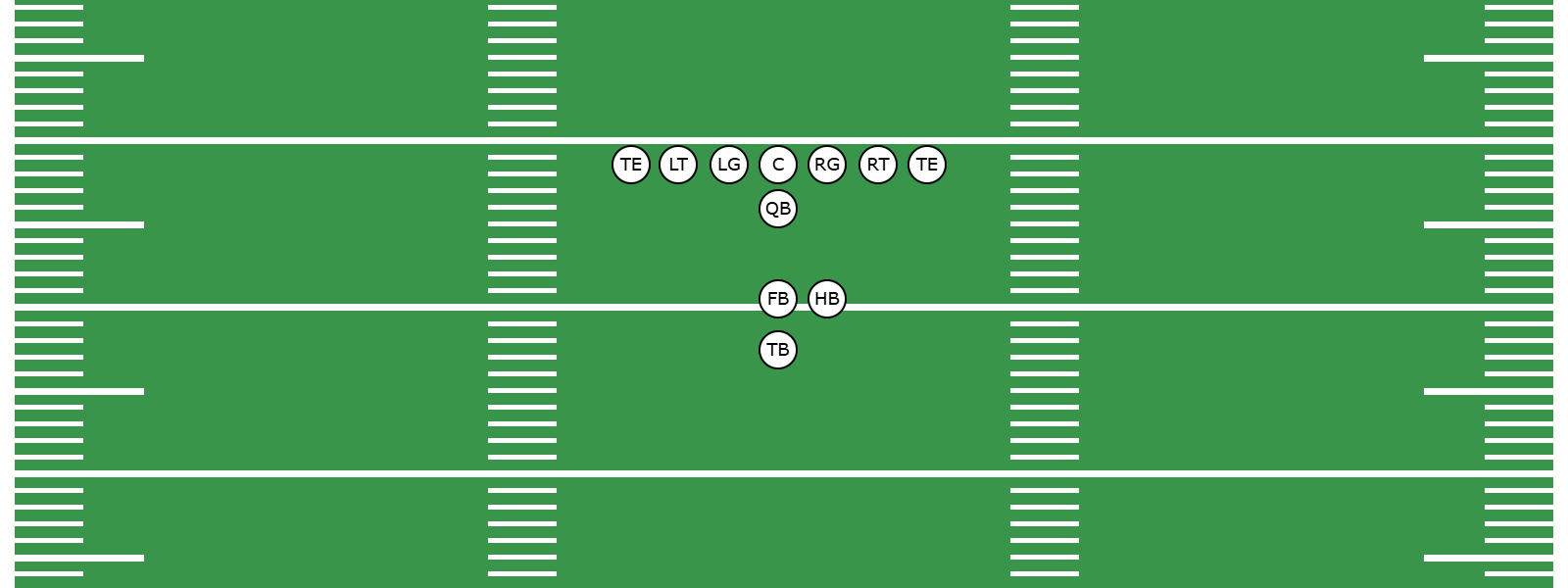
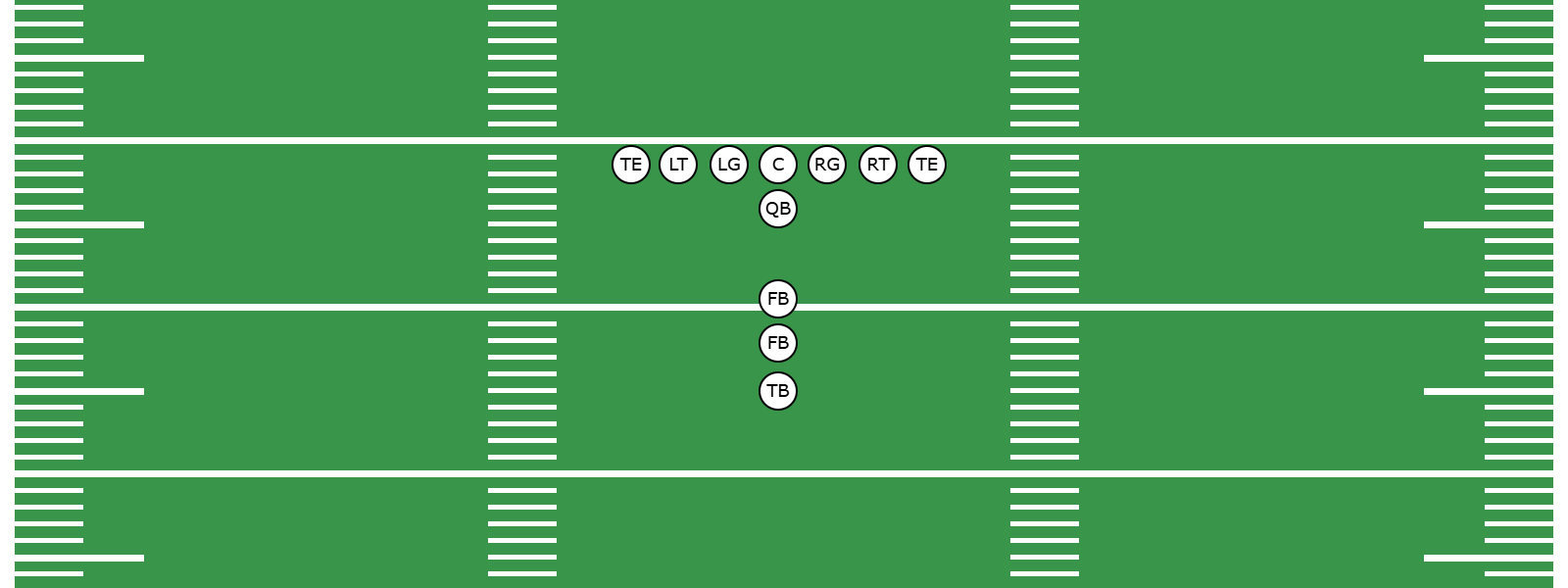
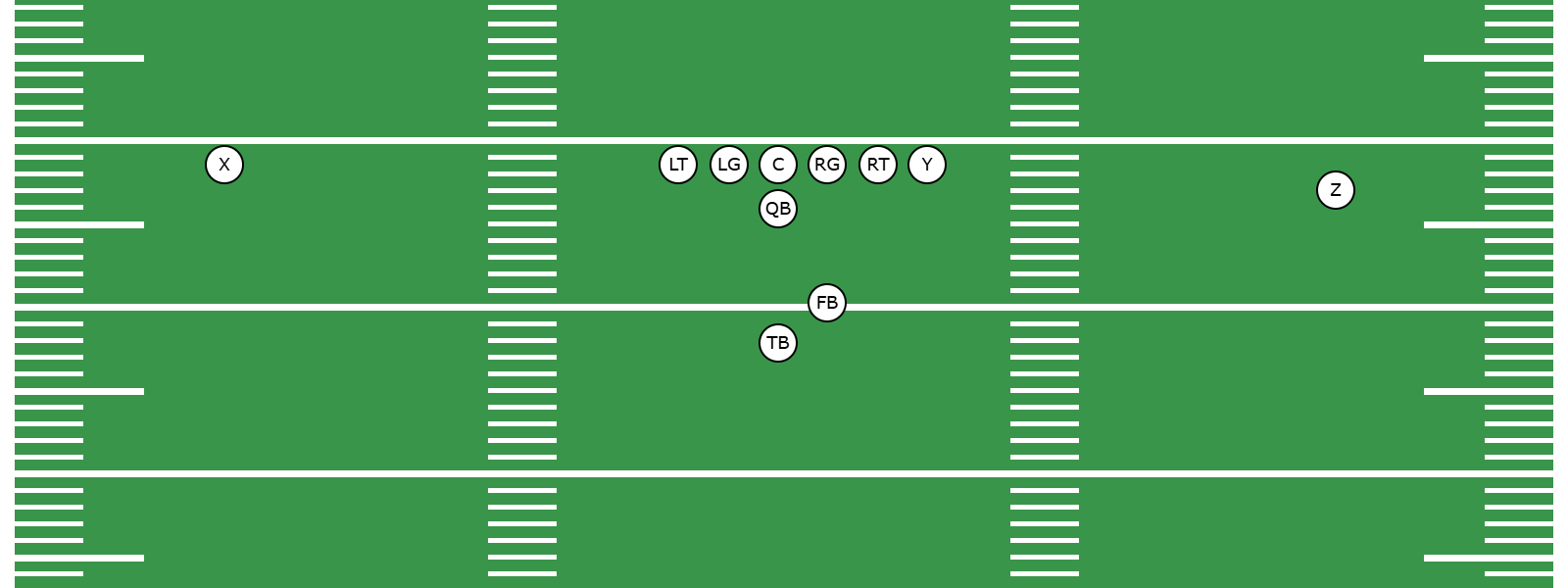
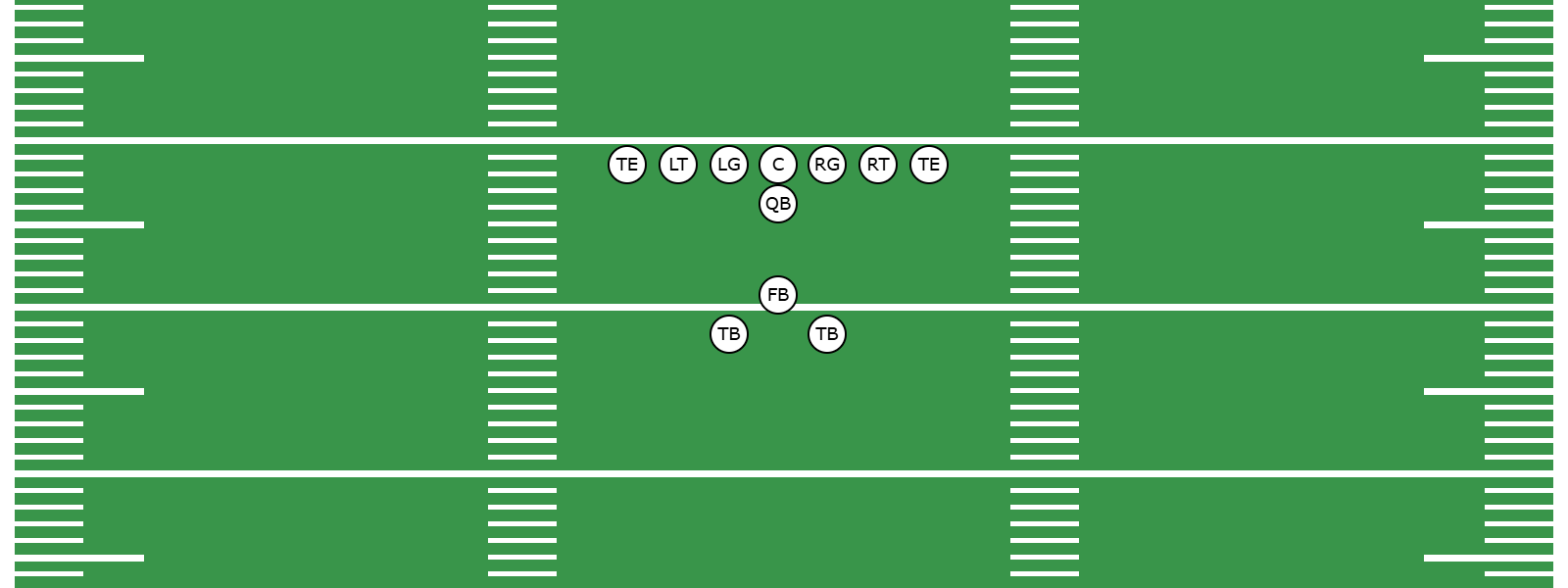
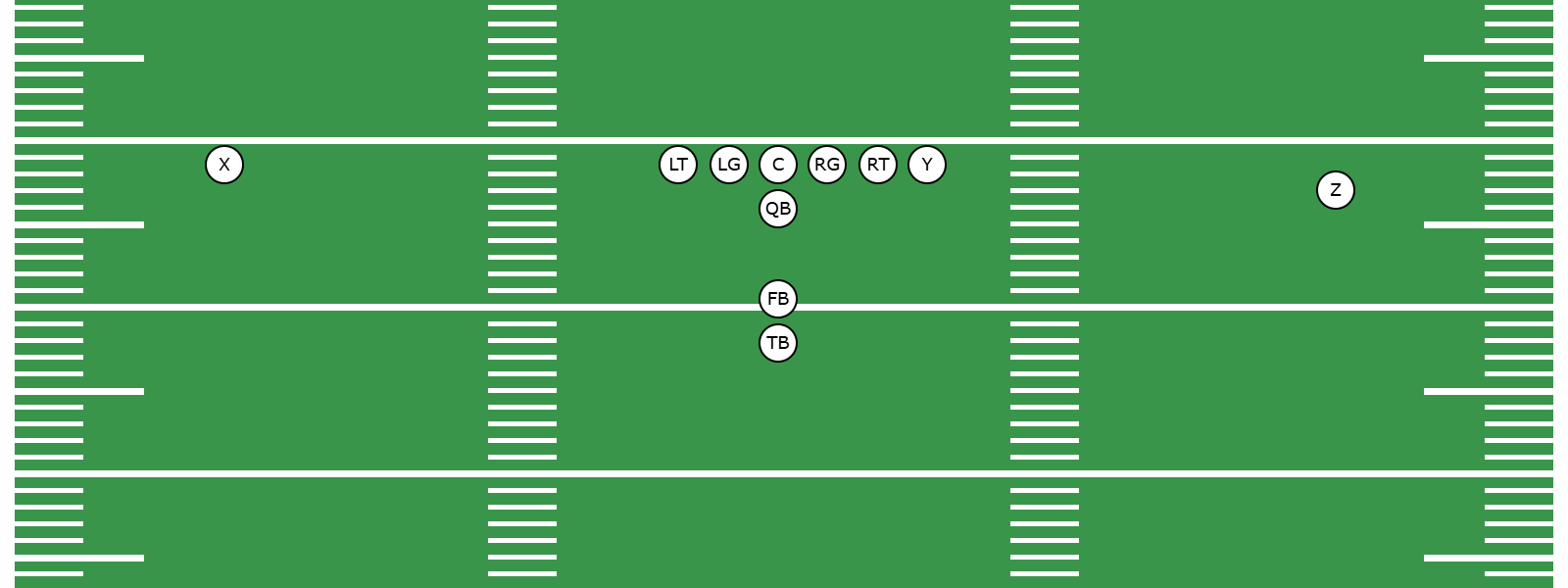
A traditional I Formation includes:
- Quarterback under center
- Fullback directly behind the quarterback
- Tailback directly behind the fullback
- Two wide receivers
- One tight end
- Five offensive linemen
This alignment creates a balanced offense capable of attacking inside, outside, and through play-action.
Try The Interactive Playbook Tool: I Formation
Draw your own I Formation play diagram right here using our embedded interactive play designer demo:
GET STARTED: To get started simply click on any of the player icons in the diagram.
Start drawing your own plays like this and build your playbook with CoachYouths Playbook Designer.
Strengths
- Powerful downhill running game.
- Excellent lead blocking from the fullback.
- Strong play-action opportunities.
- Easy to teach fundamental run concepts.
- Balanced personnel that keeps defenses honest.
Weaknesses
- Depends on having a capable fullback.
- Less effective in obvious passing situations.
- Can become predictable if the offense neglects the passing game.
- Uses fewer wide receiving threats than many spread formations.
Best Personnel
The I Formation works best with:
- A quarterback comfortable taking snaps under center.
- A physical fullback who enjoys blocking.
- A patient running back with good vision.
- Offensive linemen who can create movement at the point of attack.
Common Running Plays
The I Formation naturally supports several classic running plays:
- Iso – Uses the fullback to isolate and block a linebacker.
- Lead Dive – A quick downhill run attacking the interior.
- Toss Sweep – Gets the running back to the edge with momentum.
Common Passing Concepts
Because defenses often commit to stopping the run, the I Formation pairs well with:
- Play Action
- Bootleg
- Flood
- Tight end seam routes
Defensive Matchups
The I Formation performs well against aggressive defenses that overcommit to stopping the run. Sound, disciplined defenses that maintain gap integrity can reduce its effectiveness, making balanced play calling important.
Common Variations
Common variations include:
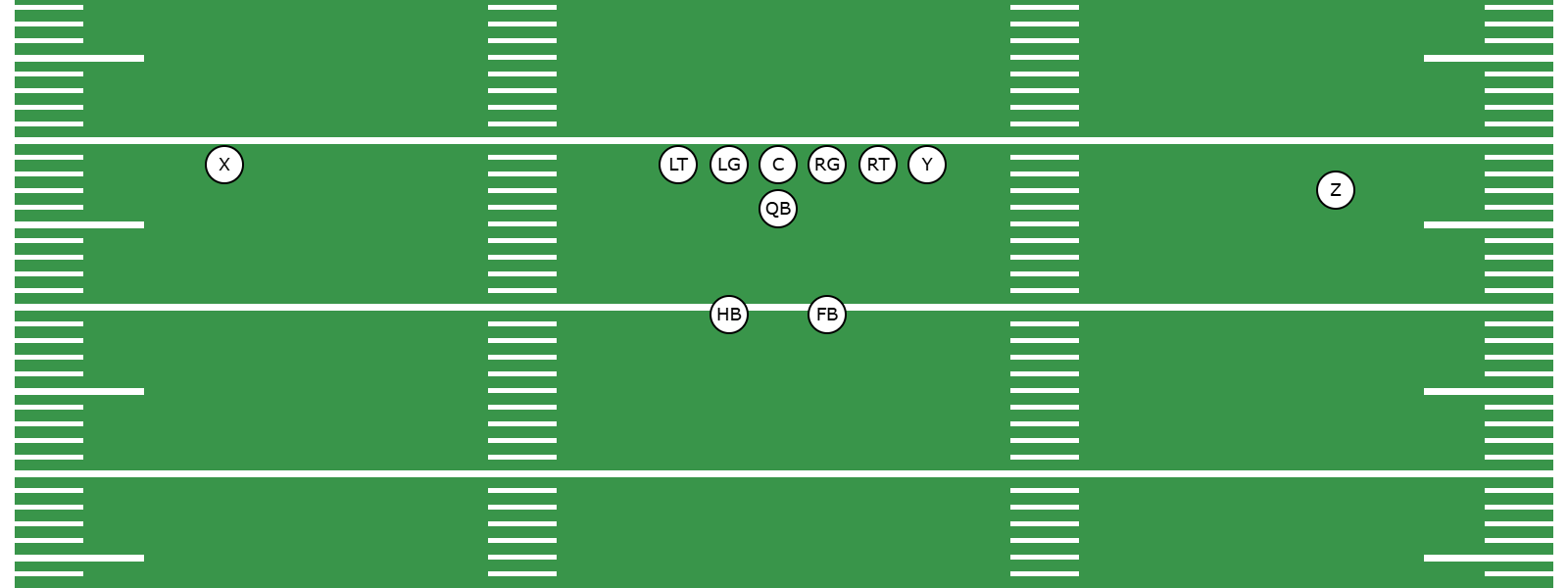
- Power I
- Maryland I
- Offset I
Each variation builds on the same core philosophy while emphasizing different personnel or blocking advantages.
Ideal Situations
The I Formation is an excellent choice for:
- Establishing a physical offensive identity.
- Controlling the clock.
- Youth teams learning offensive fundamentals.
- Setting up an effective play-action passing game.
When NOT to Use This Formation
You may prefer another formation if:
- Your roster lacks a true fullback.
- Your offense is built around four- and five-receiver passing concepts.
- You need maximum receiver spacing on every play.
Youth Coaching Tips
- Master one running play before adding several.
- Teach fullback blocking fundamentals early.
- Pair every run with a complementary play-action pass.
- Emphasize proper quarterback footwork under center.
Common Mistakes
- Becoming too run-heavy.
- Ignoring play-action opportunities.
- Installing too many plays before mastering the basics.
- Failing to use the fullback as a consistent lead blocker.
Frequently Asked Questions
Is the I Formation good for youth football?
Yes. Its straightforward alignment and emphasis on fundamentals make it an excellent choice for many youth teams.
Does every I Formation use a fullback?
Traditional I Formation offenses do. The fullback is one of the defining characteristics of the formation.
Is the I Formation still effective?
Yes. Teams that execute fundamentals well continue to use it successfully at every level of football.
Coach’s Checklist
Before choosing the I Formation, ask yourself:
- □ Do I have a dependable fullback?
- □ Can my offensive line create movement?
- □ Does my quarterback handle snaps under center confidently?
- □ Will I commit to play-action passing?
- □ Does this fit my team’s identity?
Key Takeaways
- The I Formation is a classic balanced offensive formation.
- It excels at downhill running and play-action passing.
- It remains one of the best traditional formations for teaching offensive fundamentals.
- Success depends on disciplined execution and complementary play calling.
The best way to truly understand a formation is to build it, experiment with it, and see how small alignment changes affect your offense. Open this formation in Football Playbook Designer to customize it for your own team.
Related Articles
Published by CoachYouths Staff on 07/13/2026
You are NOT currently logged in, you may login or signup for FREE at any time: