Creating a Positive Team Culture
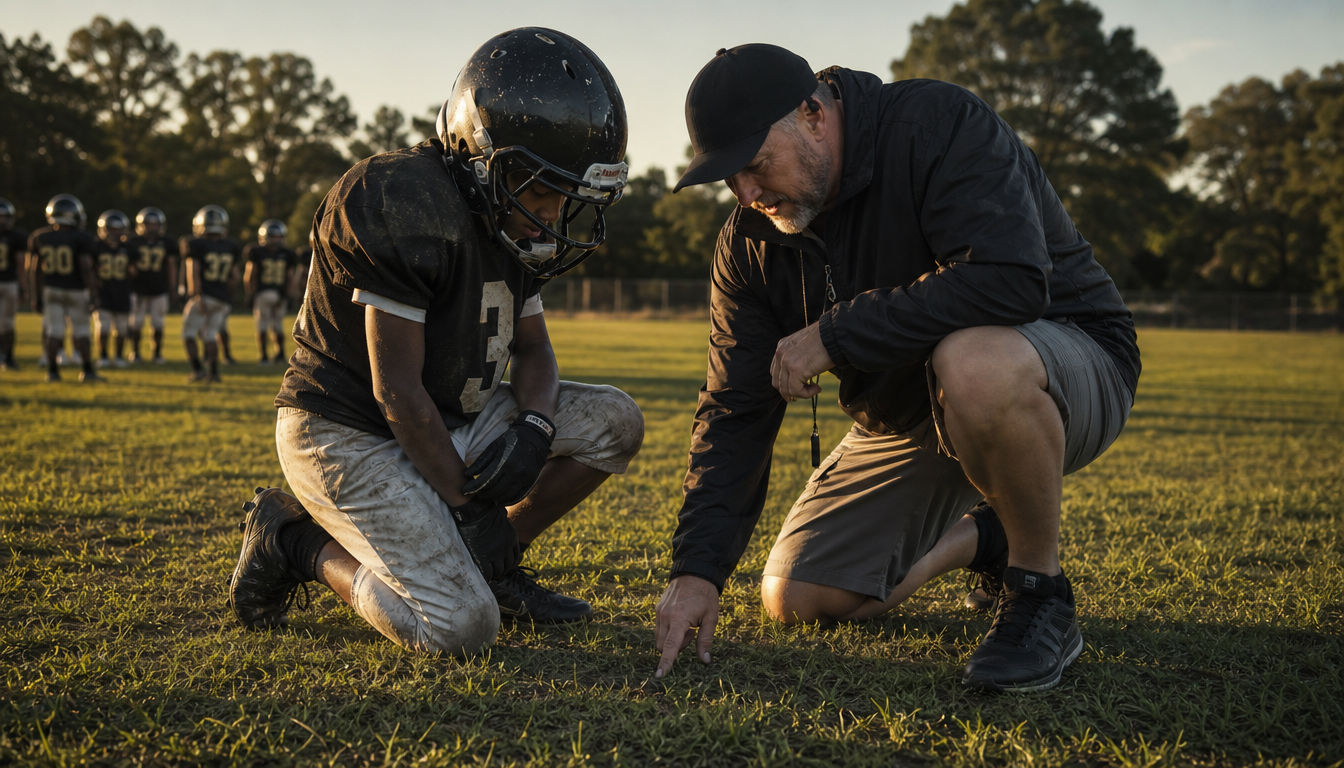
A positive team culture does not happen by accident. It is built through consistent leadership, clear expectations, and daily habits. Young athletes are heavily influenced by the environment their coaches create, and that environment often has a greater impact than the final score.
A team that trusts one another, works hard, and enjoys coming to practice will usually improve faster than a team built around winning alone.
What Is Team Culture?
Team culture is the collection of attitudes, behaviors, and standards that define your team.
It answers questions like:
- How do players treat each other?
- How do coaches respond to mistakes?
- What behaviors are encouraged?
- What does success look like?
Every team has a culture. The goal is to make yours intentional.
Set Expectations Early
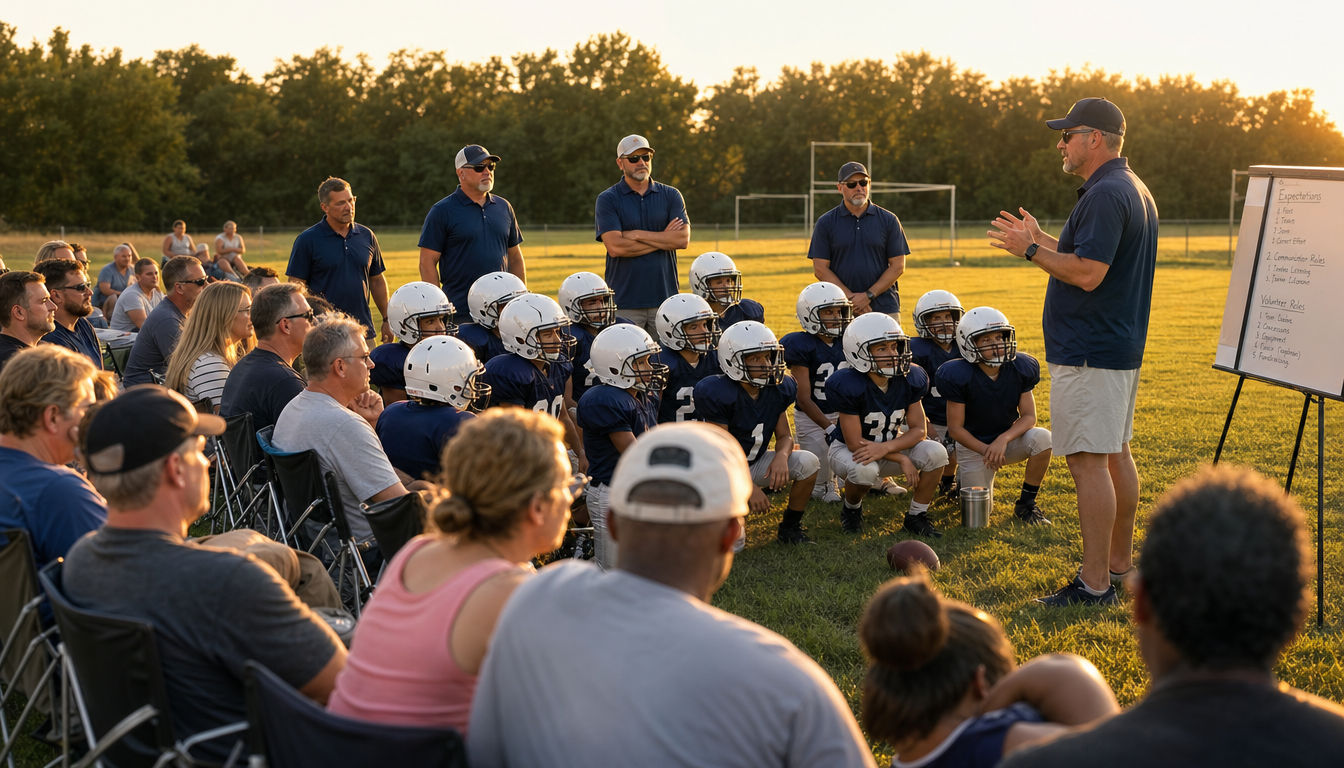
Introduce your team standards before the first practice.
Keep them simple:
- Respect everyone.
- Listen when coaches are speaking.
- Give your best effort.
- Encourage teammates.
- Take care of equipment.
- Be a good sport.
Repeat these expectations often until they become habits.
Lead by Example
Players notice everything.
If coaches remain calm, prepared, and respectful, players are more likely to behave the same way.
Demonstrate:
- Good sportsmanship.
- Positive communication.
- Patience.
- Accountability.
- Respect for officials and opponents.
Culture starts with the coaching staff.
Celebrate Effort
Young athletes cannot always control the outcome of a play, but they can control their effort.
Praise players for:
- Hustling.
- Helping teammates.
- Paying attention.
- Trying new skills.
- Improving technique.
Recognizing effort encourages continued growth.
Make Every Player Feel Important
Every player should believe they contribute to the team.
Learn names quickly, acknowledge improvement, and give each athlete opportunities to succeed.
Players who feel valued are more likely to stay engaged throughout the season.
Handle Mistakes the Right Way
Mistakes are part of learning football.
Instead of embarrassing a player:
- Explain what happened.
- Demonstrate the correct technique.
- Let the player try again.
- Praise improvement.
Correct with patience, not frustration.
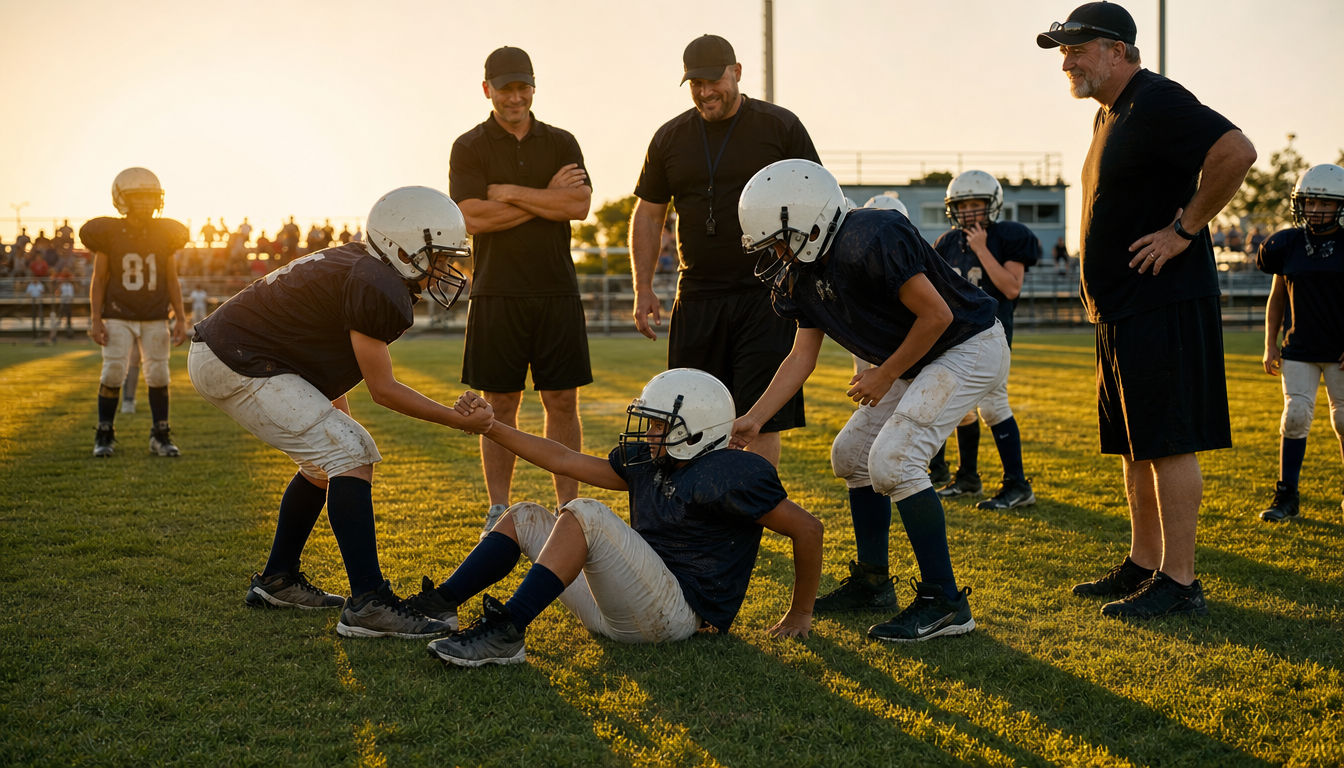
Encourage Teamwork
Create opportunities for players to support one another.
Ideas include:
- Pair experienced players with beginners.
- Celebrate team accomplishments.
- Rotate partners during drills.
- End practice with positive recognition.
Strong teams celebrate each other’s success.
Include Parents
Parents help shape team culture.
Communicate expectations clearly and encourage positive sideline behavior.
Ask parents to:
- Cheer for every player.
- Respect officials.
- Support coaches.
- Focus on effort instead of mistakes.
Consistency between coaches and parents benefits everyone.
Protect the Culture
Address negative behaviors quickly.
Do not ignore:
- Bullying.
- Disrespect.
- Poor sportsmanship.
- Teammates blaming one another.
Correcting small problems early prevents larger issues later.
Frequently Asked Questions
Can a positive culture improve performance?
Yes. Players who enjoy practice and trust their teammates often learn faster and play with more confidence.
What if one player has a bad attitude?
Address the behavior privately, explain expectations, and work with the player and parents if necessary.
How do I keep players motivated after a loss?
Focus on lessons learned, celebrate improvement, and prepare for the next practice with enthusiasm.
Key Takeaways
- Team culture begins with the coaching staff.
- Set simple expectations early.
- Celebrate effort and improvement.
- Correct mistakes with patience.
- Make every player feel valued.
- Encourage teamwork on and off the field.
- Partner with parents to reinforce positive behavior.
Related Articles
Published by CoachYouths Staff on 07/15/2026
You are NOT currently logged in, you may login or signup for FREE at any time: