How to Build Player Confidence
Confidence is one of the most valuable qualities a young football player can develop. Confident players communicate better, react faster, recover from mistakes more quickly, and are more willing to learn new skills. As a coach, you play a major role in helping players believe in themselves.
Understand Where Confidence Comes From
Real confidence is built through preparation and repeated success—not empty praise.
Players gain confidence when they:
- Learn a new skill.
- See measurable improvement.
- Know what is expected.
- Feel supported by coaches and teammates.
- Believe mistakes are part of learning.
Learn Every Player’s Starting Point
Every athlete begins the season at a different level.
Some players need help with fundamentals while others need encouragement to become leaders. Meet each player where they are and set realistic expectations for improvement.
Praise Effort and Progress
Instead of only praising results, recognize behaviors that players control.
Examples include:
- Hustling to the football.
- Listening during instruction.
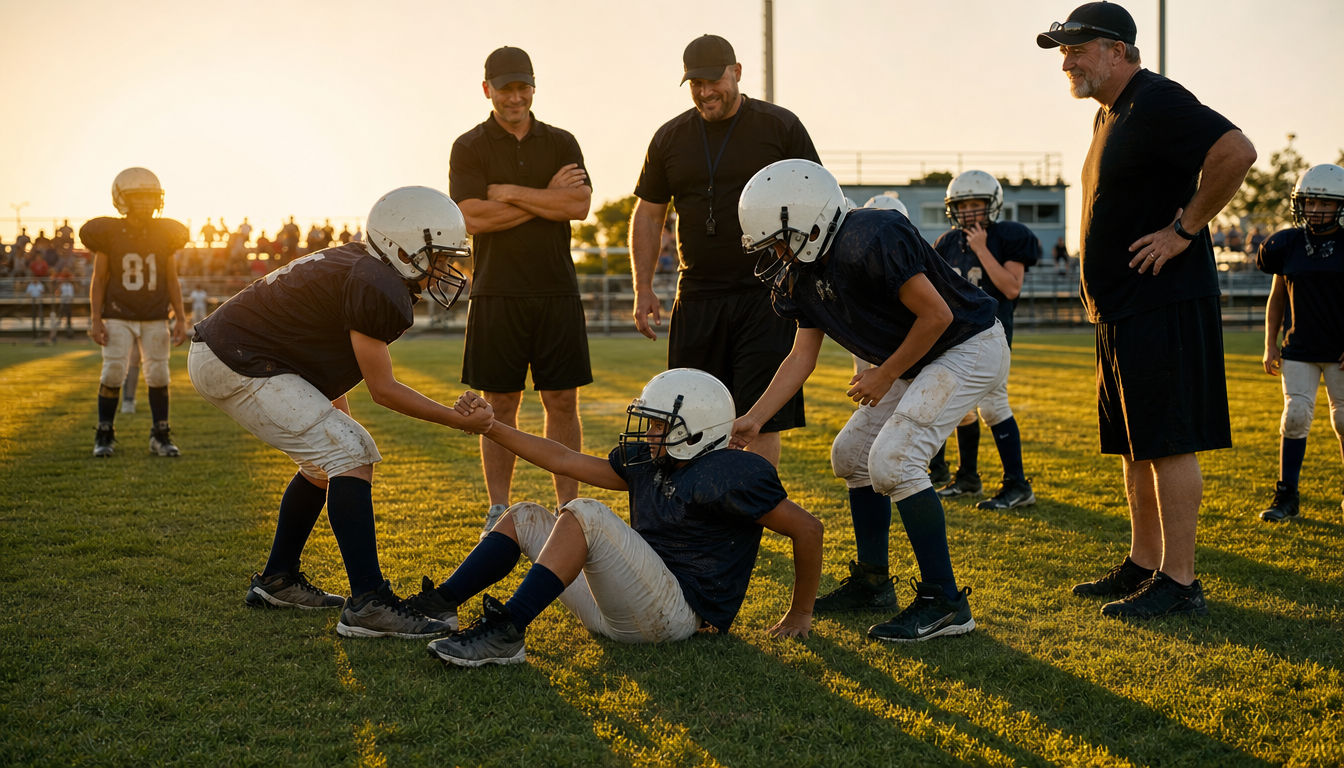
- Helping teammates.
- Practicing good technique.
- Giving maximum effort.
This teaches players that improvement is earned.
Set Achievable Goals
Large goals can feel overwhelming.
Break them into smaller milestones such as:
- Making a proper football stance.
- Completing five clean handoffs.
- Remembering an assignment.
- Making a safe tackle.
- Finishing every sprint.
Small victories build momentum.
Correct Mistakes Constructively
Mistakes should become teaching opportunities.
A simple coaching approach is:
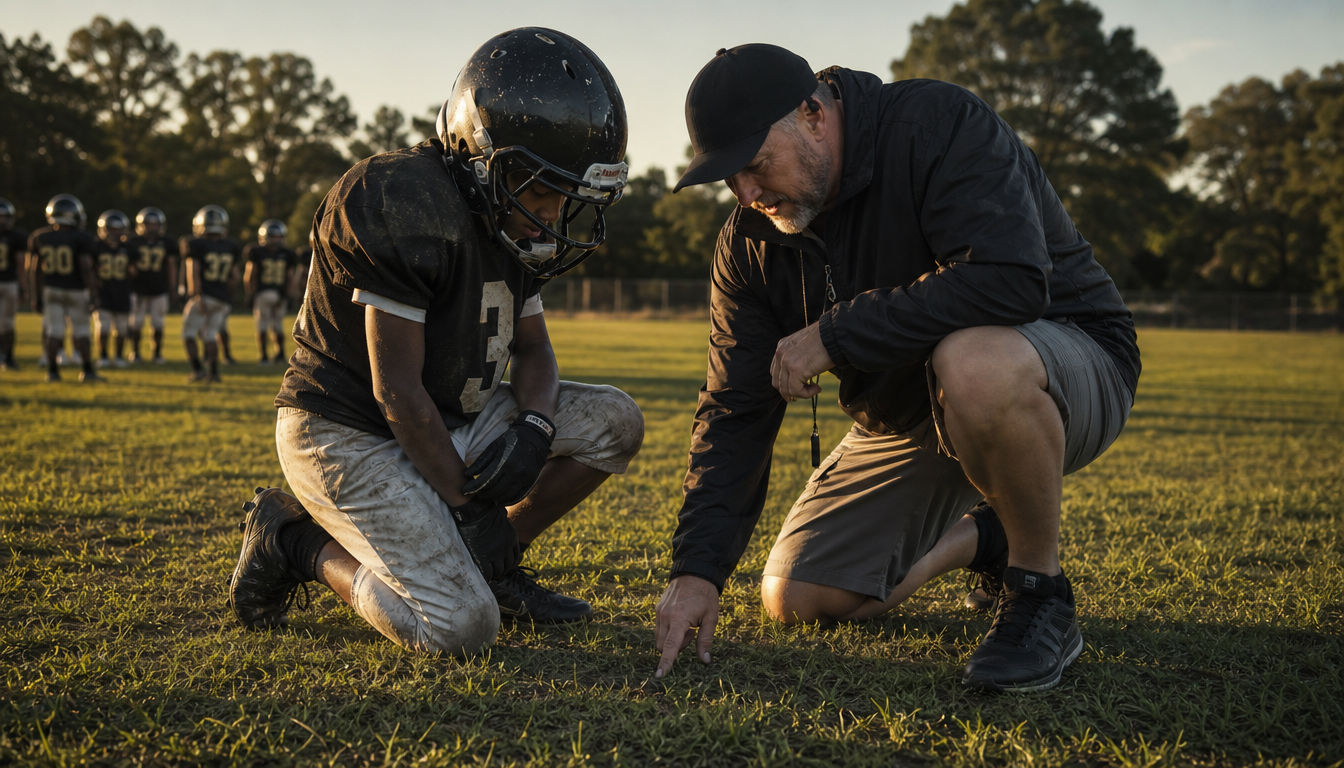
- Explain what happened.
- Demonstrate the correct technique.
- Let the player try again.
- Recognize improvement.
Avoid criticism that attacks the player rather than the behavior.
Give Every Player Opportunities to Succeed
Design drills that allow players to experience success while still being challenged.
As confidence grows, gradually increase the difficulty.
Encourage Leadership
Leadership is not limited to team captains.
Encourage players to:
- Help a teammate.
- Demonstrate a drill.
- Lead stretching.
- Celebrate others.
- Communicate on the field.
Leadership builds confidence while strengthening team culture.
Keep Perspective After Mistakes
Even experienced players make mistakes every game.
Teach players to respond by:
- Taking a deep breath.
- Learning from the play.
- Focusing on the next opportunity.
- Continuing to compete.
Dwelling on mistakes rarely improves future performance.
Partner with Parents
Parents can reinforce confidence at home.
Encourage them to ask questions like:
- What did you learn today?
- What are you improving?
- What was your favorite part of practice?
These conversations shift attention toward growth instead of only game results.
Frequently Asked Questions
Can too much praise hurt development?
Yes. Praise should be specific and connected to effort, improvement, or good decisions rather than given automatically.
How do I help a player who is afraid to make mistakes?
Create a safe learning environment where mistakes are expected and used as teaching opportunities.
Can confidence be taught?
Absolutely. Confidence grows through preparation, repetition, encouragement, and successful experiences.
Key Takeaways
- Build confidence through preparation and repetition.
- Recognize effort as well as results.
- Set achievable goals.
- Correct mistakes with patience.
- Give every player opportunities to succeed.
- Encourage leadership and teamwork.
- Work with parents to reinforce positive growth.
Related Articles
Published by CoachYouths Staff on 07/15/2026
You are NOT currently logged in, you may login or signup for FREE at any time: