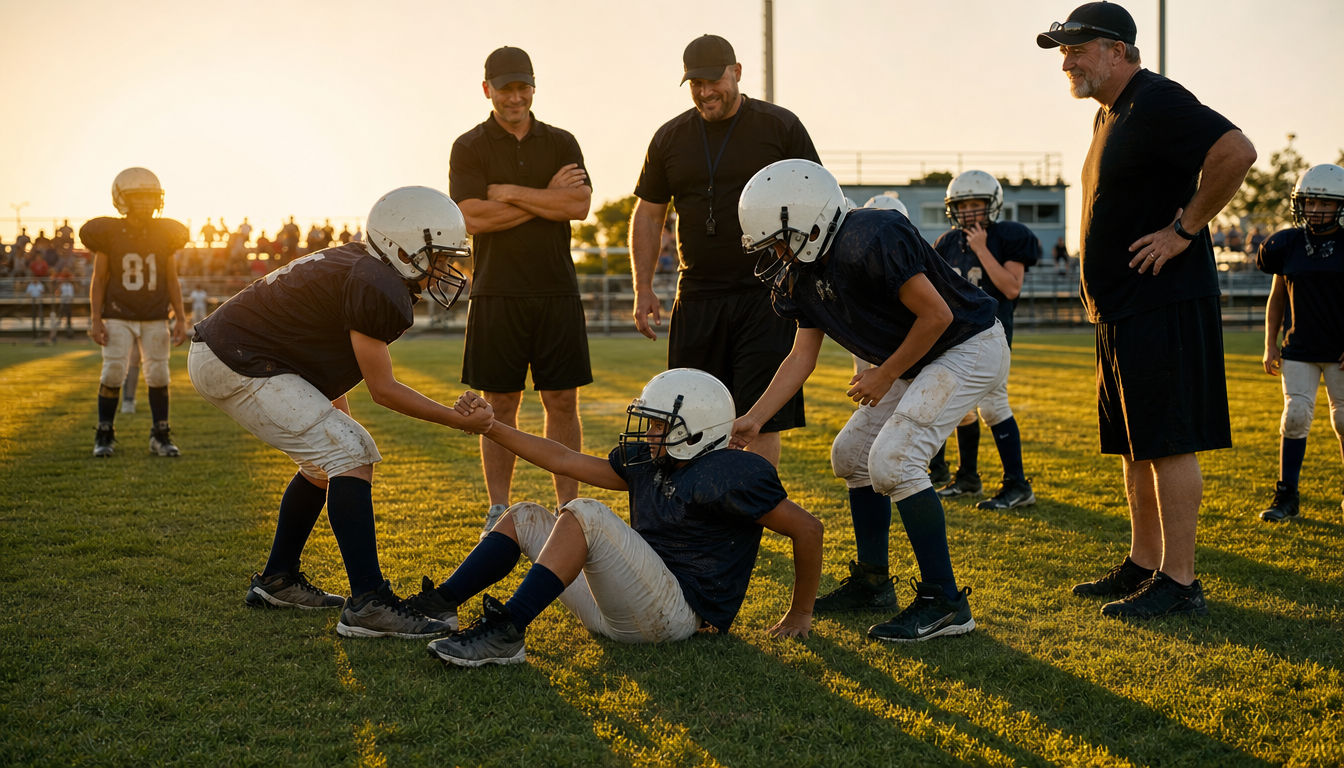
Practice Organization Tips That Save Time
Youth football practices often feel too short, especially for volunteer coaches who only have a few evenings each week with their team. While most coaches look for ways to squeeze more drills into practice, the biggest improvements usually come from eliminating wasted time.
Small organizational changes can create dozens of extra quality repetitions over the course of a season.
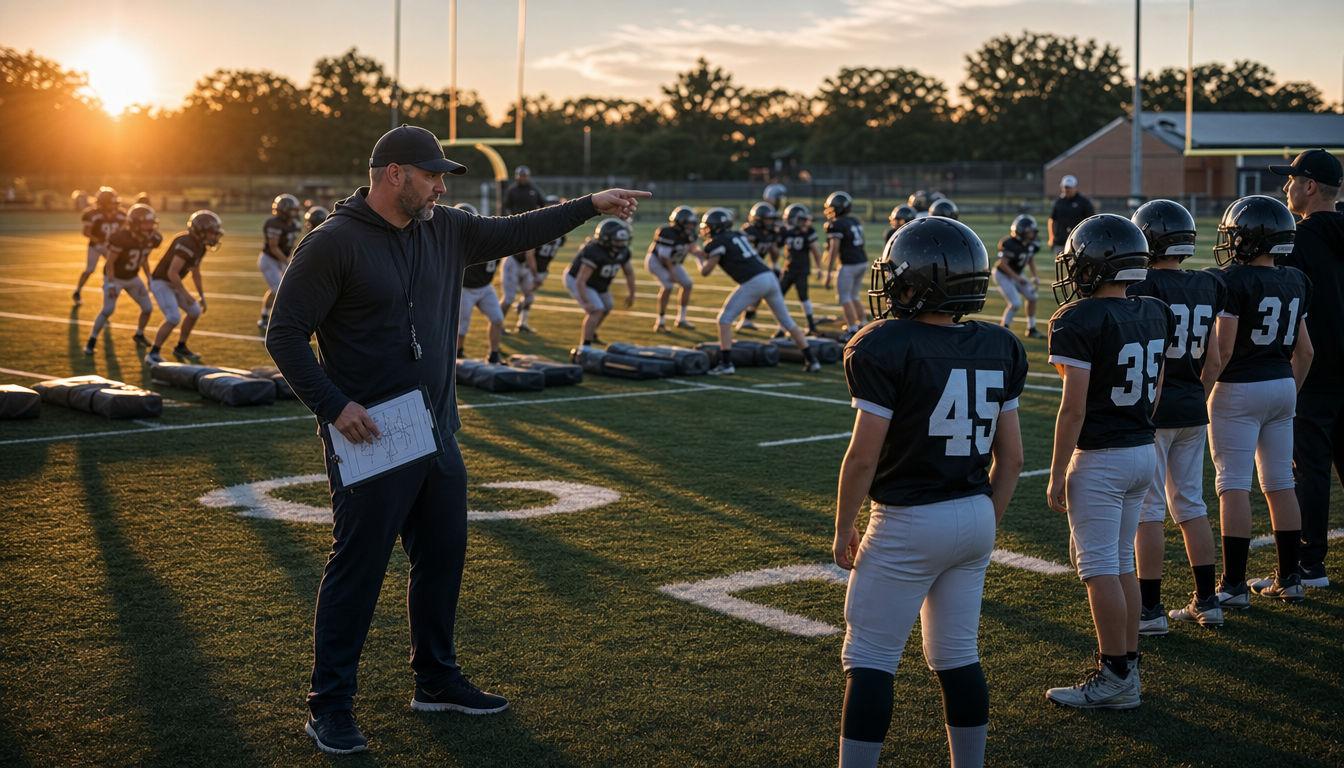
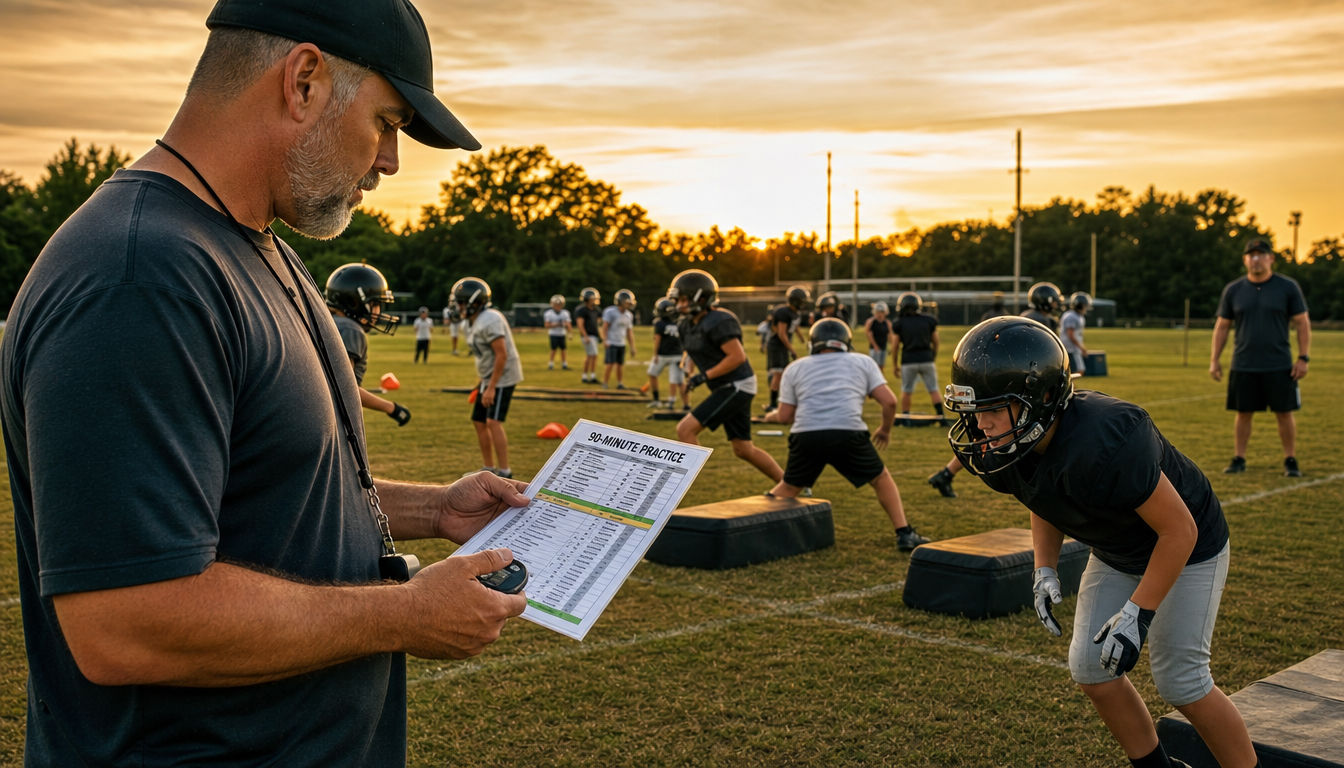
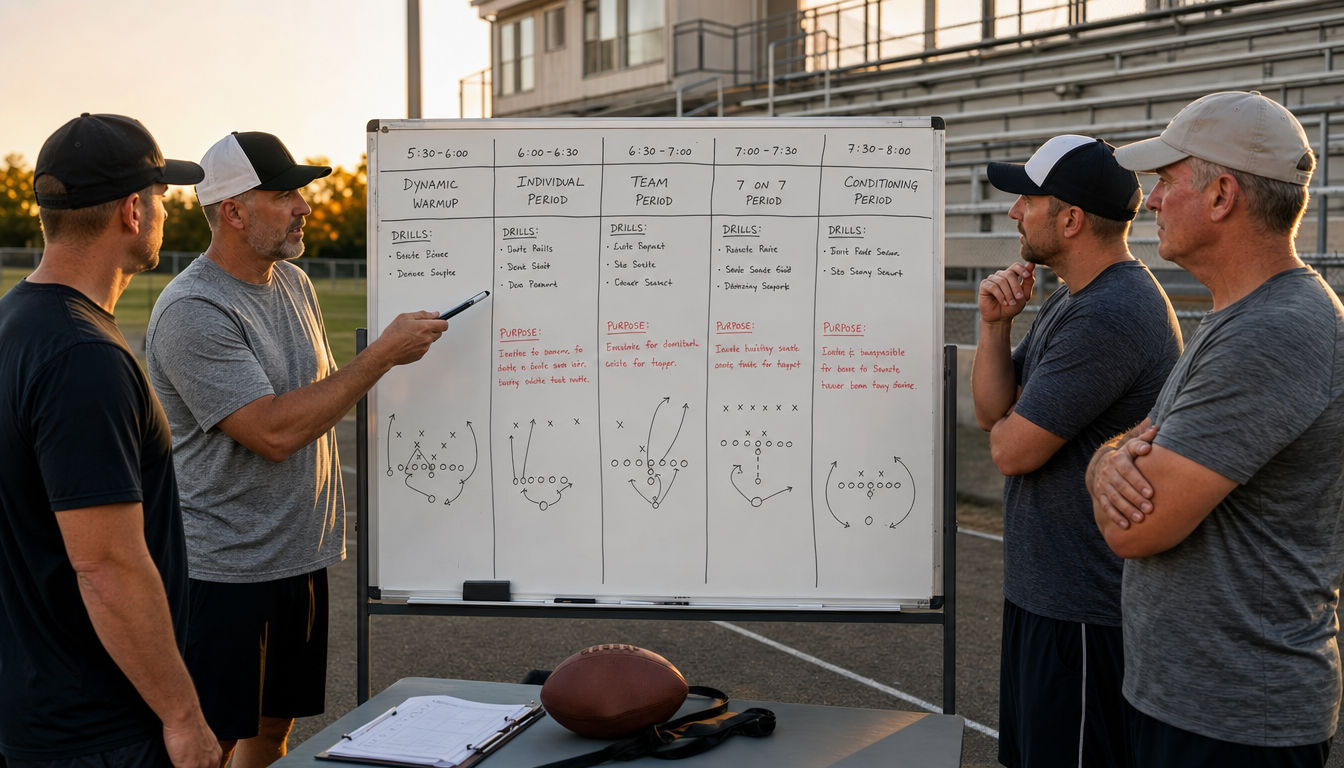
Arrive with a Written Plan
Never begin practice wondering what comes next.
Before leaving home, know:
- The practice objective.
- The order of every drill.
- Approximate time for each activity.
- Equipment you’ll need.
- Which coach is responsible for each station.
Good organization reduces stress for coaches and players alike.
Set Up Before Players Arrive
Whenever possible, place cones, bags, footballs, and other equipment on the field before practice begins.
This allows players to move directly from one activity to the next without waiting for coaches to prepare the next drill.
Assign Responsibilities
If you have assistant coaches, give each one a clear role.
Examples include:
- Leading warm-ups.
- Coaching offensive positions.
- Running tackling stations.
- Managing equipment.
- Tracking time.
When everyone knows their responsibilities, practice flows more smoothly.
Minimize Transition Time
The time between drills is often where practices lose momentum.
To speed up transitions:
- Explain the next drill before moving.
- Keep stations close together.
- Rotate groups in the same direction.
- Use a whistle or consistent verbal cue.
Saving even 30 seconds between activities adds valuable coaching time.
Keep Equipment Simple
You do not need dozens of training aids to run an excellent practice.
A few essentials often cover most needs:
- Footballs.
- Cones.
- Blocking bags.
- Agility ladders, if available.
- Hand shields.
Simple setups are easier to organize and adjust.
Use Stations Wisely
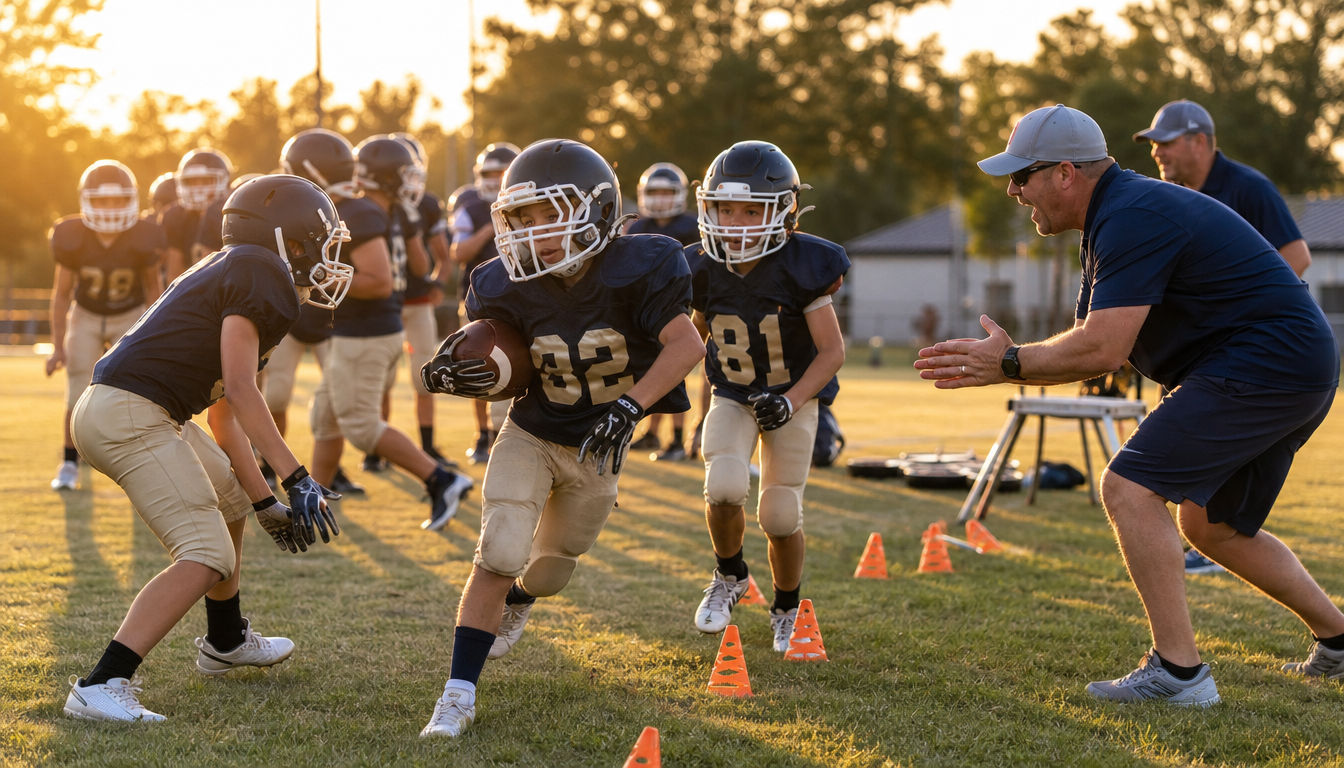
Station-based practices increase repetitions.
For example:
- Offensive line station.
- Ball security station.
- Tackling fundamentals.
- Quarterback and center exchange.
After several minutes, rotate groups and repeat.
Players stay active while coaches focus on specific skills.
Avoid Long Team Meetings
Team meetings should communicate information—not consume practice time.
Keep meetings:
- Brief.
- Positive.
- Focused.
Players came to play football, not stand in a huddle.
Review After Practice
Spend a few minutes after every practice asking:
- What slowed us down?
- Which drill worked best?
- Where did players spend too much time waiting?
- What can we improve next practice?
Small adjustments each week create significant improvements over an entire season.
Frequently Asked Questions
Should every practice be planned in advance?
Yes. A written plan helps coaches stay organized and adapt more easily when changes are necessary.
How many stations should I use?
Use only as many stations as you have coaches to supervise effectively.
What wastes the most practice time?
Long transitions, lengthy explanations, and players standing in line are usually the biggest time wasters.
Key Takeaways
- Plan every practice before arriving.
- Prepare equipment in advance.
- Give assistant coaches clear responsibilities.
- Reduce transition time.
- Use stations to increase repetitions.
- Continuously improve your practice organization.
Related Articles
Published by CoachYouths Staff on 07/15/2026
You are NOT currently logged in, you may login or signup for FREE at any time: