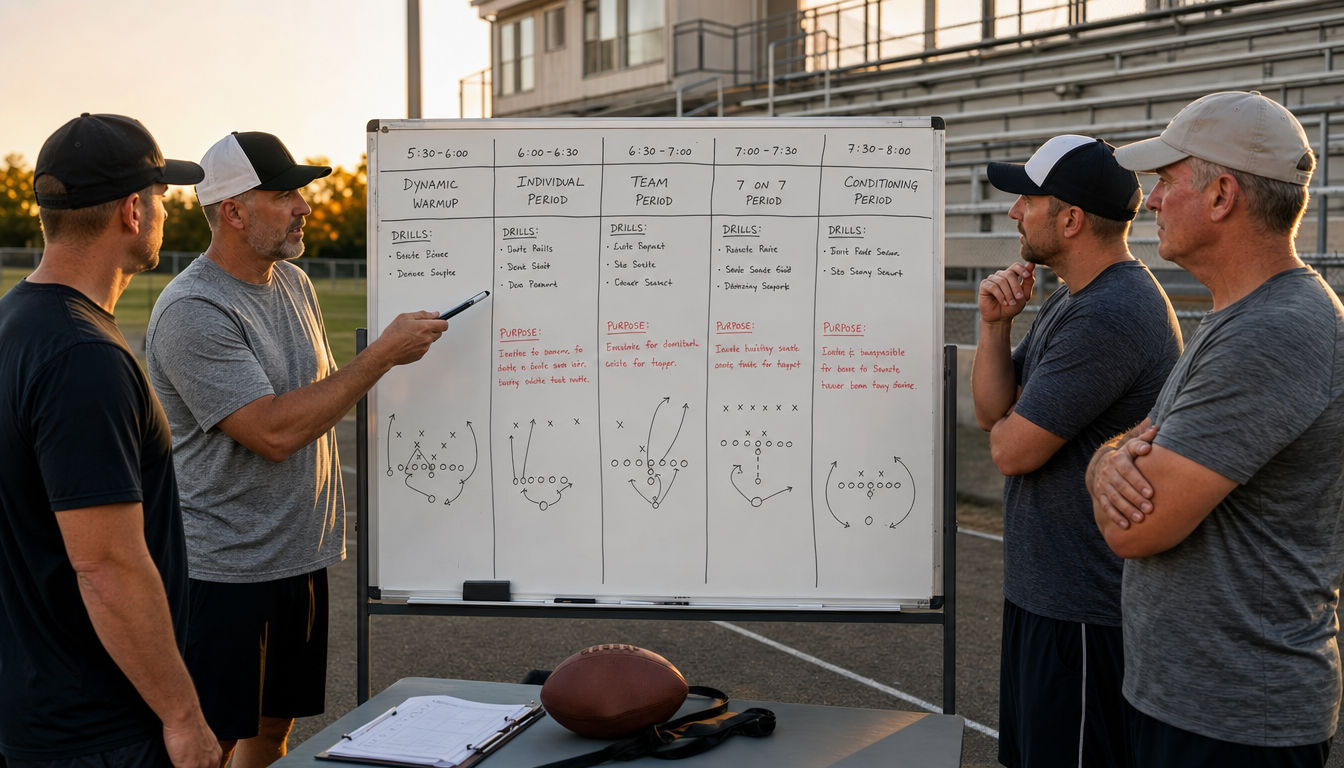
Conditioning Without Wasting Practice Time
Every volunteer coach wants players who can finish games with energy, but many teams spend too much valuable practice time running laps that have little connection to football. Youth players become better football players by playing football, not by spending large portions of practice doing generic conditioning.
The most effective conditioning develops football skills while preparing players for the physical demands of the game.
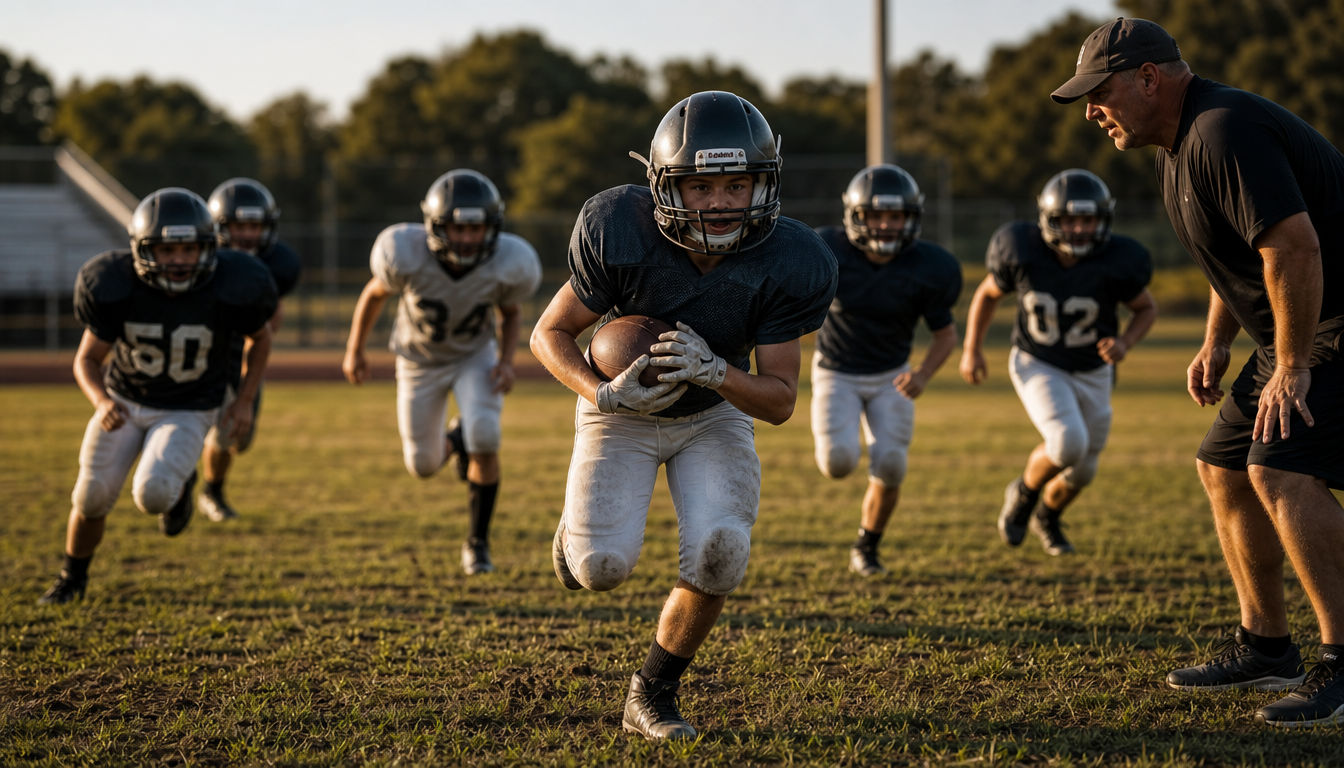
Understand the Goal
Conditioning should prepare players to:
- Sustain effort throughout a game.
- Recover quickly between plays.
- Maintain good technique when tired.
- Stay mentally focused late in practice.
- Reduce fatigue-related mistakes.
Running until players are exhausted should never be the objective.
Build Conditioning into Drills
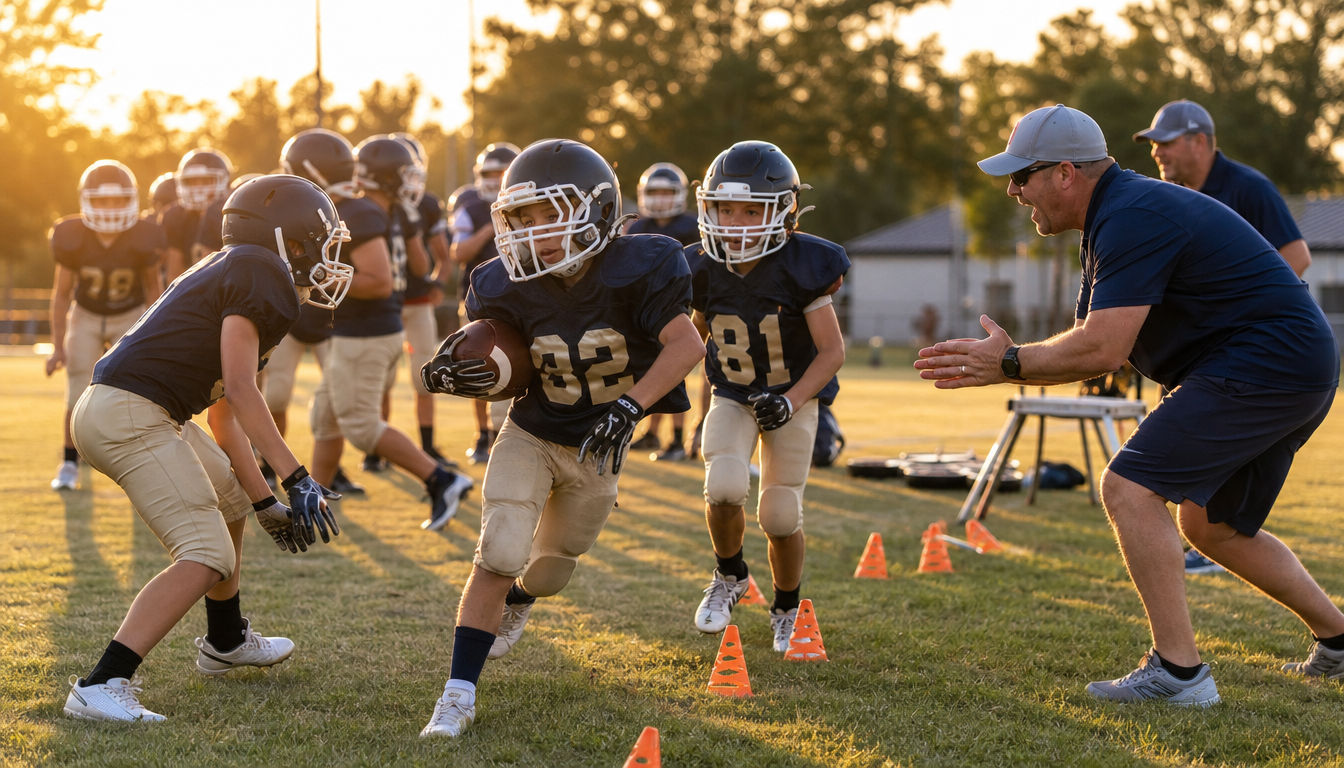
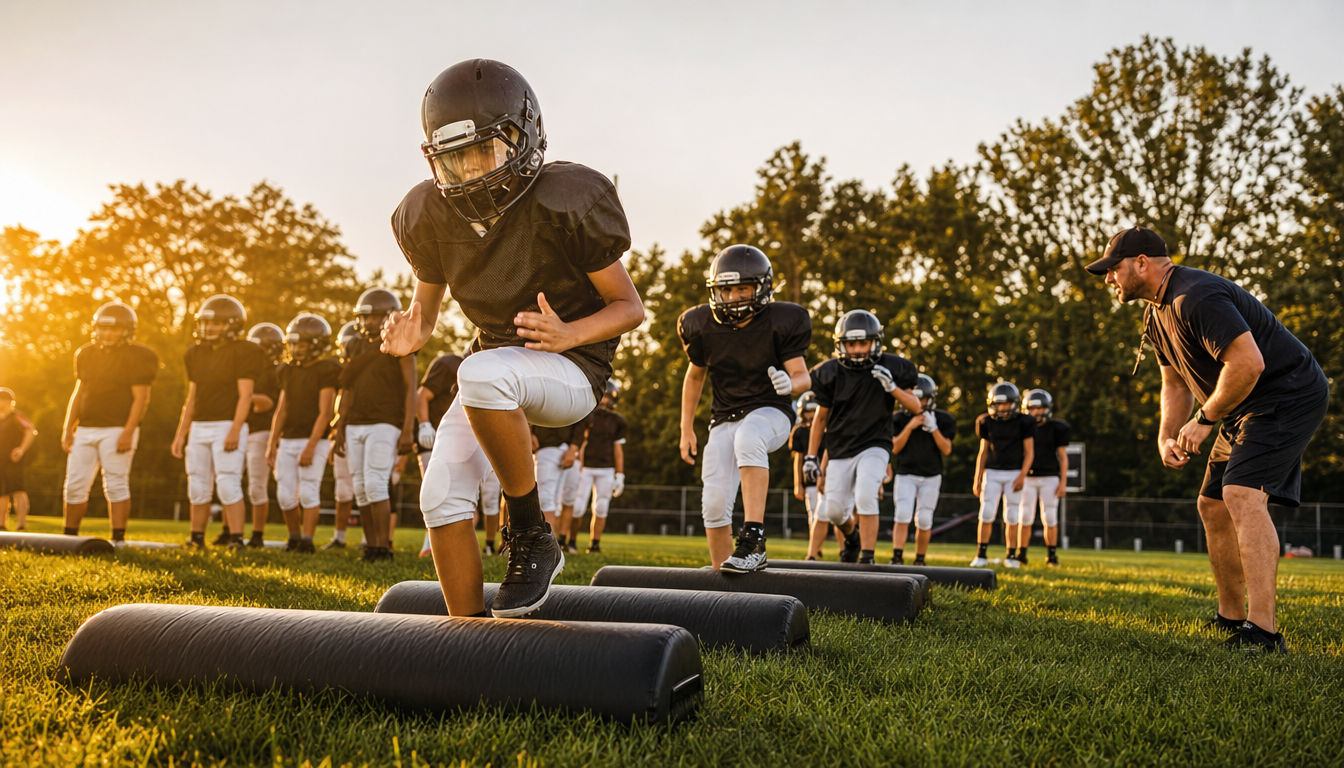
Many football drills naturally improve conditioning.
Examples include:
- Pursuit drills.
- Blocking circuits.
- Ball security drills.
- Group tackling drills.
- Team offense.
- Team defense.
Players receive football repetitions while improving fitness at the same time.
Keep Players Moving
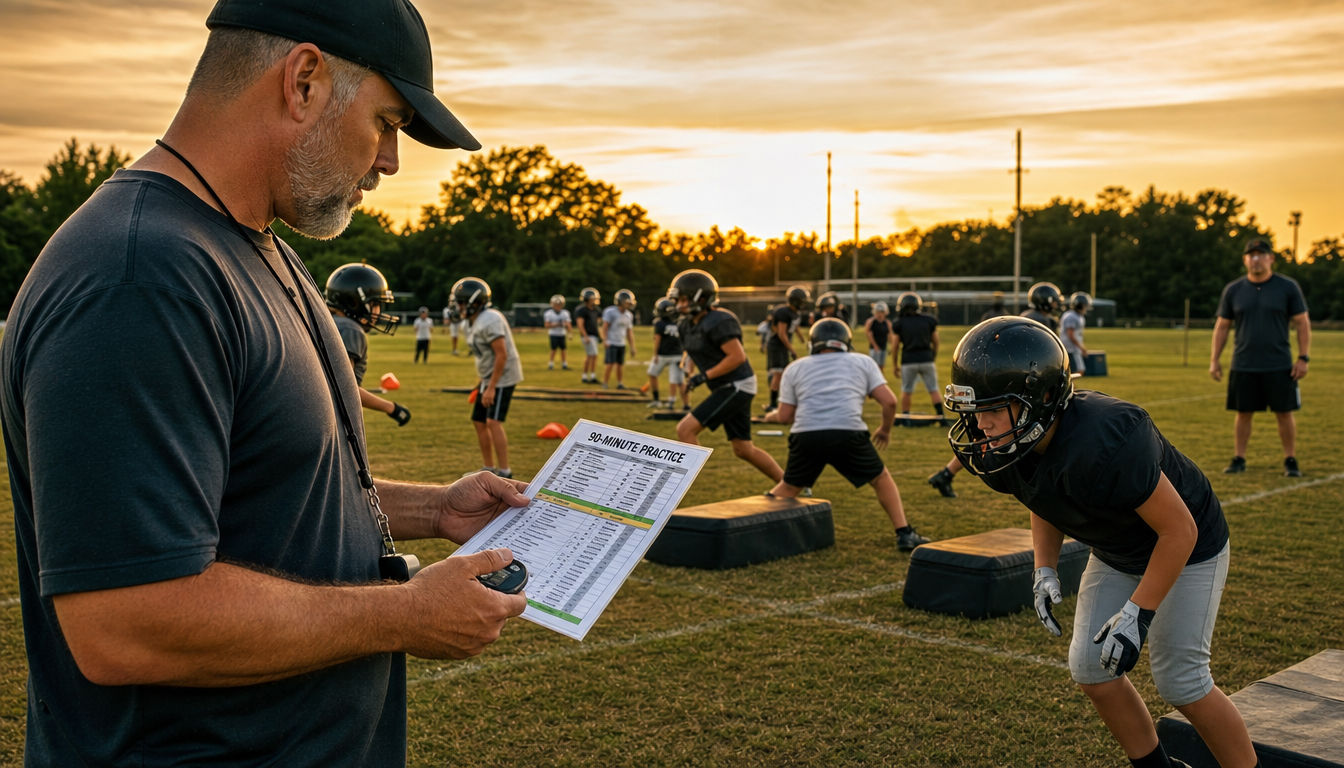
The best conditioning happens when players spend less time standing and more time participating.
Increase activity by:
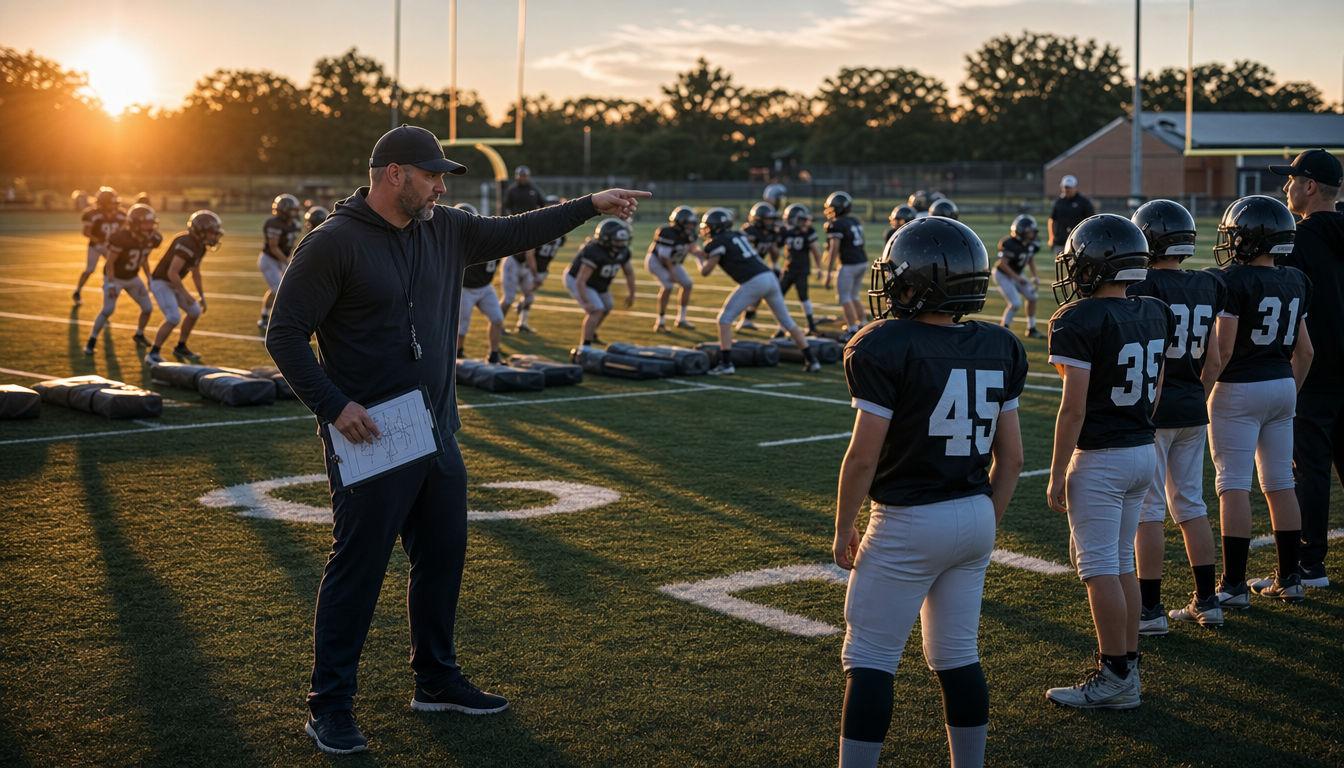
- Creating multiple stations.
- Rotating groups quickly.
- Using short instruction periods.
- Keeping equipment organized.
More movement means more productive conditioning.
Match Conditioning to Age
Younger players do not need advanced conditioning programs.
Instead, focus on:
- Proper movement.
- Coordination.
- Agility.
- Balance.
- Short bursts of effort.
As players mature, intensity can gradually increase while remaining age appropriate.
Avoid Conditioning as Punishment
Using conditioning to punish mistakes often creates negative feelings about practice.
Instead, make conditioning purposeful and connected to football.
Players should understand that conditioning helps them become better teammates, not that it is a consequence for making errors.
Finish with Quality, Not Exhaustion
A productive practice should leave players challenged but still able to perform good technique.
If players become too fatigued to execute safely, learning stops.
End practice while players are still capable of giving quality effort.
Frequently Asked Questions
Should youth football players run long distances?
In most cases, no. Football is built around short, explosive efforts with brief recovery periods.
Is conditioning important?
Yes, but it should support football performance rather than replace football instruction.
How often should we condition?
Most teams build enough conditioning into well-organized practices. Additional conditioning should be purposeful and age appropriate.
Key Takeaways
- Build conditioning into football drills whenever possible.
- Keep players moving throughout practice.
- Focus on quality effort instead of exhaustion.
- Match conditioning to the age of your players.
- Never use conditioning simply as punishment.
Related Articles
Published by CoachYouths Staff on 07/15/2026
You are NOT currently logged in, you may login or signup for FREE at any time: