Practice Planning by Age Group
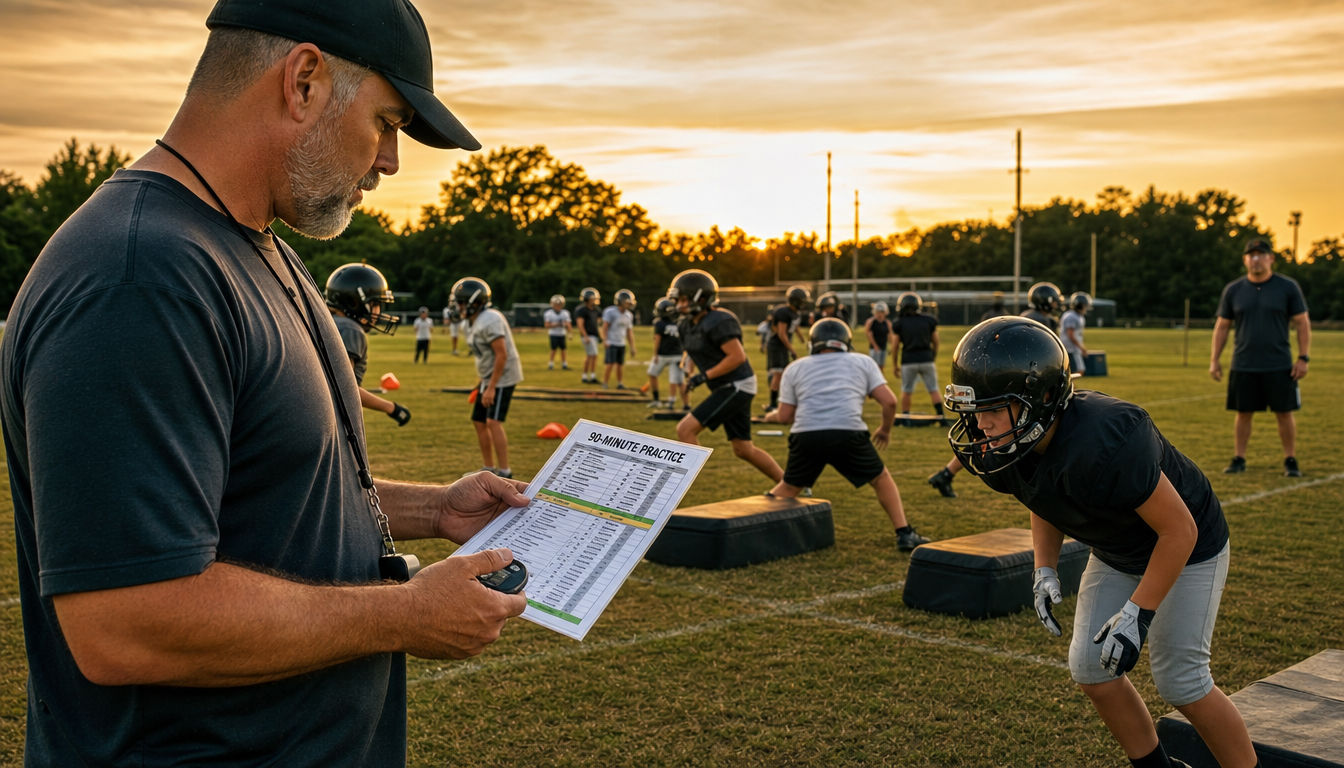
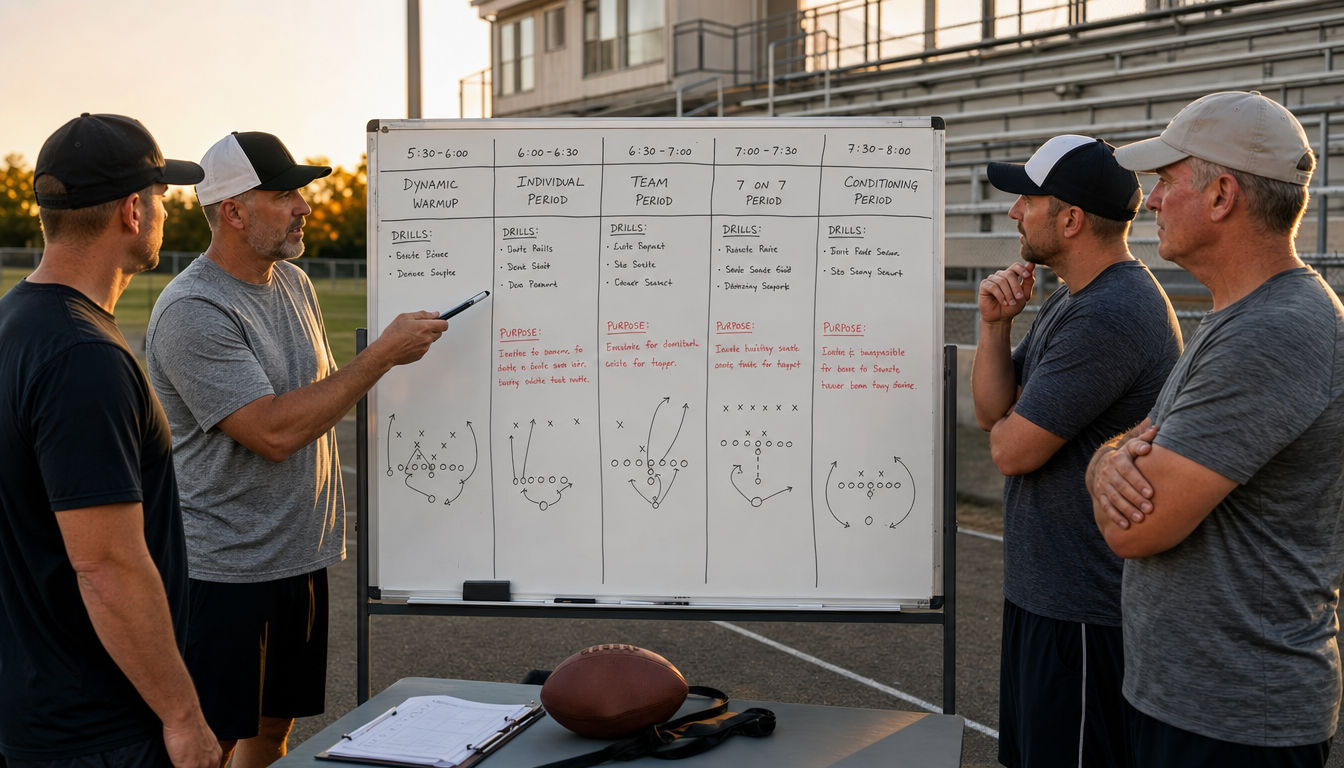
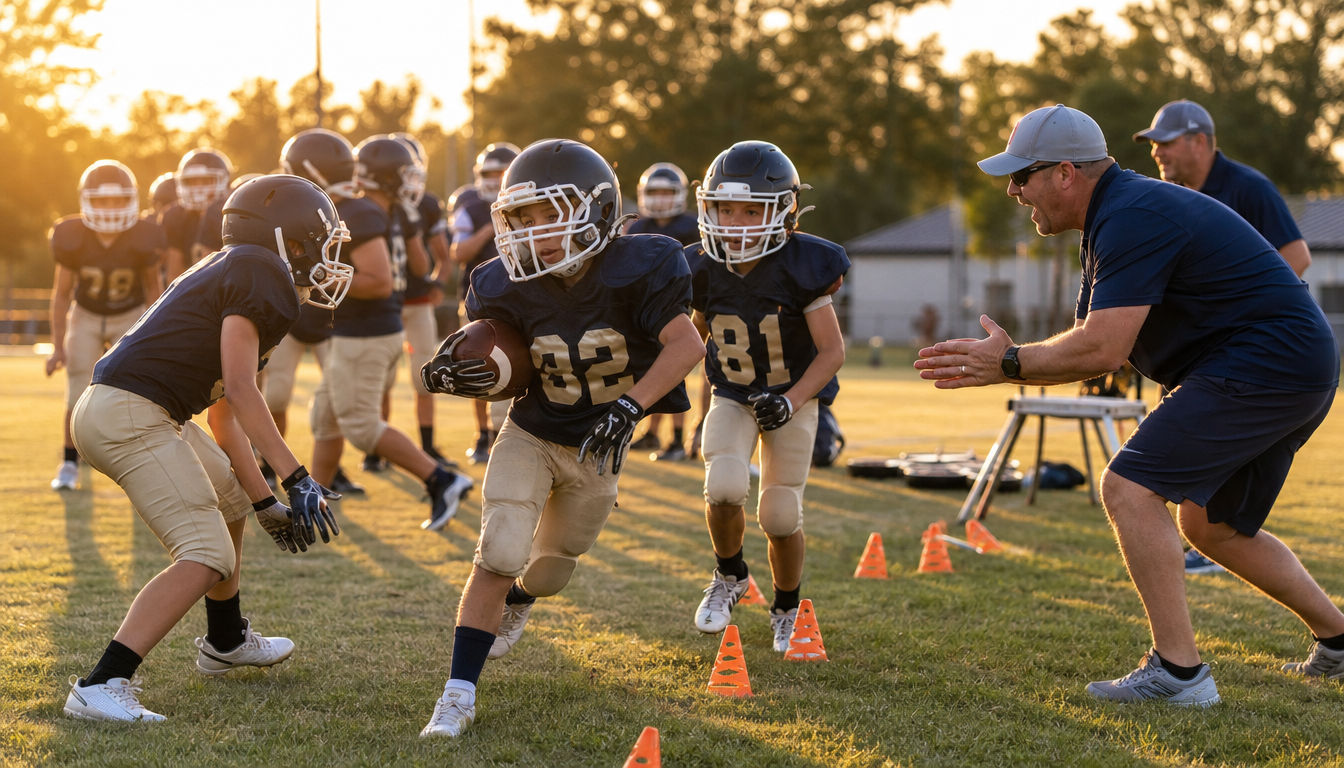
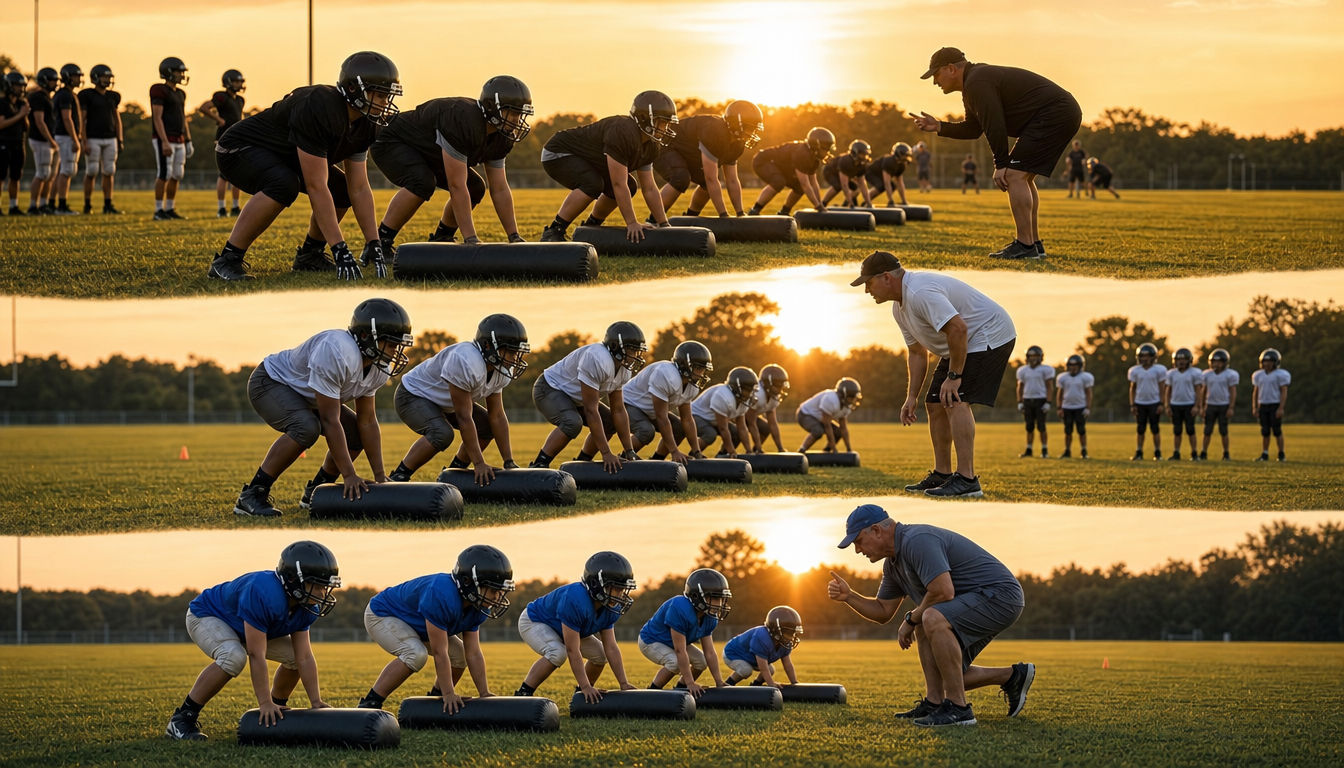
A practice plan that works for 14-year-olds will not necessarily work for 6-year-olds. As players grow physically and mentally, their attention span, coordination, and ability to understand football concepts change. The best volunteer coaches adjust their practices to match the age and experience of their players rather than expecting every team to train the same way.
Focus on Development, Not Complexity
Regardless of age, every practice should help players:
- Learn fundamentals.
- Build confidence.
- Stay active.
- Have fun.
- Improve teamwork.
The difference is how those goals are accomplished.
6U and 8U
At the youngest levels, simplicity wins.
Prioritize:
- Athletic movement.
- Ball security.
- Basic stance.
- Listening skills.
- Short, energetic drills.
Keep explanations brief and change activities frequently to maintain attention.
10U
Players are ready to understand simple football concepts.
Begin introducing:
- Basic offensive formations.
- Defensive alignment.
- Position responsibilities.
- Simple game situations.
Continue spending most of practice on fundamentals.
12U
Players generally handle more structure and repetition.
Increase emphasis on:
- Execution.
- Communication.
- Team periods.
- Reading assignments.
- Situational football.
Add complexity gradually while continuing to reinforce technique.
14U
Older youth players can manage longer teaching periods and more detailed instruction.
Practice can include:
- Film review, if available.
- Advanced fundamentals.
- Clock management.
- Special situations.
- Expanded playbooks.
Even at this level, fundamentals remain the foundation of successful football.
Adjust to Your Team
Age is only one factor.
Consider:
- Previous football experience.
- Team maturity.
- Practice attendance.
- Skill level.
- League rules.
Some younger teams advance quickly, while some older teams benefit from slowing down and reviewing the basics.
Frequently Asked Questions
Should every age group practice for the same amount of time?
No. Follow your league’s guidelines and adjust the pace and content to fit your players’ attention span and physical development.
When should I introduce more advanced concepts?
Only after players consistently demonstrate the fundamentals required to execute them successfully.
What is the biggest mistake coaches make?
Expecting players to learn at the same pace regardless of age or experience.
Key Takeaways
- Match practice to the age and maturity of your players.
- Build on fundamentals every season.
- Increase complexity gradually.
- Keep younger players active and engaged.
- Let player development determine the pace of instruction.
Related Articles
Published by CoachYouths Staff on 07/15/2026
You are NOT currently logged in, you may login or signup for FREE at any time: