How to Stop the Run
Most youth football offenses rely on the running game. If your defense consistently stops the run, you force opponents into more difficult situations and give your team a much better chance to win. Stopping the run is not about guessing correctly or calling the perfect defense. It is about disciplined execution on every snap.
The best run defenses play fundamentally sound football from the first whistle to the last.
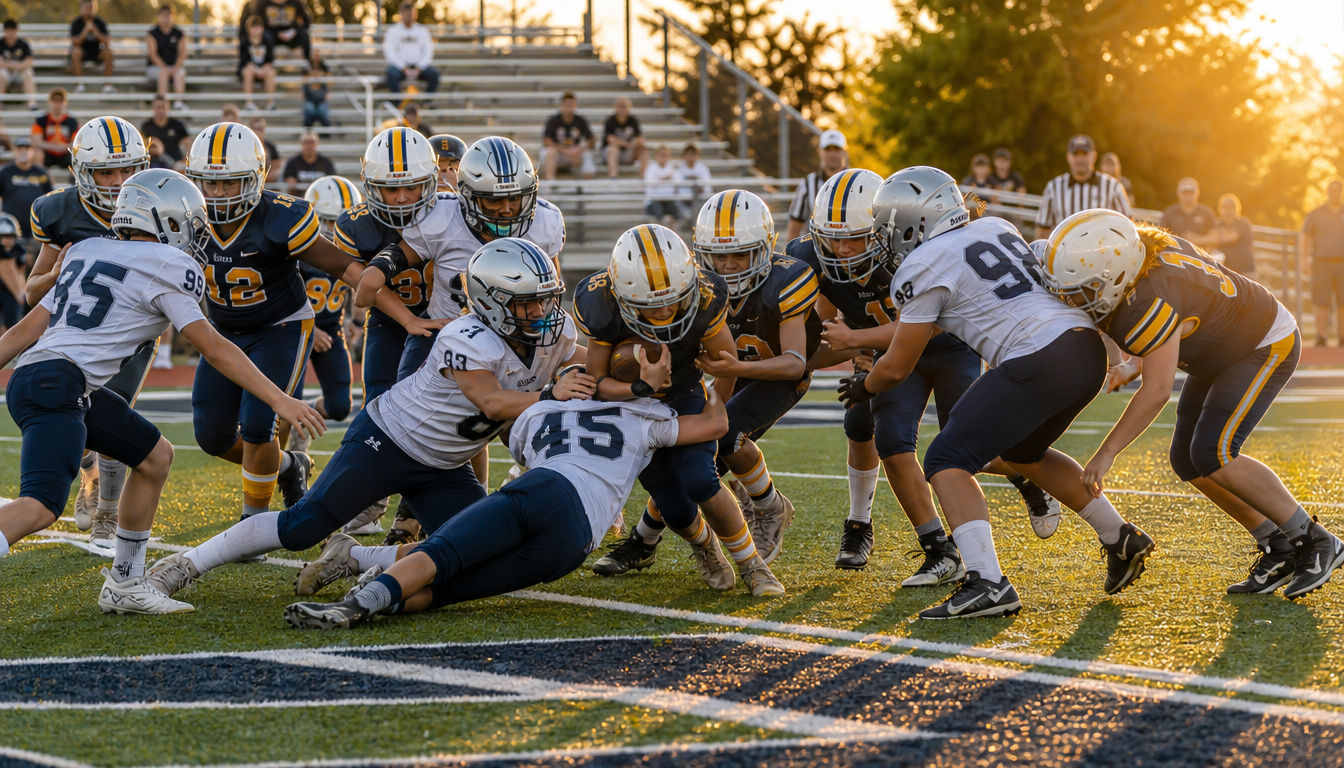
Win Before the Ball Carrier Arrives
Stopping the run begins before the tackle.
Defenders should:
- Align correctly.
- Know their assignment.
- Control their gap.
- Read the play.
- React without hesitation.
A missed assignment often creates a running lane before contact is even possible.
Maintain Gap Discipline
Every defender has a responsibility.
Teach players to:
- Stay in their assigned gap.
- Avoid chasing the football too early.
- Trust teammates to protect adjacent gaps.
- Close running lanes before pursuing.
Gap integrity forces runners to change direction.
Set the Edge
Outside defenders have an important responsibility.
They should:
- Keep outside leverage.
- Force the runner back inside.
- Prevent the offense from reaching the sideline.
- Stay patient against reverses and bootlegs.
Losing contain often turns short runs into long gains.
Pursue as a Team
One defender rarely makes every tackle.
Coach players to:
- Take proper pursuit angles.
- Run to the football every play.
- Arrive under control.
- Finish through the whistle.
Relentless pursuit limits extra yards after contact.
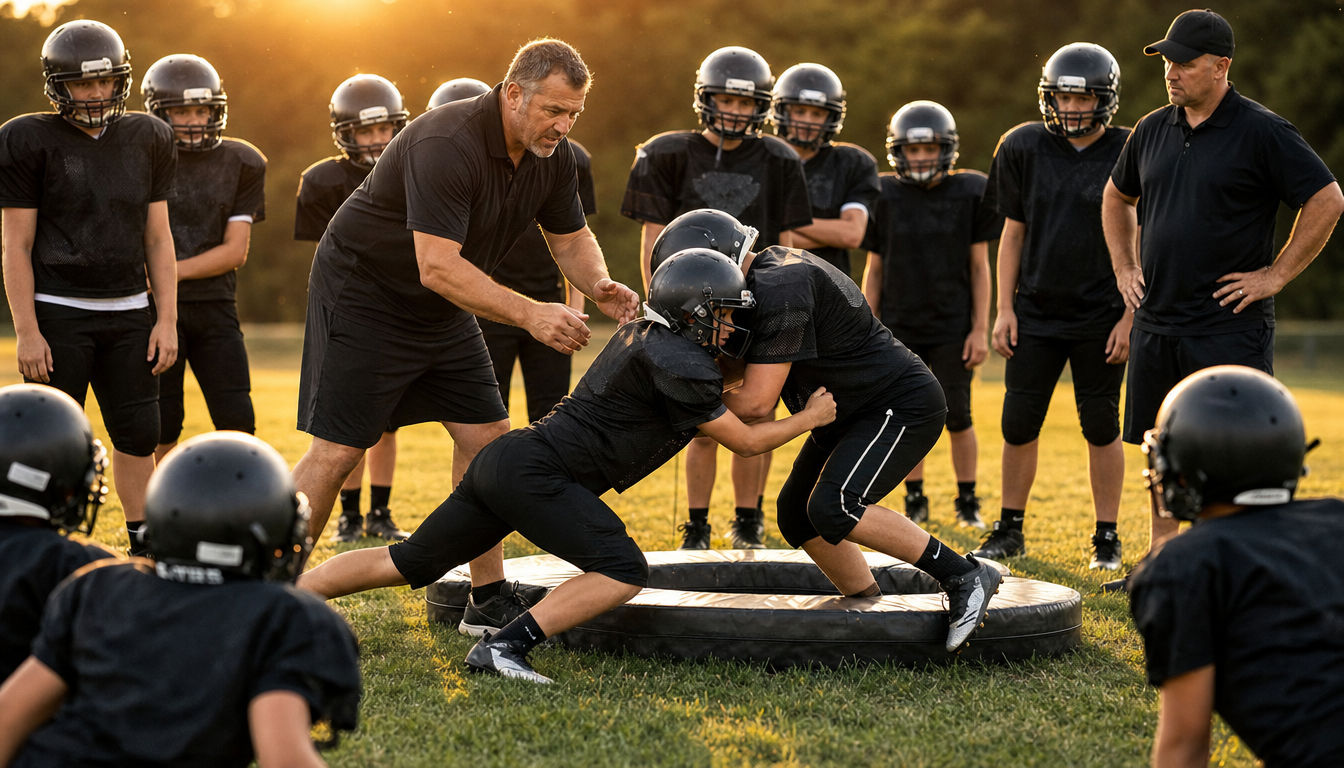
Tackle Securely
Once defenders arrive:
- Break down.
- Track the runner’s hips.
- Wrap with both arms.
- Drive the feet.
- Finish the tackle.
Secure tackling completes good defensive football.
Evaluate During the Game
When opponents run successfully, ask:
- Which gap was exposed?
- Did we lose contain?
- Were we out of position?
- Did we miss the tackle?
- Is this a technique problem or an assignment problem?
Small corrections usually produce big improvements.
Common Mistakes
Avoid:
- Abandoning gap responsibilities.
- Over-pursuing the football.
- Diving at runners.
- Focusing on big hits instead of secure tackles.
- Changing the defense before identifying the real problem.
Frequently Asked Questions
What is the most important part of run defense?
Gap discipline combined with reliable tackling.
Should linebackers attack immediately?
They should read their keys first, then fill their assigned gap aggressively.
Why do youth teams give up long runs?
Missed assignments, poor pursuit angles, and missed tackles are usually bigger factors than the defensive play call.
Key Takeaways
- Stop the run with disciplined fundamentals.
- Protect every gap.
- Set the edge.
- Pursue together.
- Diagnose problems before changing your defense.
Related Articles
Published by CoachYouths Staff on 07/15/2026
You are NOT currently logged in, you may login or signup for FREE at any time: