How to Make In-Game Adjustments
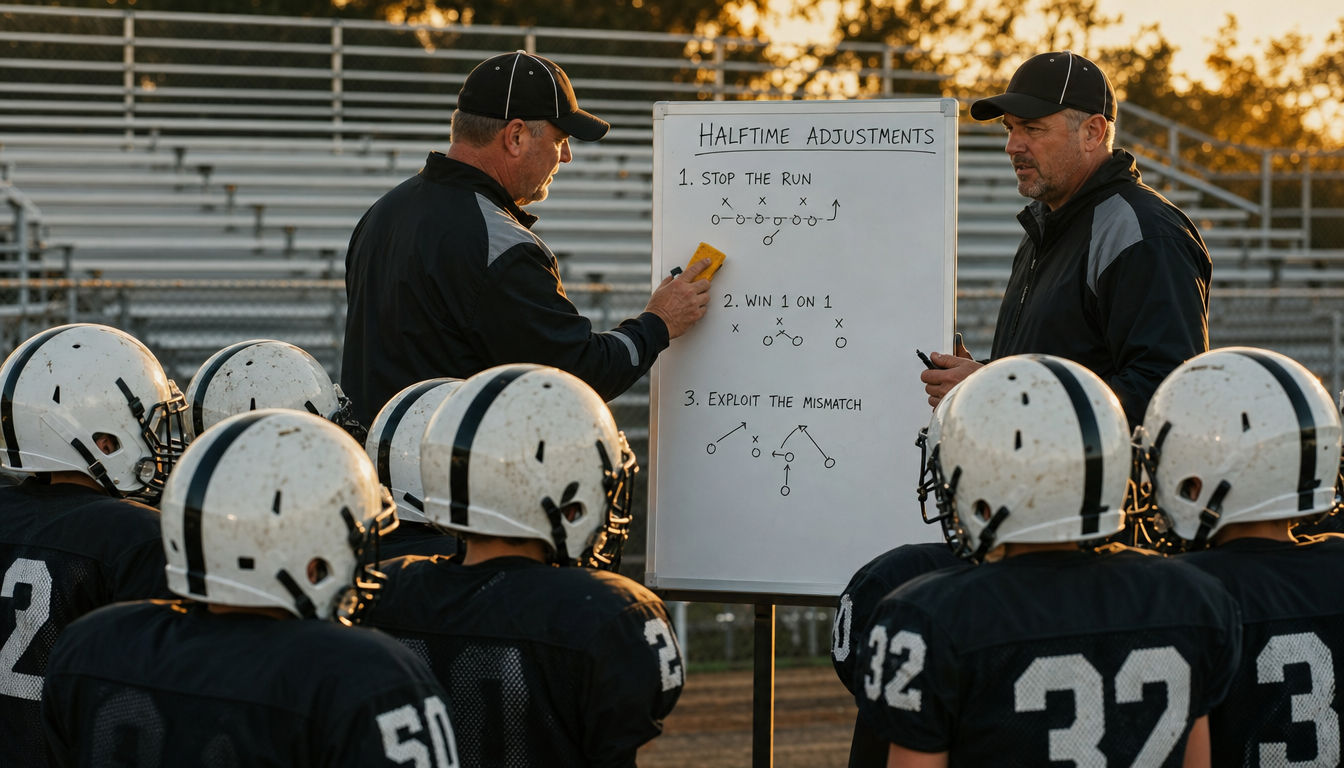
Football games rarely unfold exactly as planned. Opponents make adjustments, players become fatigued, and unexpected situations arise. Effective coaches recognize what is happening, communicate clearly, and make simple changes that help their players succeed.
Great in-game adjustments are based on observation, not emotion.

Observe Before You Change
Before making an adjustment, ask:
- What is actually causing the problem?
- Is it an assignment issue?
- Is it a technique issue?
- Is it an effort issue?
- Is the opponent simply executing well?
Correct the real problem instead of guessing.
Make Small Changes First
Avoid changing your entire game plan.
Instead consider:
- Adjusting player alignment.
- Running your best play more often.
- Changing a blocking assignment.
- Rotating fresh players.
- Reinforcing communication.
Small adjustments are easier for young players to execute.
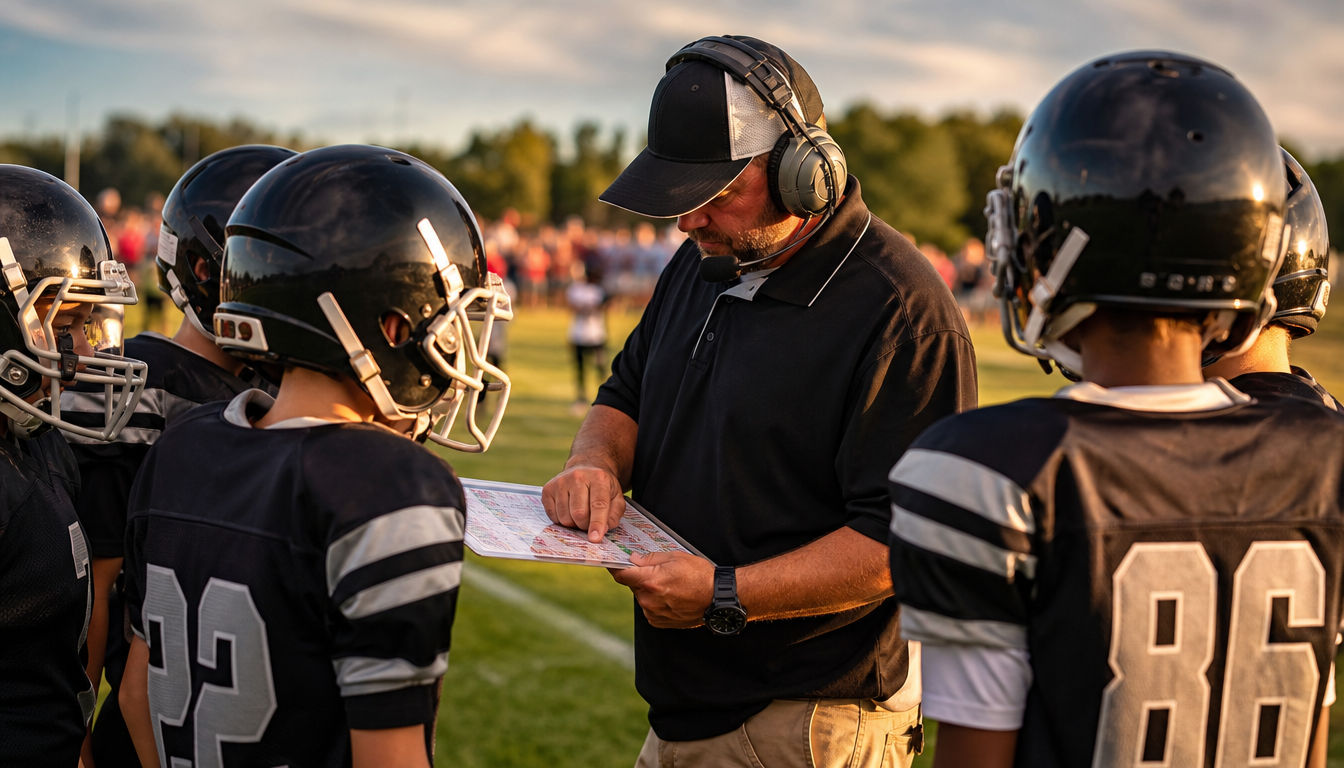
Communicate Clearly
When making a change:
- Keep instructions brief.
- Speak confidently.
- Make sure players understand.
- Confirm assignments before the next snap.
Clear communication prevents confusion.
Watch for Trends
Do not react to one successful play.
Look for patterns such as:
- A formation creating problems.
- A recurring mismatch.
- Repeated missed tackles.
- Consistent success attacking one area.
Patterns deserve adjustments. One play usually does not.
Trust Your Preparation
Remember what your team practiced.
Return to:
- Your core concepts.
- Your strongest formations.
- Your most reliable players.
- Your proven fundamentals.
Preparation should guide decisions under pressure.
Evaluate Between Series
Use every break in play to ask:
- What changed?
- What is working now?
- What needs attention next?
- Are players confident?
Continuous evaluation leads to better decisions.
Common Mistakes
Avoid:
- Overreacting after one play.
- Making multiple changes at once.
- Calling unfamiliar plays.
- Coaching emotionally.
- Ignoring successful concepts.
Frequently Asked Questions
How often should we adjust?
Only when you identify a meaningful trend or recurring problem.
Should players know every adjustment?
No. Keep adjustments simple and role-specific.
What is the biggest key?
Observe carefully, communicate clearly, and stay patient.
Key Takeaways
- Observe before adjusting.
- Fix the real problem.
- Keep changes simple.
- Trust your preparation.
- Evaluate continuously throughout the game.
Related Articles
Published by CoachYouths Staff on 07/15/2026
You are NOT currently logged in, you may login or signup for FREE at any time: