Making Halftime Adjustments
Halftime gives coaches a valuable opportunity to improve their team’s performance without overreacting to the first half. The goal is not to install a new offense or defense. Instead, identify what is working, correct the biggest problems, and communicate a simple plan for the second half.
The best halftime adjustments are focused, calm, and easy for players to understand.
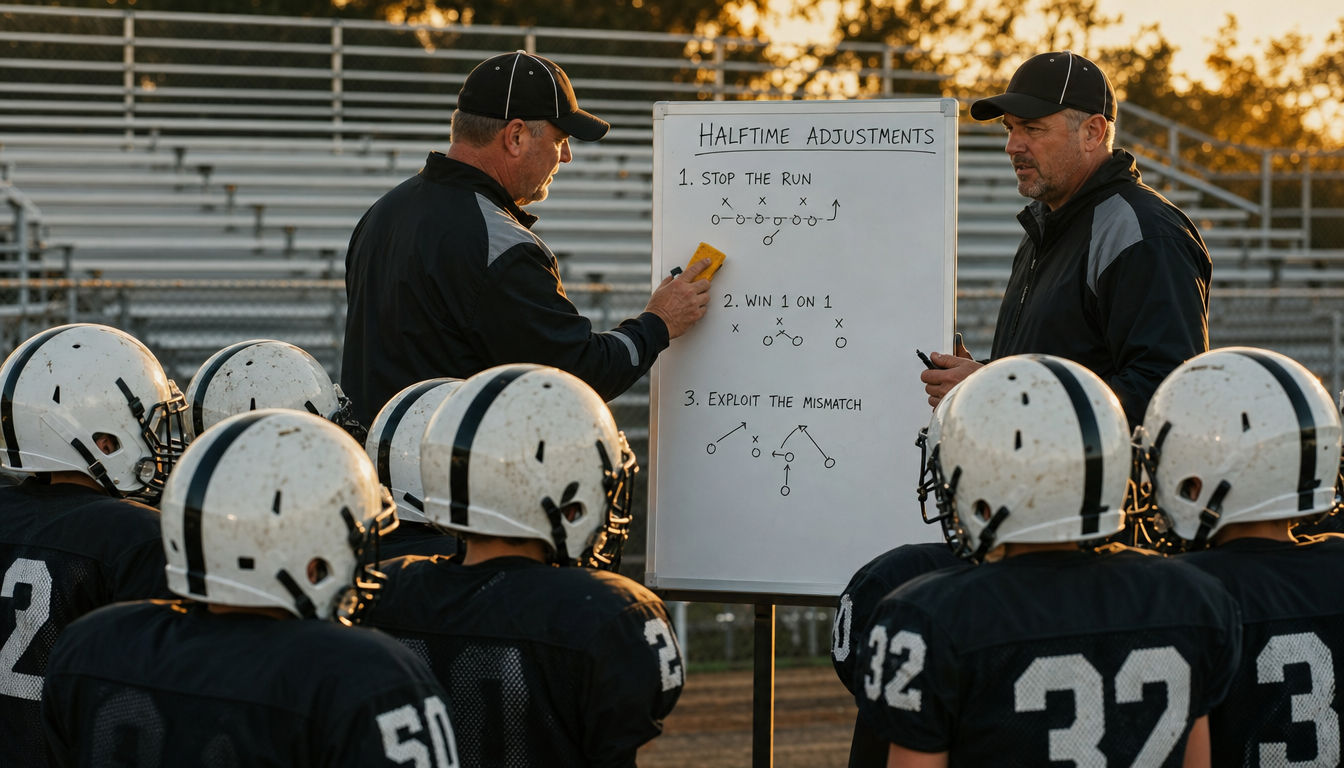
Start with the Facts
Before speaking to your team, identify:
- What has worked well?
- What has consistently failed?
- Which matchups favor your team?
- Where are the biggest mistakes occurring?
Separate facts from emotions.
Keep Adjustments Simple
Most youth teams only need a few changes.
Examples include:
- Running your best play more often.
- Adjusting defensive alignment.
- Improving pursuit angles.
- Changing blocking assignments.
- Improving communication.
Small improvements usually create the biggest results.
Reinforce the Positives
Players need confidence as much as correction.
Highlight:
- Great effort.
- Good execution.
- Smart decisions.
- Hustle and teamwork.
Build on success before discussing mistakes.
Correct the Biggest Problem First
Avoid overwhelming players.
Choose one or two priorities such as:
- Ball security.
- Tackling.
- Blocking.
- Alignment.
- Communication.
Clear priorities are easier to execute.
Prepare for the Opening Drive
Know exactly how you want to begin the second half.
Review:
- Opening play.
- Defensive expectations.
- Special teams assignments.
- Situational reminders.
A confident start often sets the tone.
Stay Calm
Players often reflect the coach’s emotions.
Speak clearly.
Remain positive.
Focus on solutions instead of blame.
Confidence is contagious.
Common Mistakes
Avoid:
- Making too many adjustments.
- Criticizing players without offering solutions.
- Installing brand-new plays.
- Letting emotions control decisions.
- Ignoring what worked well.
Frequently Asked Questions
How many adjustments should we make?
Usually one to three meaningful adjustments are enough for most youth teams.
Should we change our offense?
Only if your current approach consistently fails. Build around what your players execute best.
What should halftime feel like?
Organized, positive, and focused on preparing for the second half.
Key Takeaways
- Evaluate the first half objectively.
- Make only a few important adjustments.
- Reinforce what is working.
- Give players clear priorities.
- Begin the second half with confidence.
Related Articles
Published by CoachYouths Staff on 07/15/2026
You are NOT currently logged in, you may login or signup for FREE at any time: