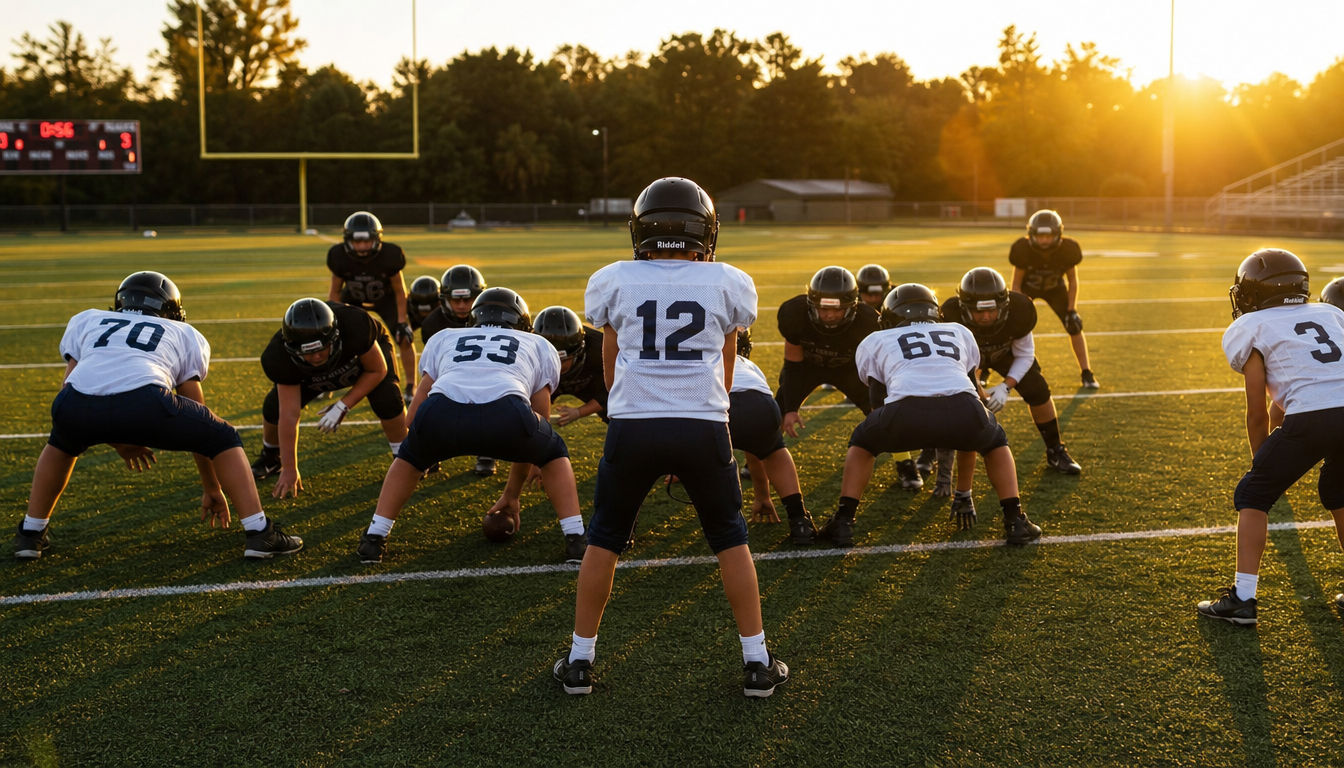
How to Attack a Defensive Blitz
A well-timed blitz can disrupt any offense, especially at the youth level where timing and communication are still developing. The good news is that blitzes also create opportunities. When defenders send extra players toward the football, they leave fewer defenders somewhere else on the field.
The objective is not to outmuscle a blitz. It is to recognize it, stay composed, and attack the space the defense gives you.
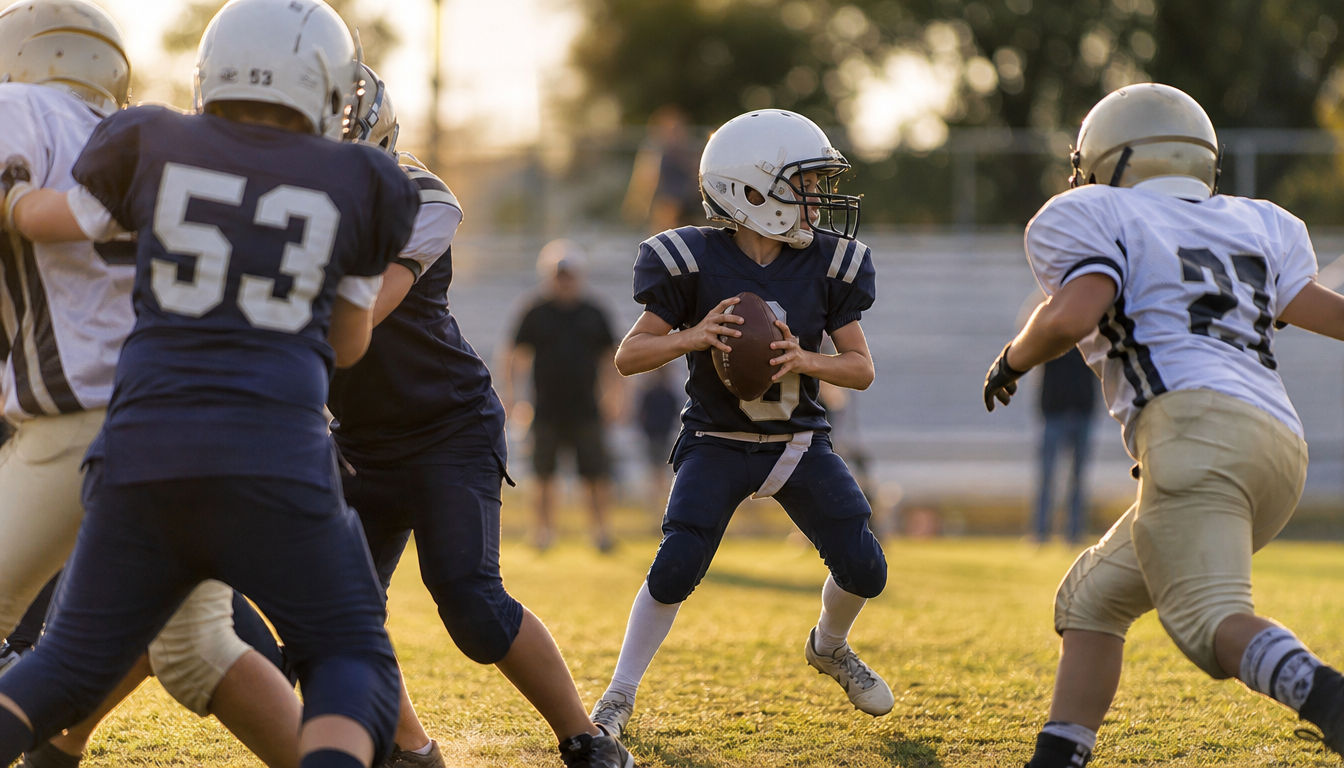
What Is a Blitz?
A blitz occurs when defenders who normally play behind the line of scrimmage attack immediately after the snap.
Common blitzers include:
- Linebackers.
- Defensive backs.
- Occasionally multiple defenders at once.
More rushers create pressure, but they also reduce coverage elsewhere.
Recognize Blitz Clues
Before the snap, look for signs such as:
- Linebackers creeping toward the line.
- Defensive backs unusually close to the formation.
- Defenders showing urgency before the cadence.
- Repeated pressure from the same side.
No clue is perfect, but several together often indicate pressure is coming.
Do Not Panic
The worst response to a blitz is rushing your own offense.
Instead:
- Stay with familiar terminology.
- Trust your practice.
- Execute fundamentals.
- Communicate calmly.
Confident execution beats rushed decisions.
Attack the Vacated Area
If extra defenders rush the quarterback, someone is usually left with more space.
Consider:
- Quick passes.
- Short crossing routes.
- Flats.
- Screens, if your team practices them.
- Fast hitting inside runs.
The best answer depends on your personnel and preparation.
Improve Protection
Sometimes the adjustment is not the play call but the protection.
Options include:
- Keeping a running back in to block.
- Tightening splits.
- Sliding protection toward the pressure.
- Using a quicker passing concept.
Keep adjustments simple enough for young players to execute confidently.
Practice Pressure Situations
Do not wait until game day.
Include periods where your scout defense:
- Blitzes from different locations.
- Changes alignment.
- Brings pressure after motion.
The more players experience pressure in practice, the calmer they become during games.
Common Mistakes
Avoid:
- Calling slow-developing plays against heavy pressure.
- Ignoring repeated blitz tendencies.
- Changing your entire offense.
- Holding the football too long.
- Forgetting ball security.
Frequently Asked Questions
Should I always throw against a blitz?
No. A quick run into the area vacated by the blitz can be just as effective.
How do I know where the blitz is coming from?
Watch linebacker depth, defensive back alignment, and repeated defensive tendencies throughout the game.
What is the simplest adjustment?
A quick, high-confidence play your players have practiced repeatedly.
Key Takeaways
- Learn to recognize blitz indicators.
- Stay calm and trust your fundamentals.
- Attack the space created by extra rushers.
- Make simple protection adjustments.
- Practice pressure situations every week.
Related Articles
Published by CoachYouths Staff on 07/15/2026
You are NOT currently logged in, you may login or signup for FREE at any time: