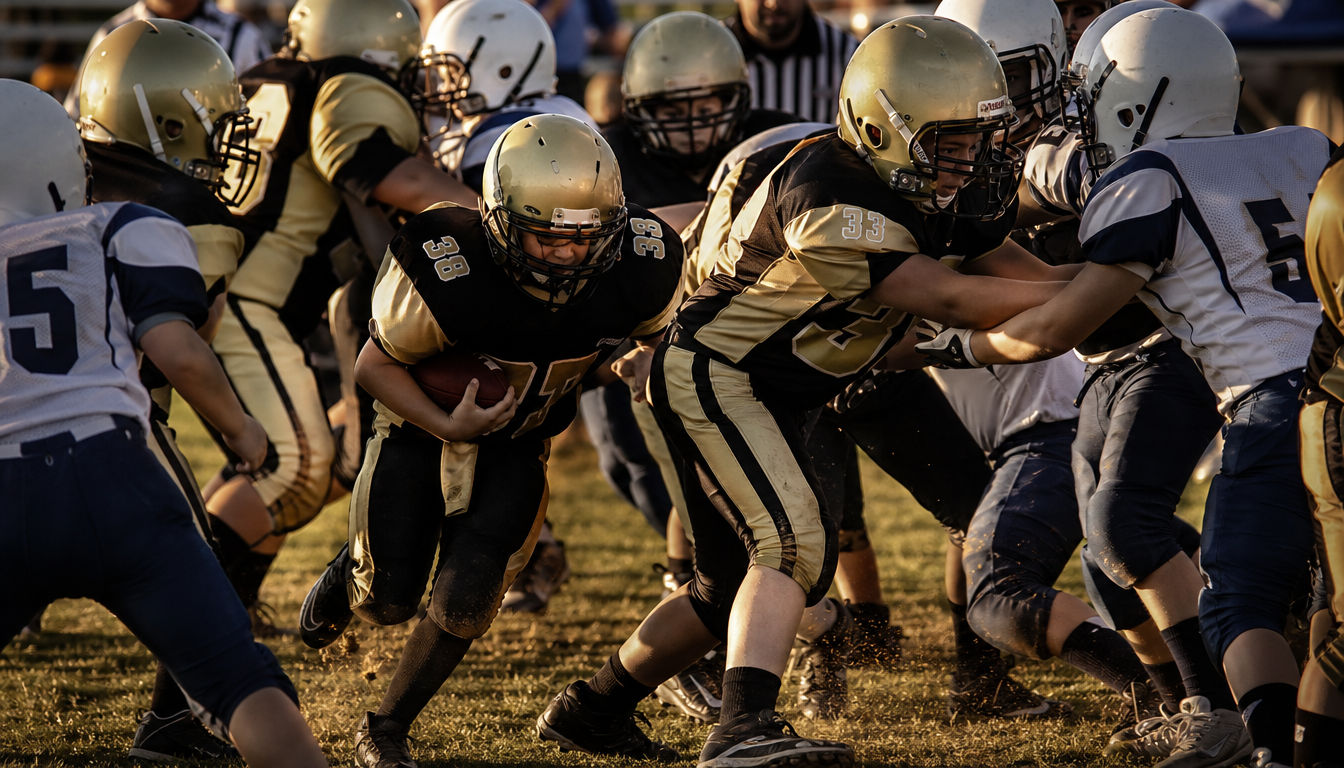
Adjusting Your Offense During a Game
Every game unfolds differently. A play that worked perfectly last week may struggle against a different opponent, while a concept you barely expected to use may become your most productive call. Successful youth football coaches recognize what the defense is doing, make small adjustments, and continue building around the strengths of their players.
Good in-game adjustments are usually simple. Major overhauls rarely work in the middle of a game.
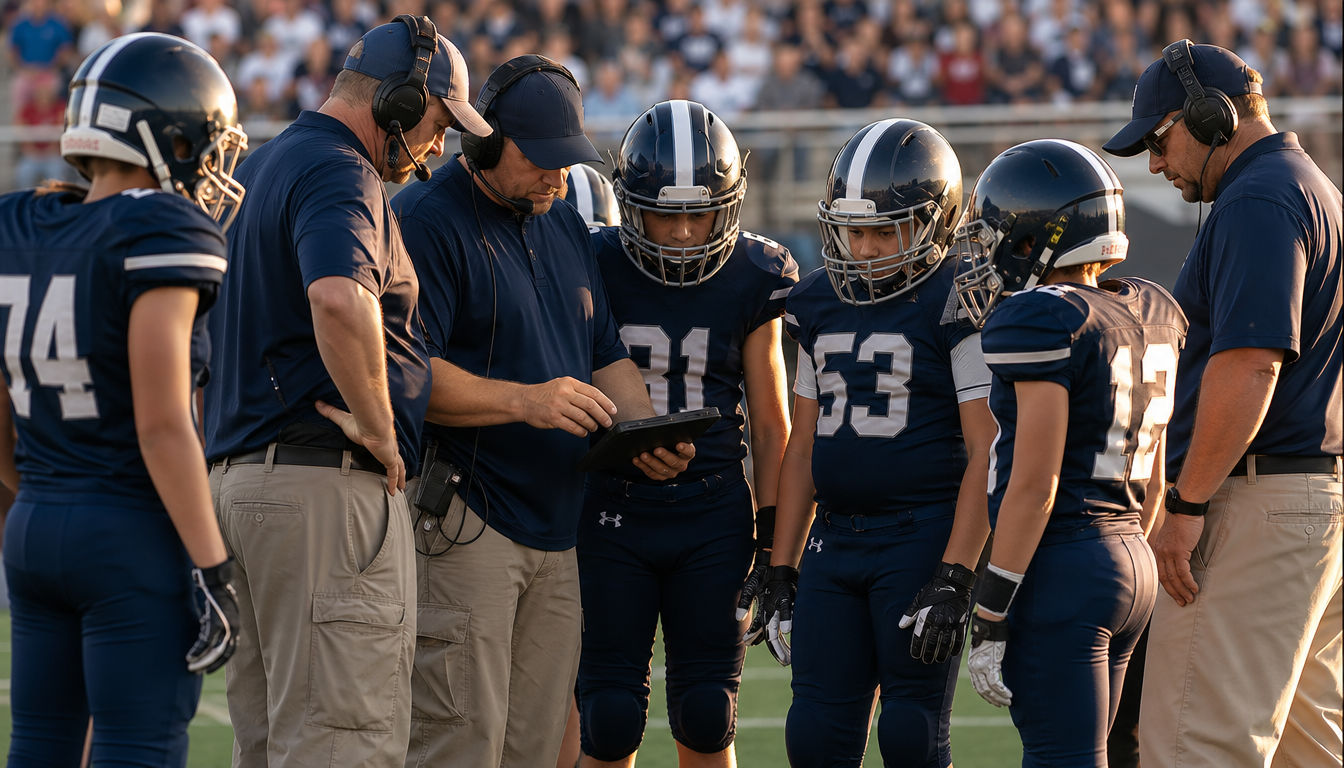
Start by Confirming the Problem
Before changing your offense, determine why a play is failing.
Ask questions such as:
- Are players lining up correctly?
- Is everyone blocking the correct defender?
- Are we protecting the football?
- Is the defense simply winning one matchup?
- Have we executed this play successfully before?
Do not confuse poor execution with a poor play design.
Look for Defensive Tendencies
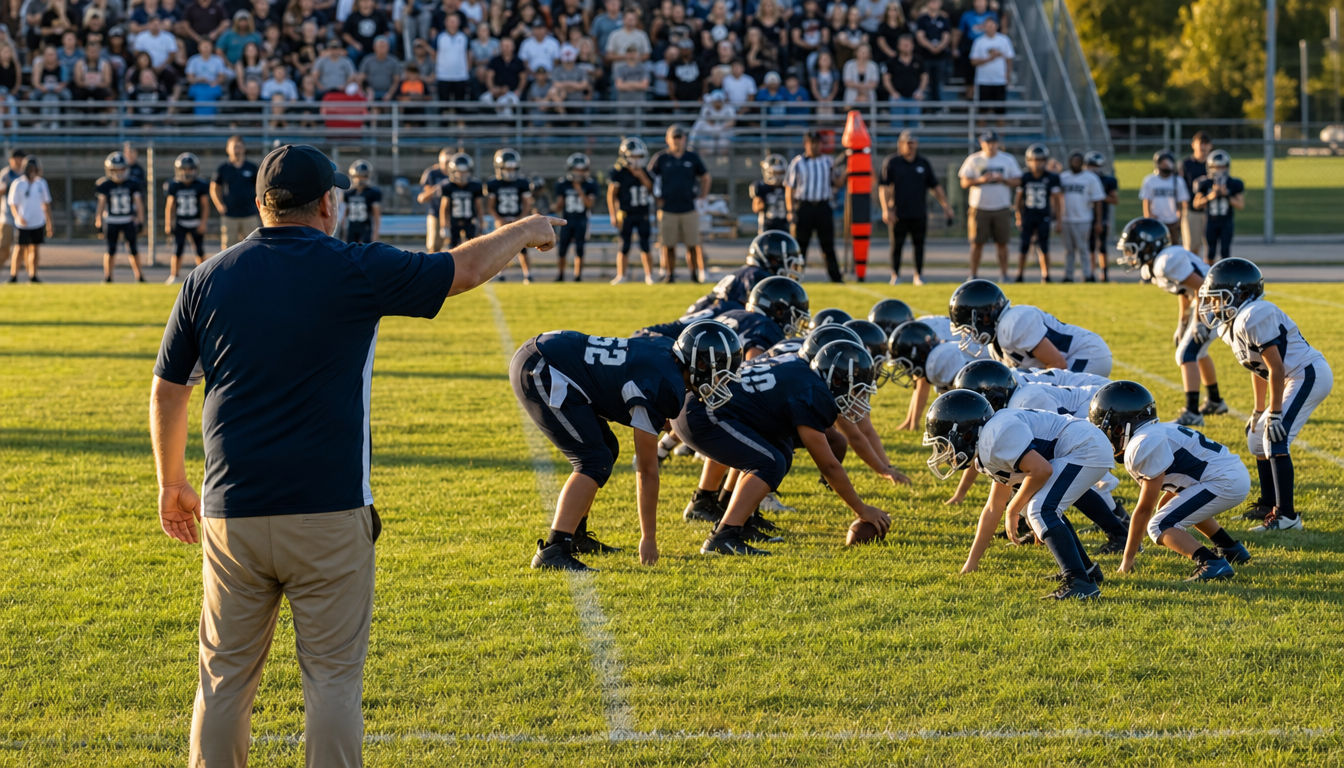
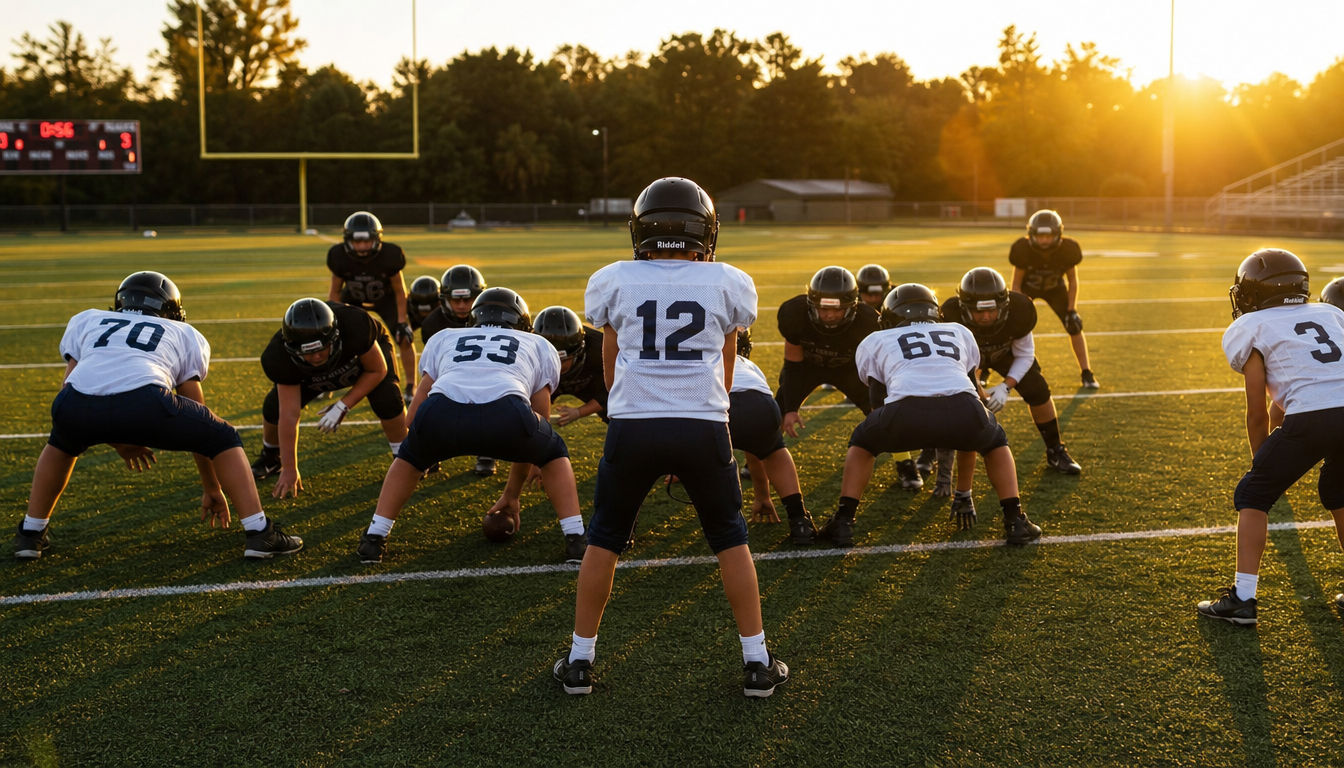
As the game progresses, defenses begin revealing patterns.
Watch for:
- Linebackers attacking the same gap.
- Defensive ends crashing inside.
- Cornerbacks playing tight or giving a large cushion.
- Blitzes from the same side.
- Safeties moving closer to the line.
The more you observe, the easier your next play call becomes.
Make One Adjustment at a Time
Avoid changing everything at once.
Instead, make one small adjustment and evaluate the result.
Examples include:
- Running the same play in the opposite direction.
- Changing the point of attack.
- Using a different formation.
- Adding play-action after several successful runs.
Small adjustments are easier for young players to execute.
Stay True to Your Identity
Every team has strengths.
If your offense is built around a physical running game, do not abandon it after one difficult series.
Likewise, if your quarterback throws accurately, continue looking for safe passing opportunities.
Adjust your offense without abandoning your identity.
Communicate Clearly
Players already have enough to think about during a game.
When making adjustments:
- Use familiar terminology.
- Keep instructions brief.
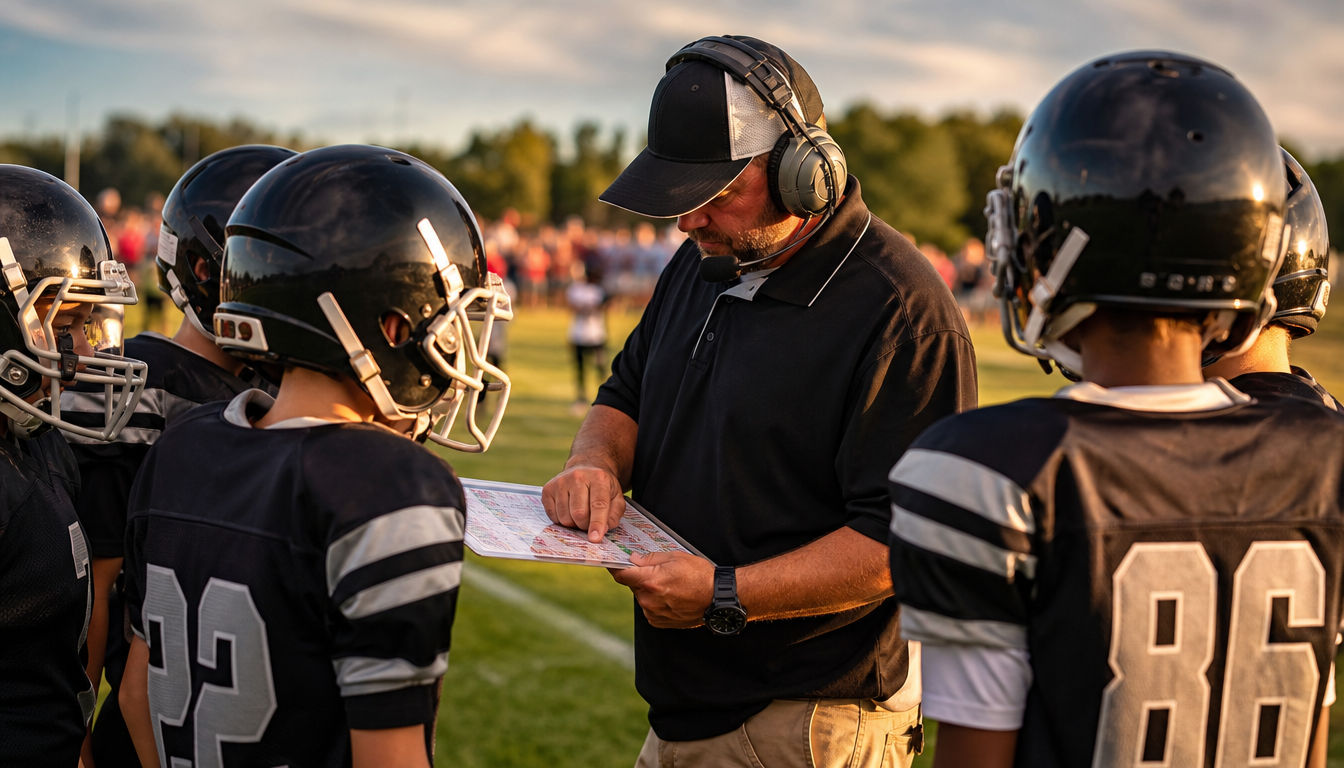
- Explain only what changed.
- Confirm players understand before the next snap.
Confidence comes from clarity.
Use Halftime Wisely
Halftime is your best opportunity to make meaningful adjustments.
Discuss:
- Which plays consistently gained yards.
- Defensive alignments causing problems.
- Blocking assignments that need clarification.
- Two or three priorities for the second half.
Resist the urge to install completely new concepts.
Common Mistakes
Avoid:
- Making emotional decisions after one bad play.
- Changing formations every series.
- Introducing unpracticed plays.
- Ignoring successful concepts.
- Giving players too many new instructions.
Simple adjustments are usually the most effective.
Frequently Asked Questions
How quickly should I adjust?
Observe several plays before making significant changes. One unsuccessful play rarely tells the whole story.
Should I remove a play after it fails?
Not immediately. Determine whether the problem was execution, defensive alignment, or the play itself.
What is the most valuable adjustment?
Often, running a familiar play from a different formation or attacking a different area of the defense is enough.
Key Takeaways
- Identify the real problem before making changes.
- Study defensive tendencies throughout the game.
- Make one adjustment at a time.
- Stay committed to your offensive identity.
- Use halftime to reinforce simple, practical corrections.
Related Articles
Published by CoachYouths Staff on 07/15/2026
You are NOT currently logged in, you may login or signup for FREE at any time: