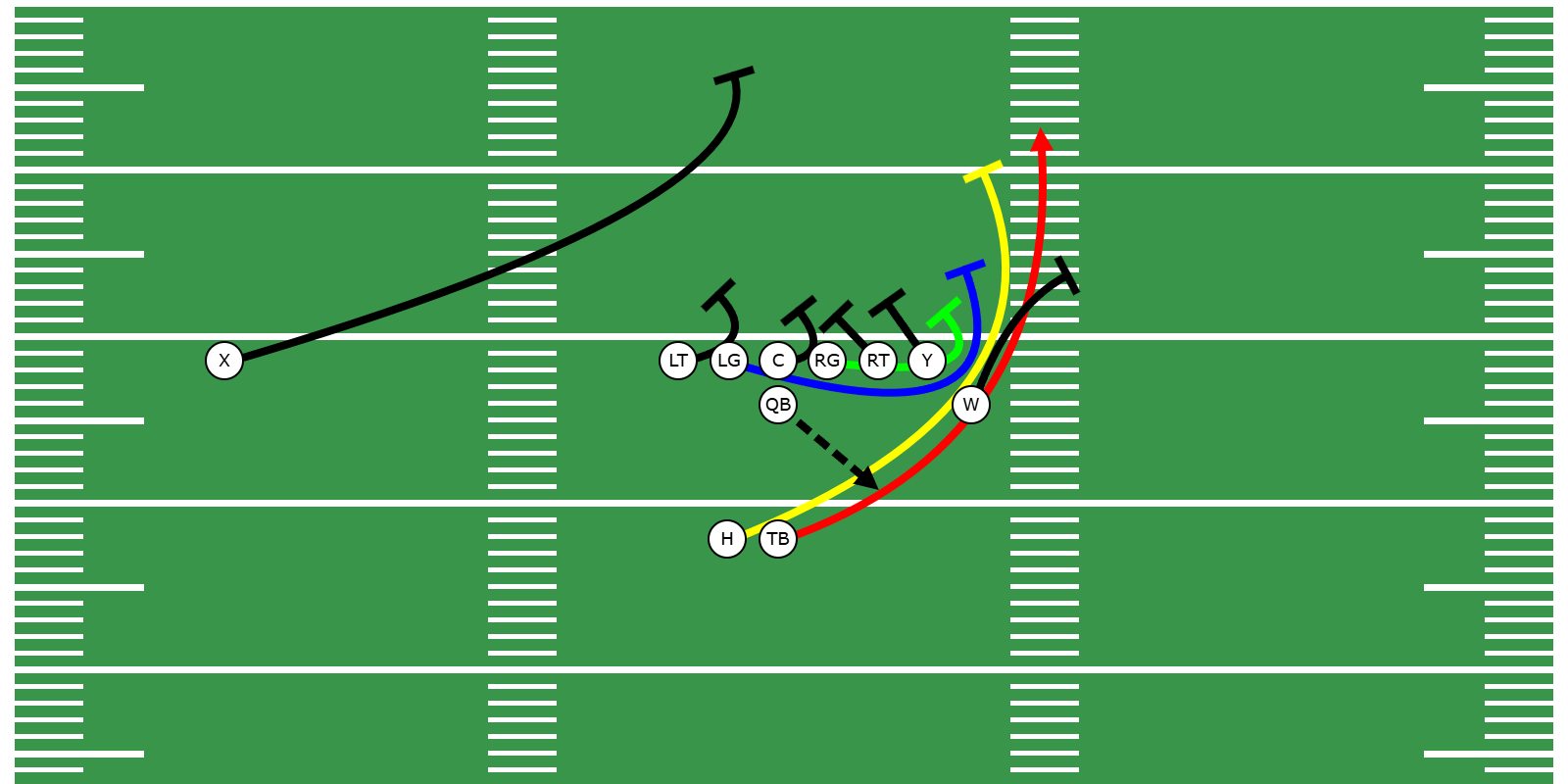
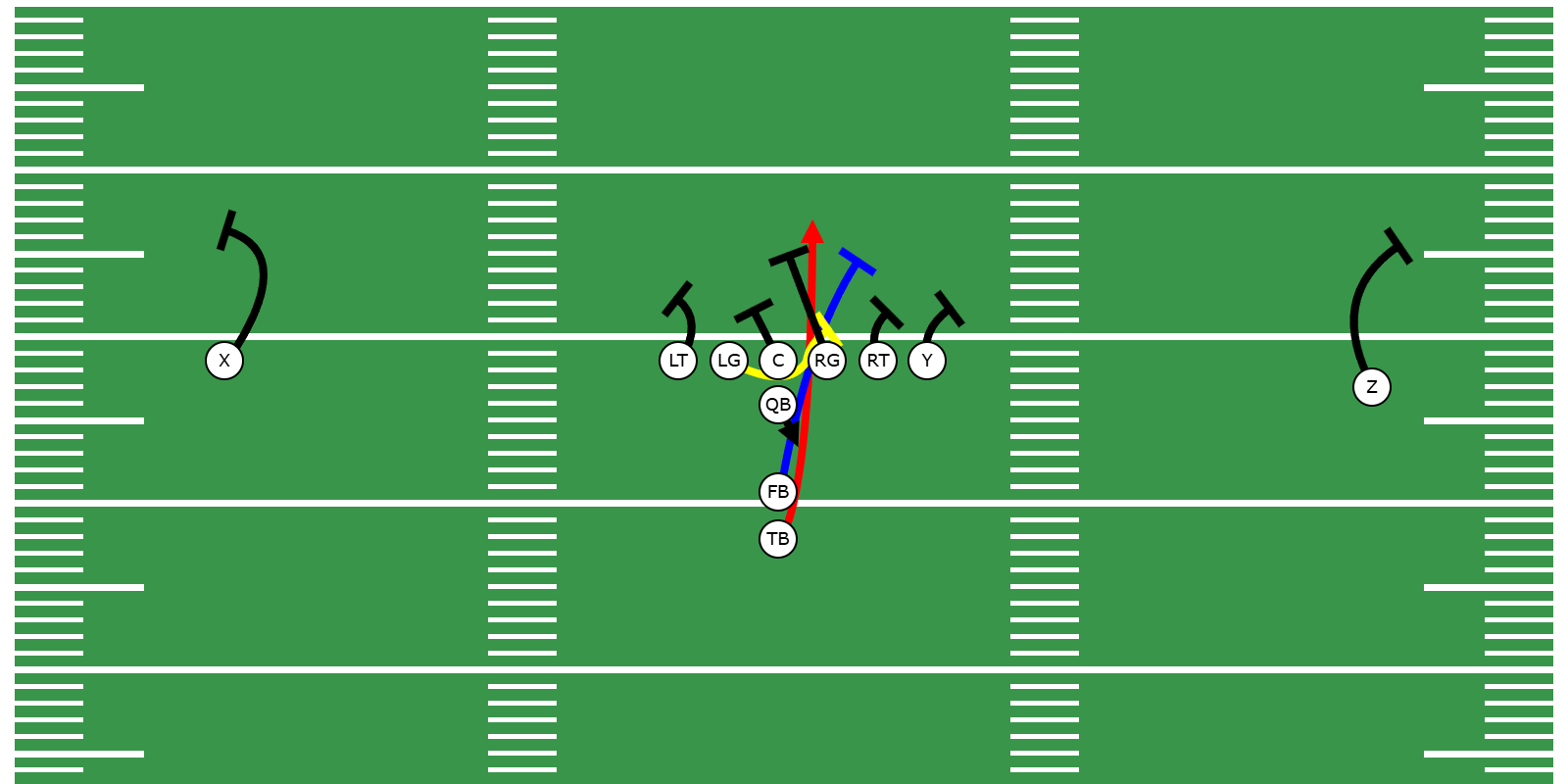
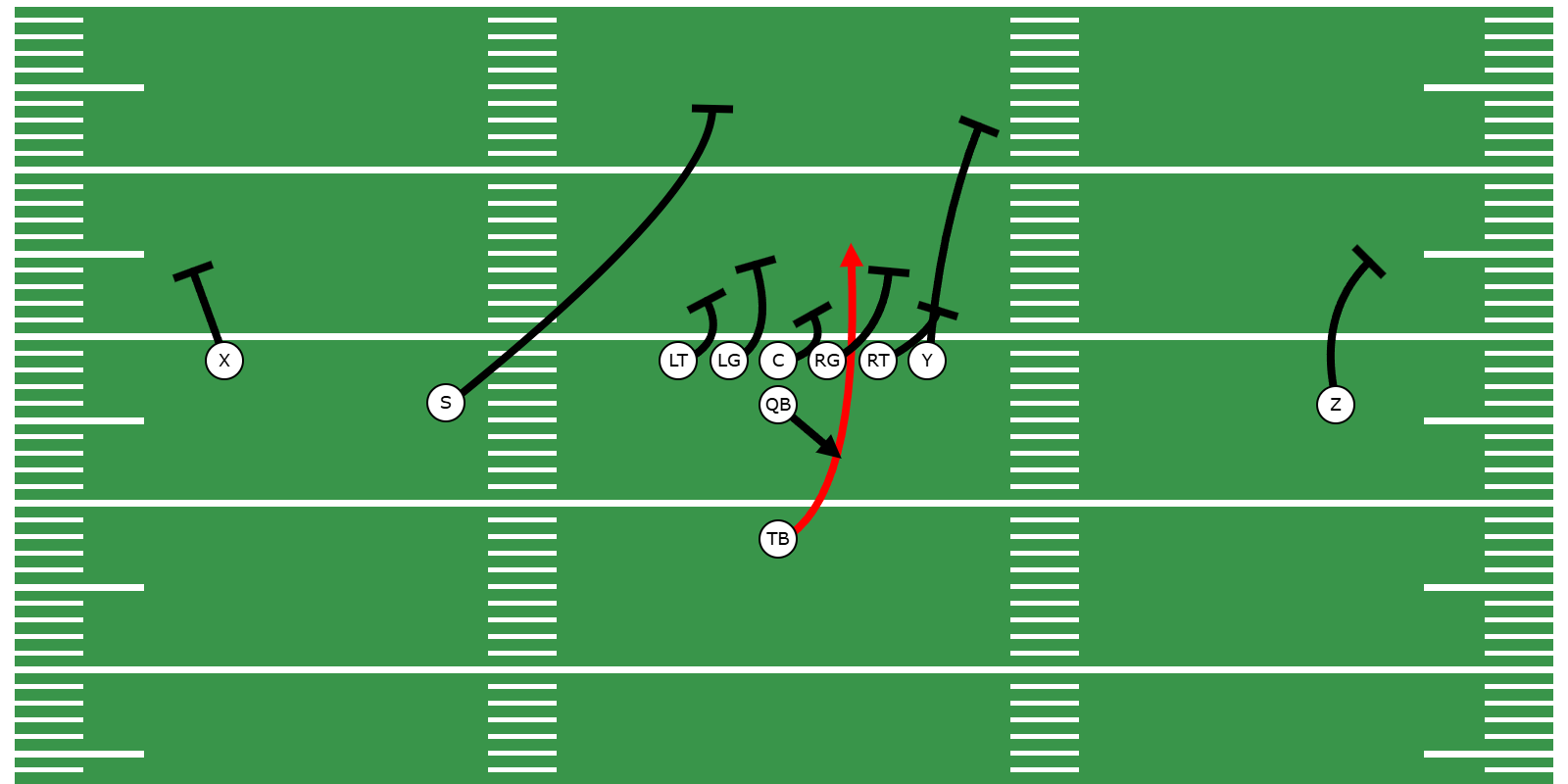
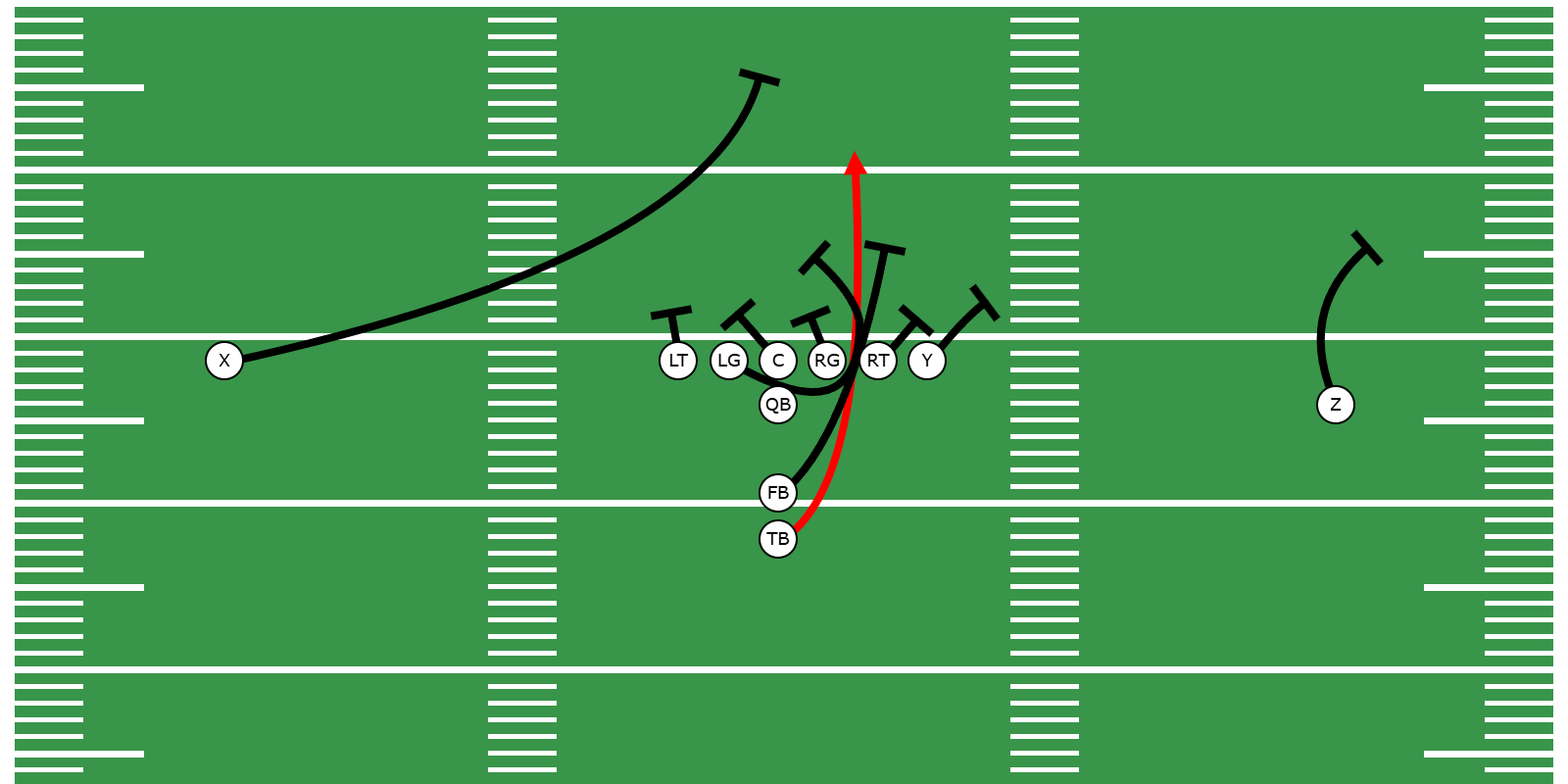
Belly Run Concept
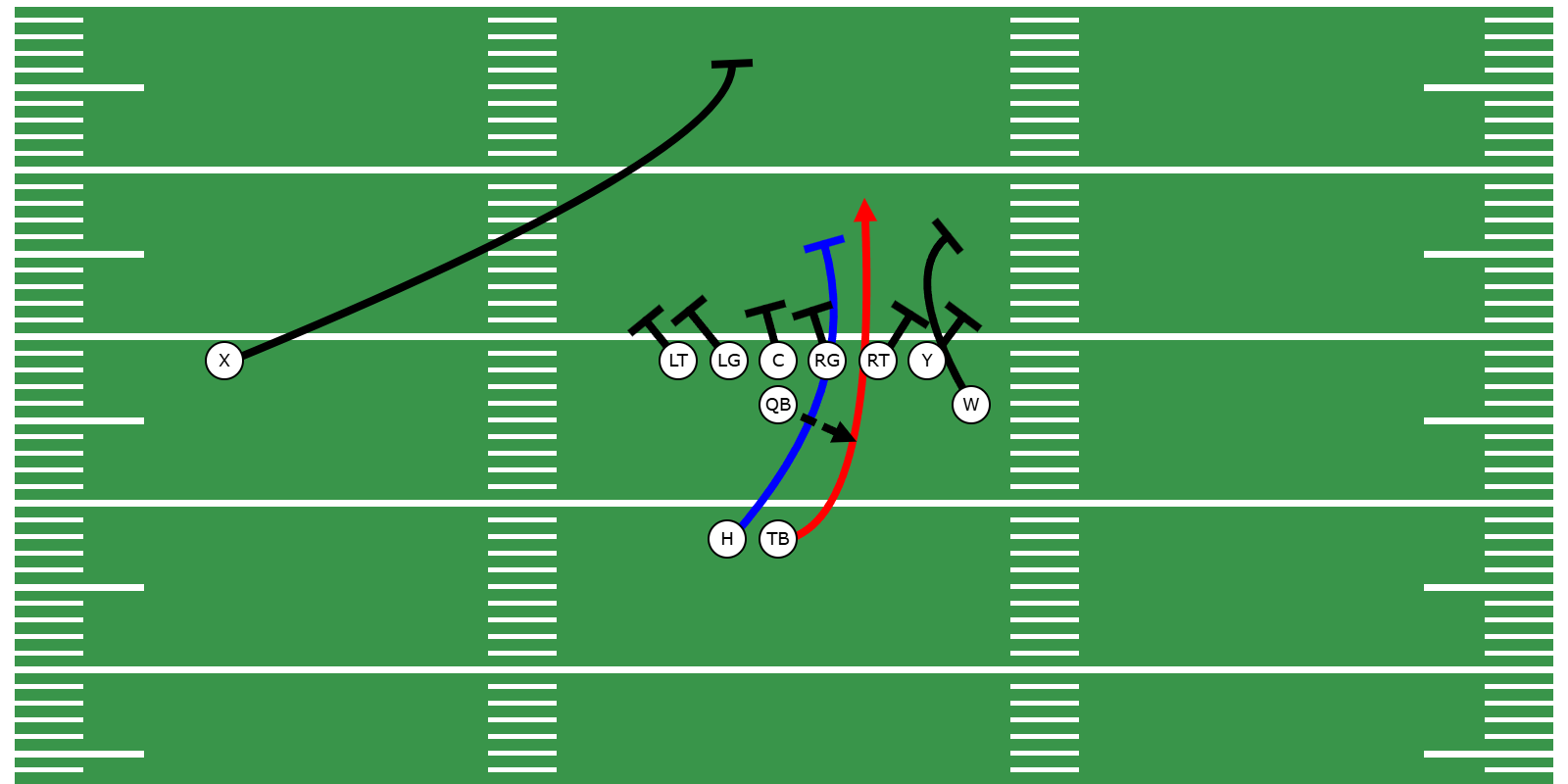
Belly is a classic downhill running concept that attacks the interior of the defense with quick-hitting backfield action and physical blocking. Most commonly associated with the Wing T offense, Belly complements Buck Sweep by punishing defenses that overreact to perimeter runs. It gives the running back a fast path to the line of scrimmage while creating vertical movement at the point of attack.
Why Belly Works
After defenses begin flowing aggressively to stop outside runs, Belly attacks the space they vacate inside. The quick handoff, combined with down blocks and a lead blocker, creates a decisive vertical crease before linebackers can recover.
Best Formations
Belly is most effective from the Wing T Formation, but it also adapts well to Singleback and I Formation offenses that want a quick downhill complement to outside runs.
Personnel
21 Personnel is the traditional grouping because the fullback and wingback create natural misdirection. Eleven personnel variations can use an H-back or tight end to perform the lead-blocking responsibilities.
Try The Interactive Playbook Tool: Belly Run Concept
Draw your own Belly Run Concept concept based play diagram right here using our embedded interactive play designer demo:
GET STARTED: To get started simply click on any of the player icons in the diagram.
Start drawing your own plays like this and build your playbook with CoachYouths Playbook Designer.
Blocking Responsibilities
- Offensive line: Down block to create vertical movement and eliminate penetration.
- Lead blocker: Attack the play-side linebacker with inside-out leverage.
- Tight end: Secure the edge defender.
- Wide receivers: Block the most dangerous perimeter support defender.
- Running back: Take the handoff, press the designed gap, and make one decisive cut if necessary.
Running Back Read
- Attack the aiming point immediately.
- Read the lead blocker.
- Stay inside when the crease opens.
- Cut off the lead block if the linebacker overplays.
- Finish every run behind your pads.
Defensive Adjustments
Even Fronts
Create movement with down blocks before climbing.
Odd Fronts
Communicate responsibilities against the nose tackle and stacked linebackers.
Slanting Fronts
Stay disciplined with blocking rules rather than chasing movement.
Coaching Points
- Hit the hole with confidence.
- Keep the backfield action compact.
- Down blocks must prevent penetration.
- Vertical yardage is the objective.
Common Youth Mistakes
- Running backs hesitating in the backfield.
- Lead blockers choosing the wrong linebacker.
- Linemen allowing penetration.
- Bouncing outside too early.
Installation Progression
Install offensive-line footwork first, then lead-block technique, followed by backfield timing. Progress from walk-throughs to half-line drills before full-team practice.
Practice Drill
Run Belly against multiple defensive fronts while emphasizing down-block angles, lead-block leverage, and quick downhill decisions by the running back.
Youth Coaching Tips
Belly becomes far more effective when paired with Buck Sweep. Teach both concepts using similar backfield action so defenders cannot immediately distinguish between inside and outside runs.
Why Belly Succeeds
Belly succeeds because it attacks downhill before linebackers can react, complementing perimeter runs while giving the offense a dependable inside rushing attack.
Related Articles
Published by CoachYouths Staff on 07/21/2026
You are NOT currently logged in, you may login or signup for FREE at any time: