Inside Zone Run Concept
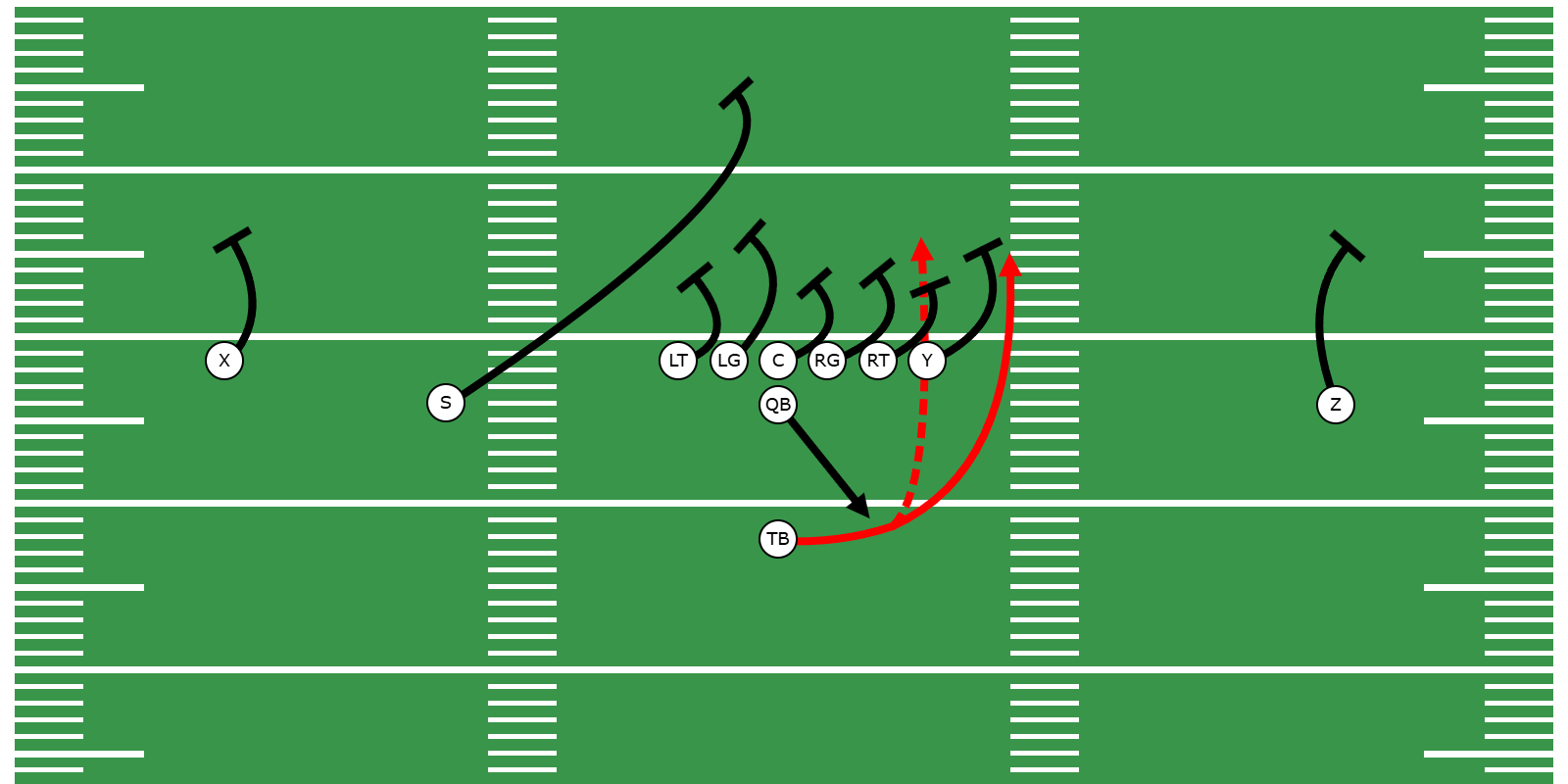
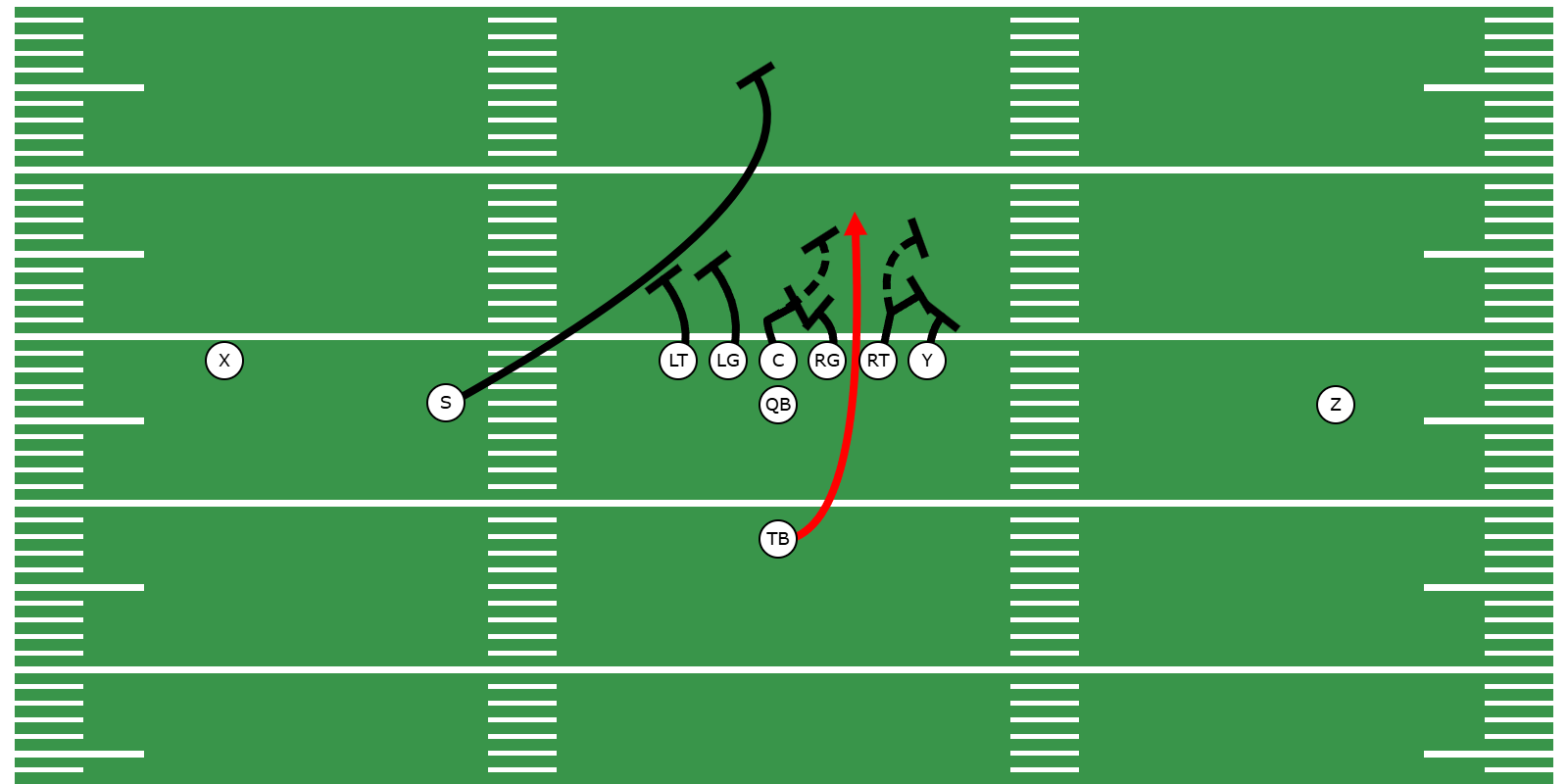
Inside Zone is one of the foundational running concepts in modern football. Rather than assigning every blocker to a specific defender, the offensive line blocks areas, working together to create vertical movement while the running back reads developing lanes. Because it teaches disciplined footwork, teamwork, and vision, Inside Zone is an outstanding base run for youth teams.
Why Inside Zone Works
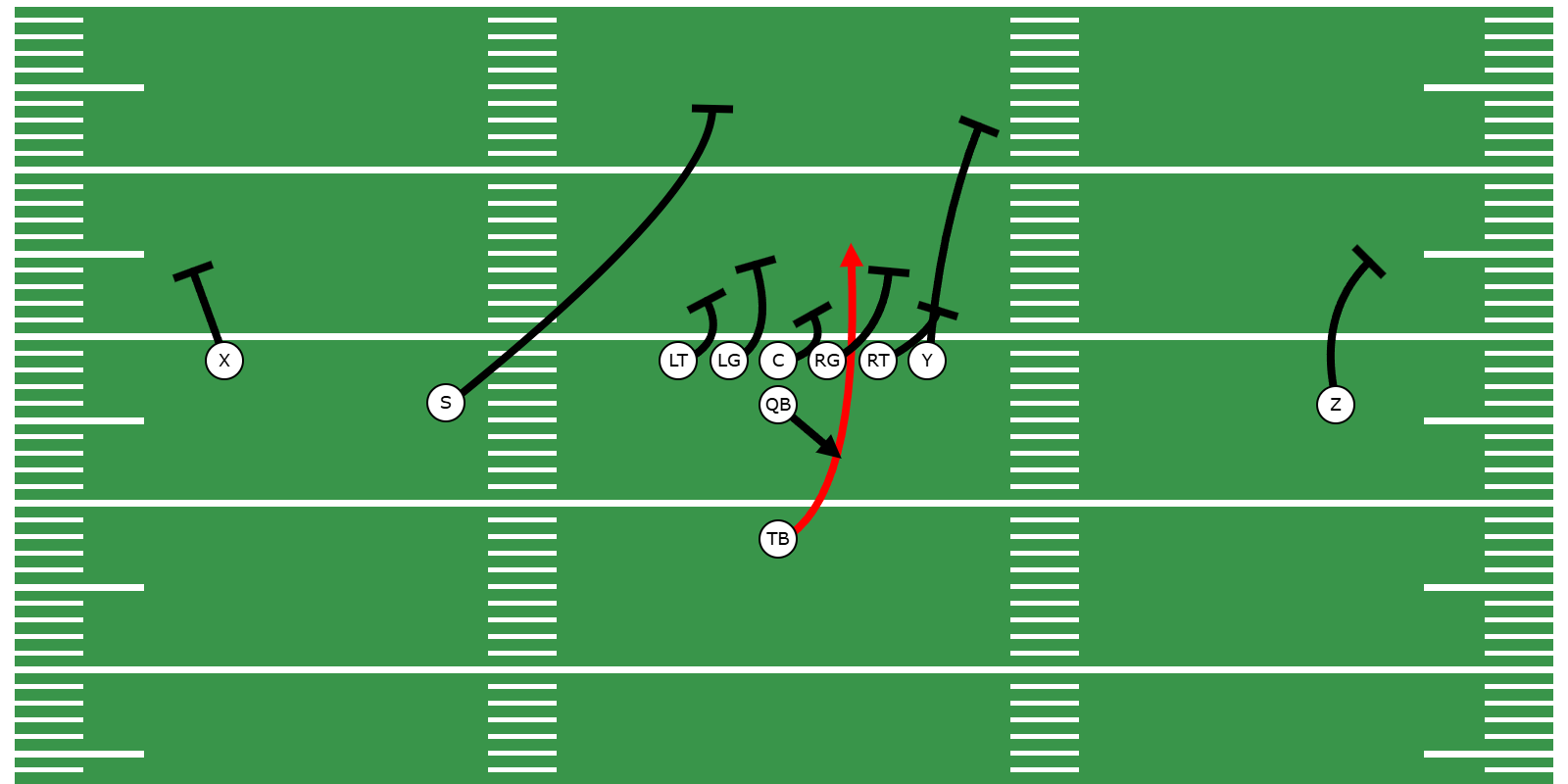
Inside Zone allows the offensive line to react to defensive movement instead of chasing defenders across the formation. Double teams create movement at the point of attack before one blocker climbs to the second level. Meanwhile, the running back presses the aiming point, forcing linebackers to commit before making a decisive cut.
Best Formations
Shotgun Spread and Shotgun Doubles simplify the quarterback/running back mesh while spreading defenders horizontally. Under-center formations are equally effective once backfield footwork is mastered.
Personnel
11 Personnel is the traditional starting point because it balances blocking strength with perimeter threats. The concept also works well from 10 Personnel when defenses remove defenders from the tackle box.
Try The Interactive Playbook Tool: Inside Zone Run Concept
Draw your own Inside Zone Run Concept concept based play diagram right here using our embedded interactive play designer demo:
GET STARTED: To get started simply click on any of the player icons in the diagram.
Start drawing your own plays like this and build your playbook with CoachYouths Playbook Designer.
Blocking Responsibilities
- Offensive line: Zone step play side, create double teams, and climb to linebackers.
- Tight end: Secure the edge or combination block depending on alignment.
- Receivers: Block the most dangerous perimeter defender.
- Running back: Press the aiming point, make one cut, and get vertical.
- Quarterback: Execute a clean mesh and carry out the fake when applicable.
Running Back Read
- Press the play-side A/B gap.
- Read the first down lineman outside the center.
- Bounce if the edge widens.
- Bang the designed lane if it opens.
- Bend backside only when the front side is closed.
Defensive Adjustments
Even Fronts
Work combination blocks and create vertical displacement.
Odd Fronts
Identify the nose tackle early and communicate double teams.
Run Blitzes
Stay on tracks and trust the zone rules instead of chasing movement.
Coaching Points
- Every blocker takes the same first step.
- Create vertical movement before climbing.
- Running backs make one decisive cut.
- Get north and south immediately after the decision.
Common Youth Mistakes
- Linemen chasing linebackers too early.
- Running backs bouncing every carry outside.
- Multiple cuts in the backfield.
- Poor communication on combination blocks.
Installation Progression
Teach footwork first, then combination blocks, then running back reads against bags before introducing live defenders. Finish with inside-run and team periods.
Practice Drill
Run half-line Inside Zone with cones marking the aiming point. Rotate defensive fronts while emphasizing double teams, linebacker climbs, and one-cut decisions.
Youth Coaching Tips
Resist installing multiple zone runs immediately. When players truly understand Inside Zone, Outside Zone, Split Zone, and Zone Read become much easier to teach.
Why Inside Zone Succeeds
Inside Zone succeeds because it combines simple blocking rules with disciplined running back reads, allowing the offense to execute effectively against a wide variety of defensive fronts.
Related Articles
Published by CoachYouths Staff on 07/21/2026
You are NOT currently logged in, you may login or signup for FREE at any time: