Trap Run Concept
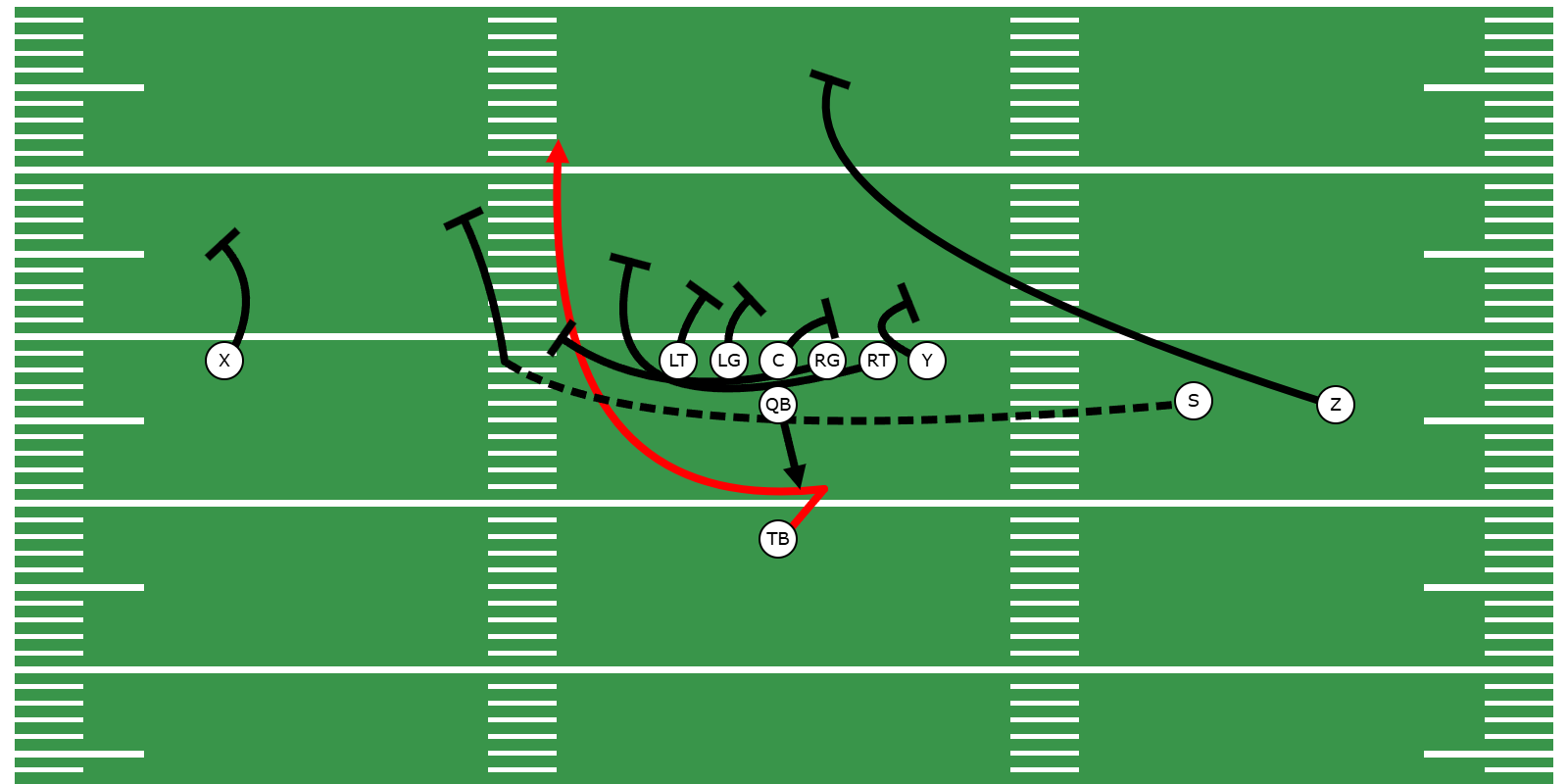
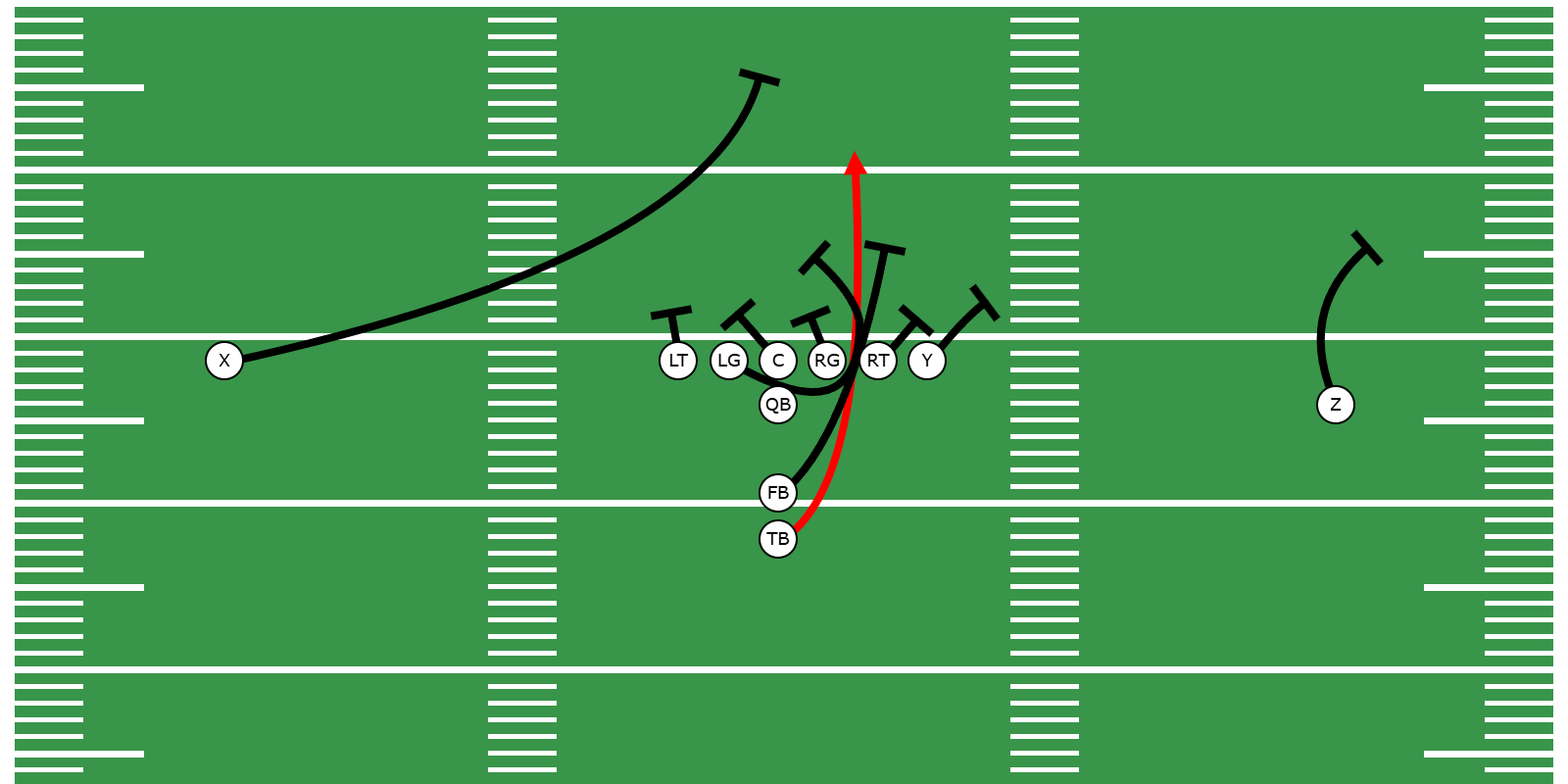
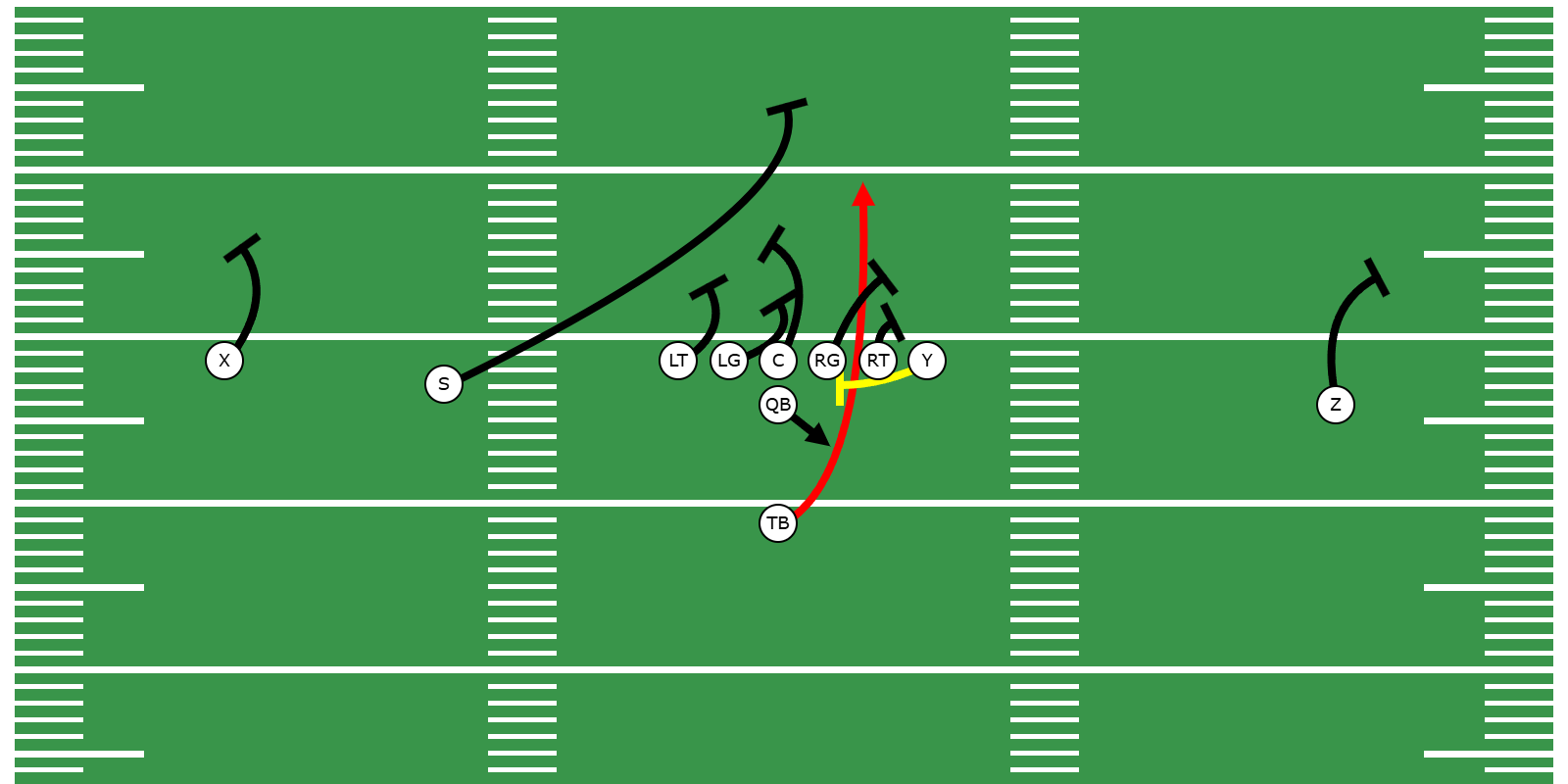
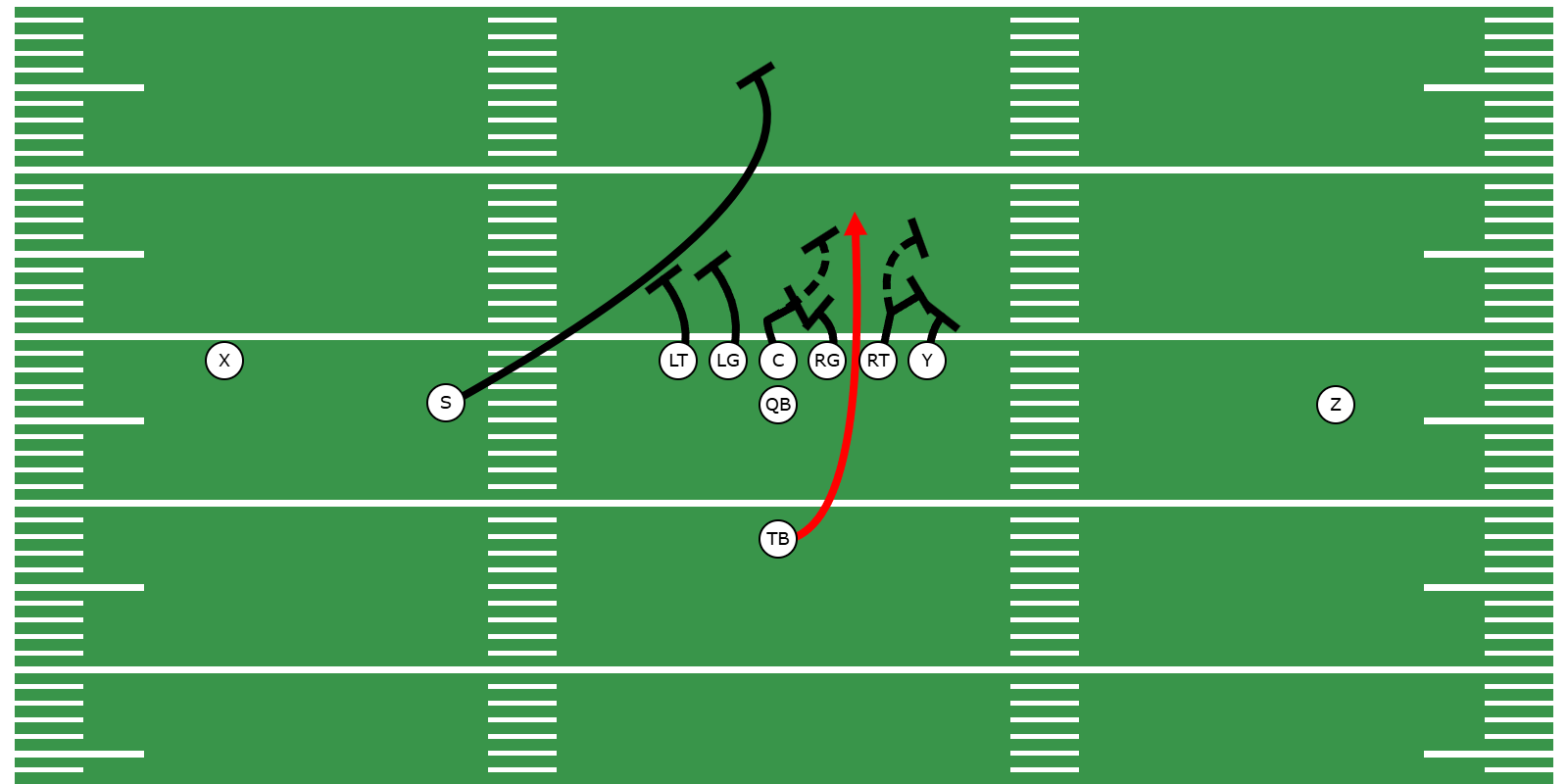
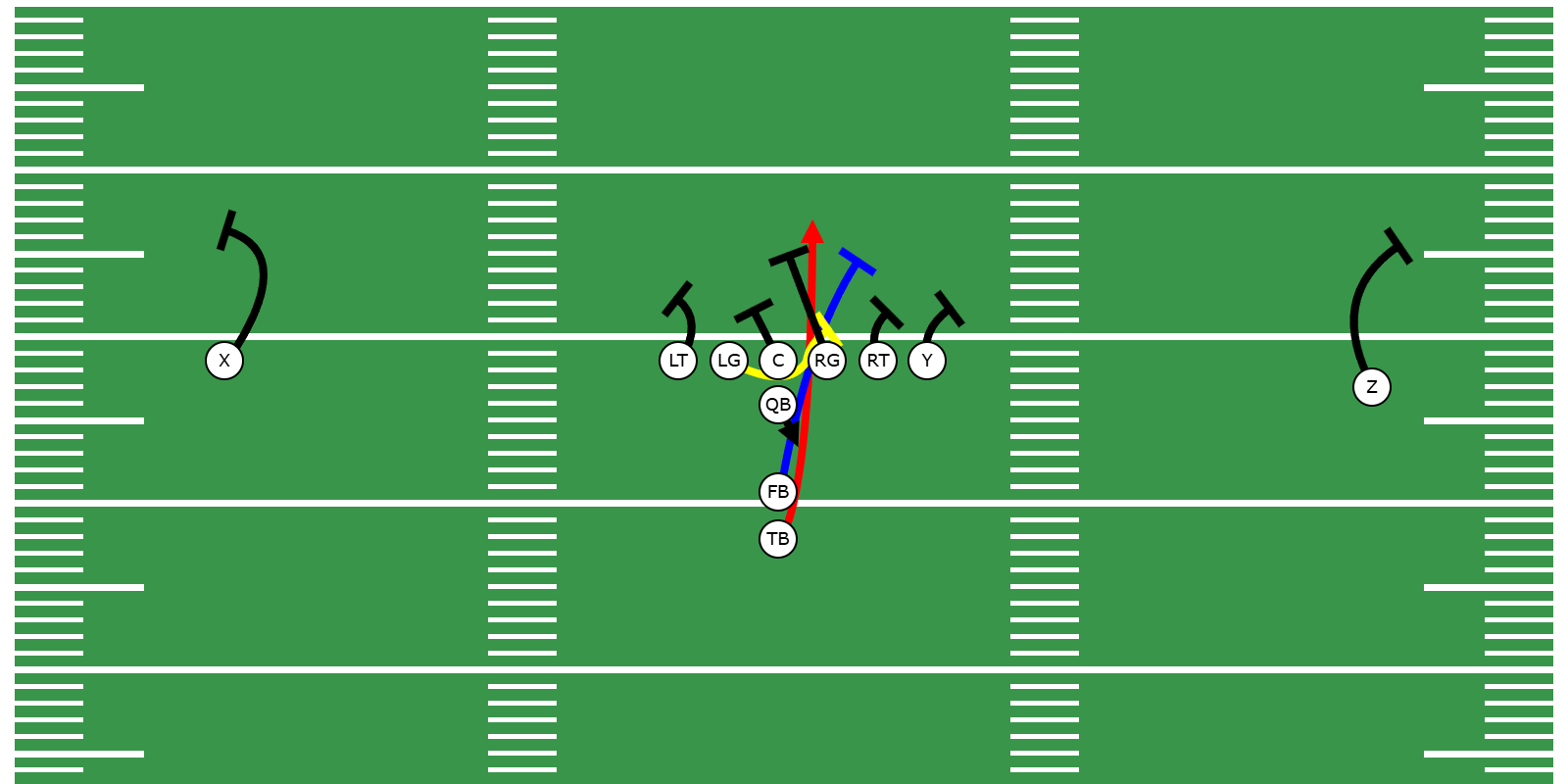
Trap is a classic gap-scheme running concept that intentionally leaves a defensive lineman unblocked for a moment before striking him with a pulling blocker from an unexpected angle. The concept punishes penetrating defensive fronts and rewards disciplined timing, making it a valuable addition to any youth offense.
Why Trap Works
Aggressive defensive linemen are taught to penetrate immediately after the snap. Trap uses that aggression against them. As the defender charges into the backfield, a pulling guard blocks him from the side, creating a crease inside before linebackers can react.
Best Formations
Trap works extremely well from the I Formation and Singleback Formation because the backfield action naturally hides the pulling blocker. Shotgun Doubles can also execute Trap effectively while pairing it with read or motion concepts.
Personnel
11 Personnel is the most common grouping because it provides balanced blocking surfaces while maintaining perimeter threats. Trap can also be successful from heavier personnel packages in short-yardage situations.
Try The Interactive Playbook Tool: Trap Run Concept
Draw your own Trap Run Concept concept based play diagram right here using our embedded interactive play designer demo:
GET STARTED: To get started simply click on any of the player icons in the diagram.
Start drawing your own plays like this and build your playbook with CoachYouths Playbook Designer.
Blocking Responsibilities
- Play-side linemen: Down block to prevent penetration.
- Backside guard: Pull tightly and trap the first designated defensive lineman.
- Center: Secure the play-side interior gap and communicate blocking adjustments.
- Tight end: Seal the edge when aligned to the play side.
- Receivers: Block the most dangerous perimeter defenders.
- Running back: Stay patient, follow the trap block, and explode through the crease.
Running Back Read
- Press the inside aiming point.
- Read the trap block.
- Cut immediately inside the trapped defender.
- Stay vertical once through the hole.
- Protect the football through traffic.
Defensive Adjustments
Even Fronts
Trap is highly effective against penetrating defensive tackles.
Odd Fronts
Communicate which defender is being trapped before the snap.
Slanting Fronts
Trust the blocking rules and avoid chasing movement.
Coaching Points
- Pull flat down the line of scrimmage.
- Trap the defender with inside-out leverage.
- Running backs must remain patient through the mesh.
- Down blocks cannot allow penetration.
Common Youth Mistakes
- Pullers taking too much depth.
- Running backs outrunning the trap block.
- Linemen abandoning down blocks early.
- Poor communication against shifting fronts.
Installation Progression
Teach down blocks and pull technique independently before combining them. Progress from walk-throughs to half-line drills, then inside-run and full-team periods.
Practice Drill
Use shields to simulate penetrating defensive tackles while guards repeatedly practice trap footwork and contact angles. Finish each rep with the running back reading the block and accelerating vertically.
Youth Coaching Tips
Teach players that Trap is a timing play, not a race. The running back should trust the puller instead of trying to beat everyone to the hole.
Why Trap Succeeds
Trap succeeds because it transforms defensive penetration into an advantage, creating a clean inside running lane with simple, repeatable blocking rules.
Related Articles
Published by CoachYouths Staff on 07/21/2026
You are NOT currently logged in, you may login or signup for FREE at any time: