Weather Considerations for Game Day
Weather can change how a football game is played, coached, and managed. Heat, cold, rain, wind, and lightning all affect player safety, execution, and decision-making. Successful youth coaches prepare for changing conditions instead of reacting to them after kickoff.
Player safety should always be the highest priority.
Check the Forecast Early
Before game day, review:
- Temperature.
- Wind conditions.
- Rain probability.
- Lightning risk.
- Field conditions.
Planning ahead helps avoid last-minute surprises.
Prepare for Heat
During hot weather:
- Encourage hydration before, during, and after the game.
- Rotate players more frequently.
- Watch for signs of heat-related illness.
- Schedule shade and water breaks when possible.
Never ignore player safety.
Prepare for Cold
In cold conditions:
- Encourage proper layered clothing when permitted.
- Keep players moving on the sideline.
- Protect hands when league rules allow.
- Pay attention to comfort and communication.
Warm players perform more consistently.
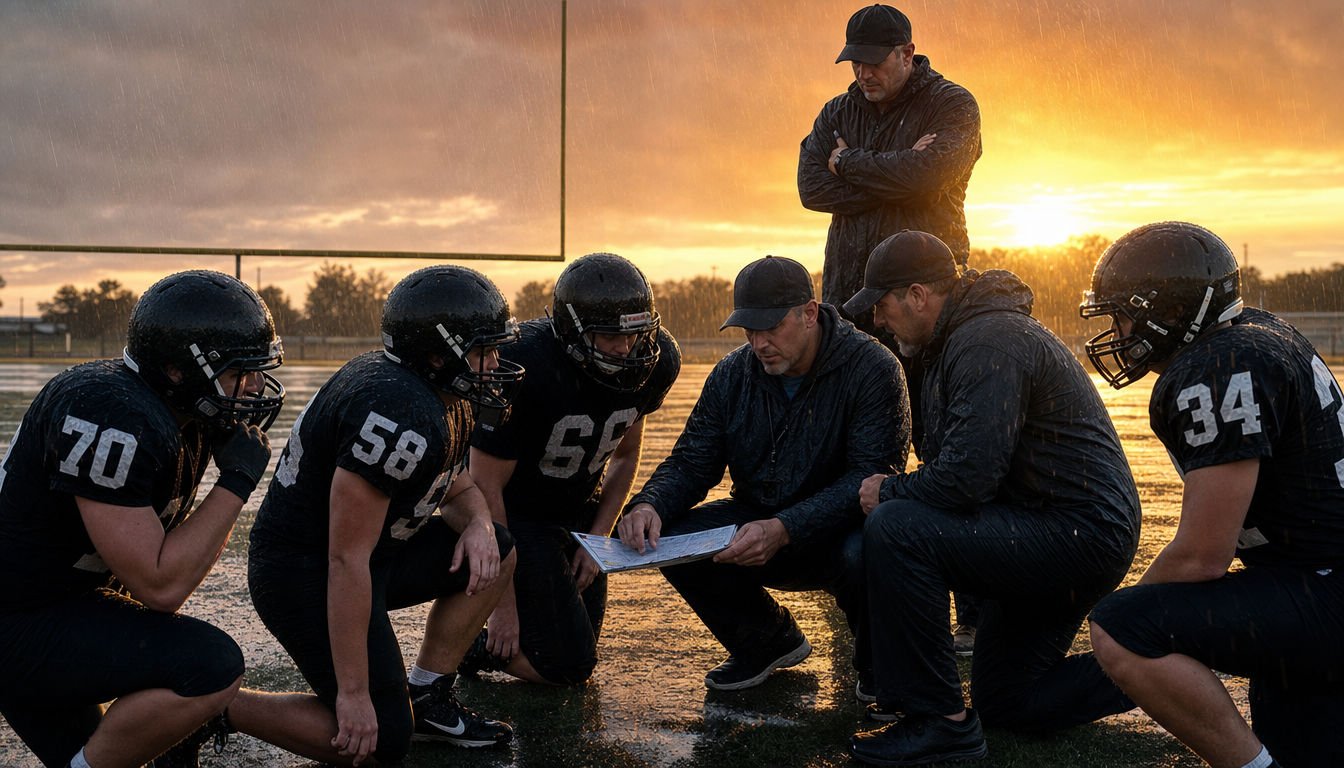
Adjust for Rain and Wind
Wet or windy weather may require coaches to:
- Emphasize ball security.
- Simplify offensive concepts.
- Expect footing issues.
- Place additional focus on special teams.
Execution often matters more than complexity.
Follow Lightning Policies
If lightning is present:
- Follow league and facility safety rules.
- Move players and families to a safe location.
- Resume play only when authorized.
No game is more important than player safety.
Communicate Your Plan
Before kickoff, explain:
- Weather expectations.
- Equipment reminders.
- Hydration plans.
- Sideline procedures.
Prepared players stay calmer when conditions change.
Common Mistakes
Avoid:
- Ignoring weather forecasts.
- Waiting too long to hydrate players.
- Using the same game plan in every condition.
- Taking unnecessary safety risks.
- Failing to communicate changes.
Frequently Asked Questions
Should weather change our game plan?
Sometimes. Adjust when conditions affect player safety or execution.
What is most important in bad weather?
Protecting players while emphasizing fundamentals such as ball security and communication.
Who makes weather-related safety decisions?
Follow your league’s policies and the directions of game officials and facility staff.
Key Takeaways
- Monitor weather before game day.
- Put player safety first.
- Adjust your plan when conditions require it.
- Communicate clearly with players and families.
- Fundamentals become even more important in difficult weather.
Published by CoachYouths Staff on 07/15/2026
You are NOT currently logged in, you may login or signup for FREE at any time: