Stretch Run Concept
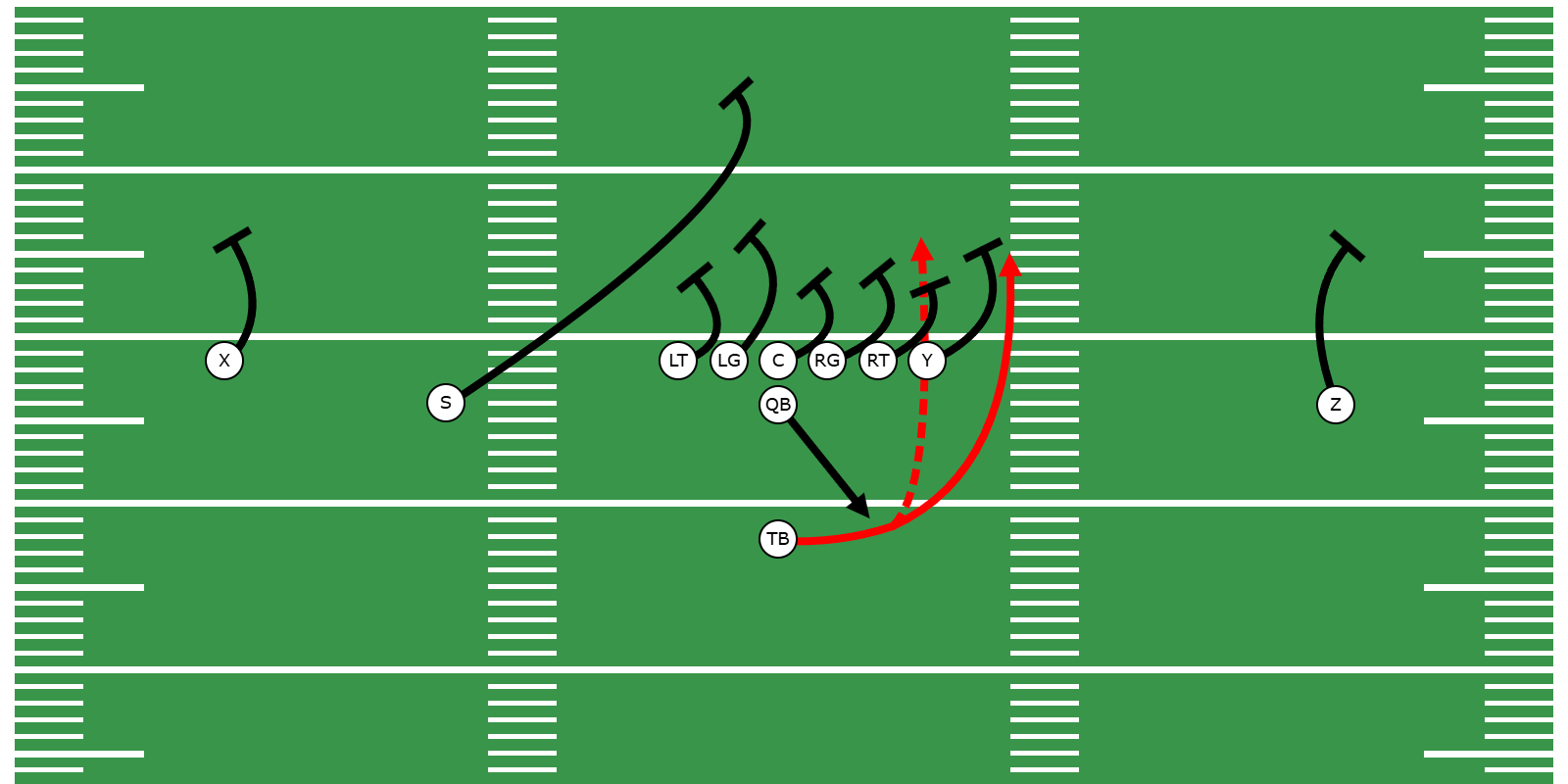
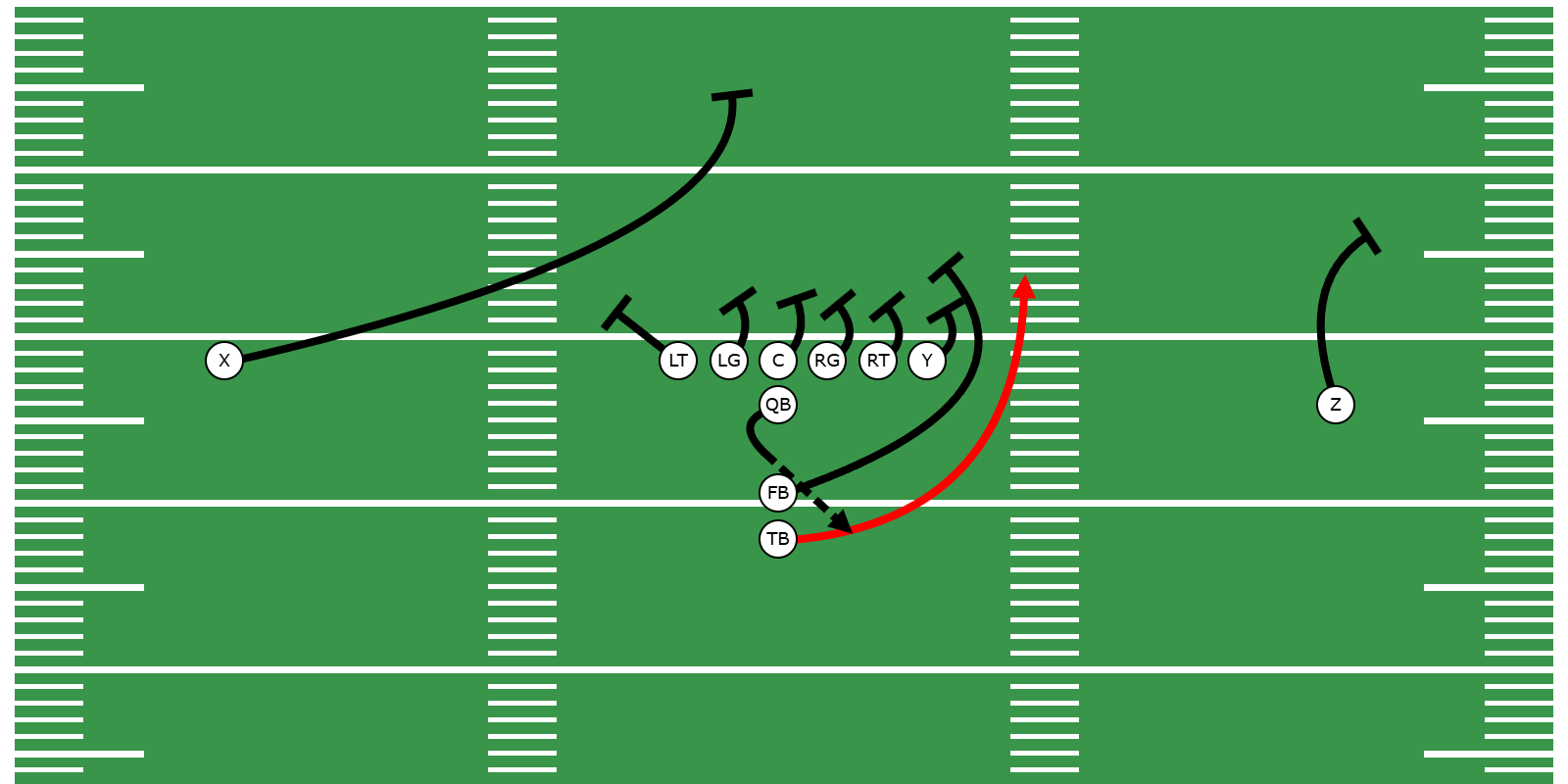
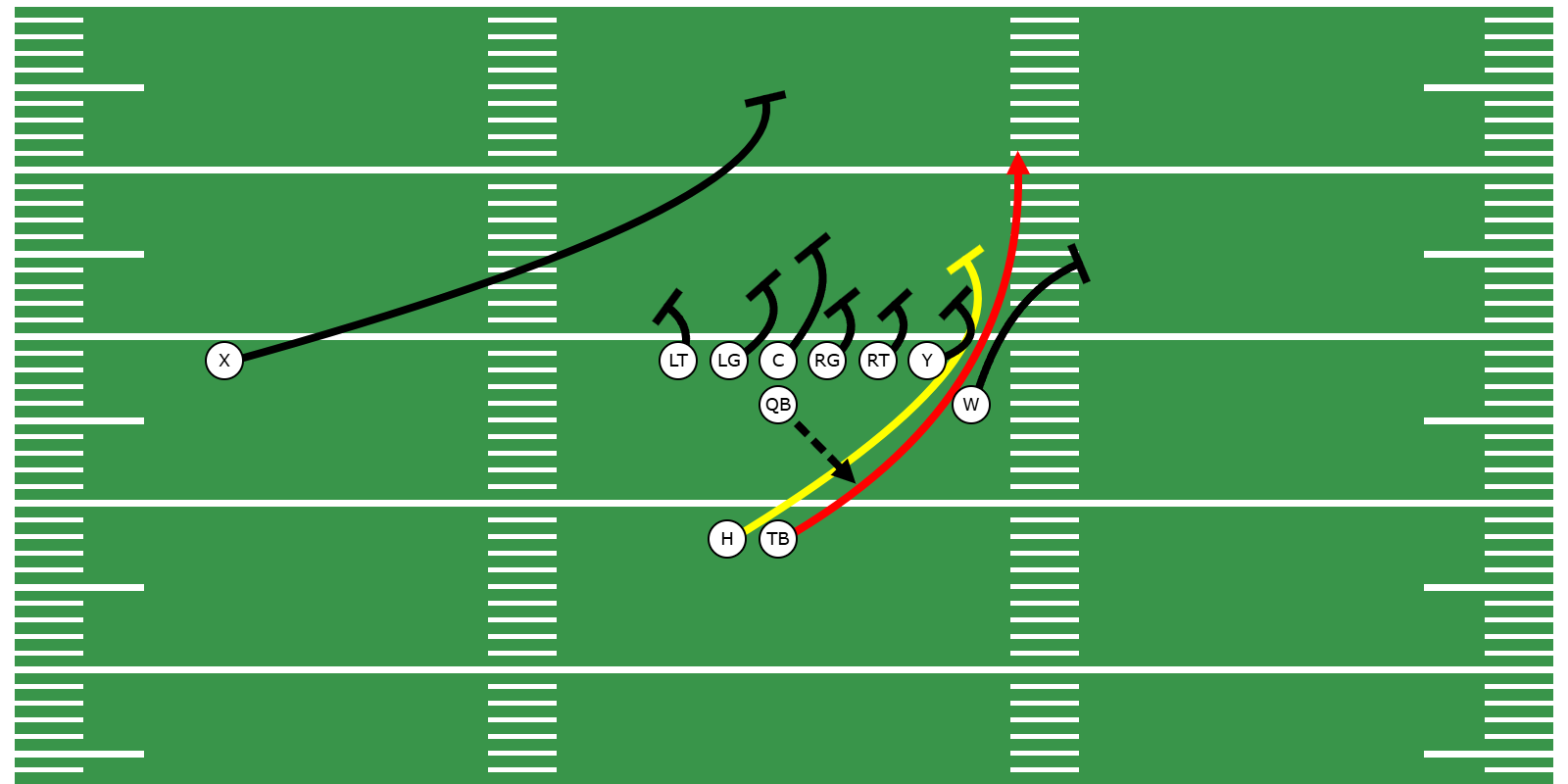
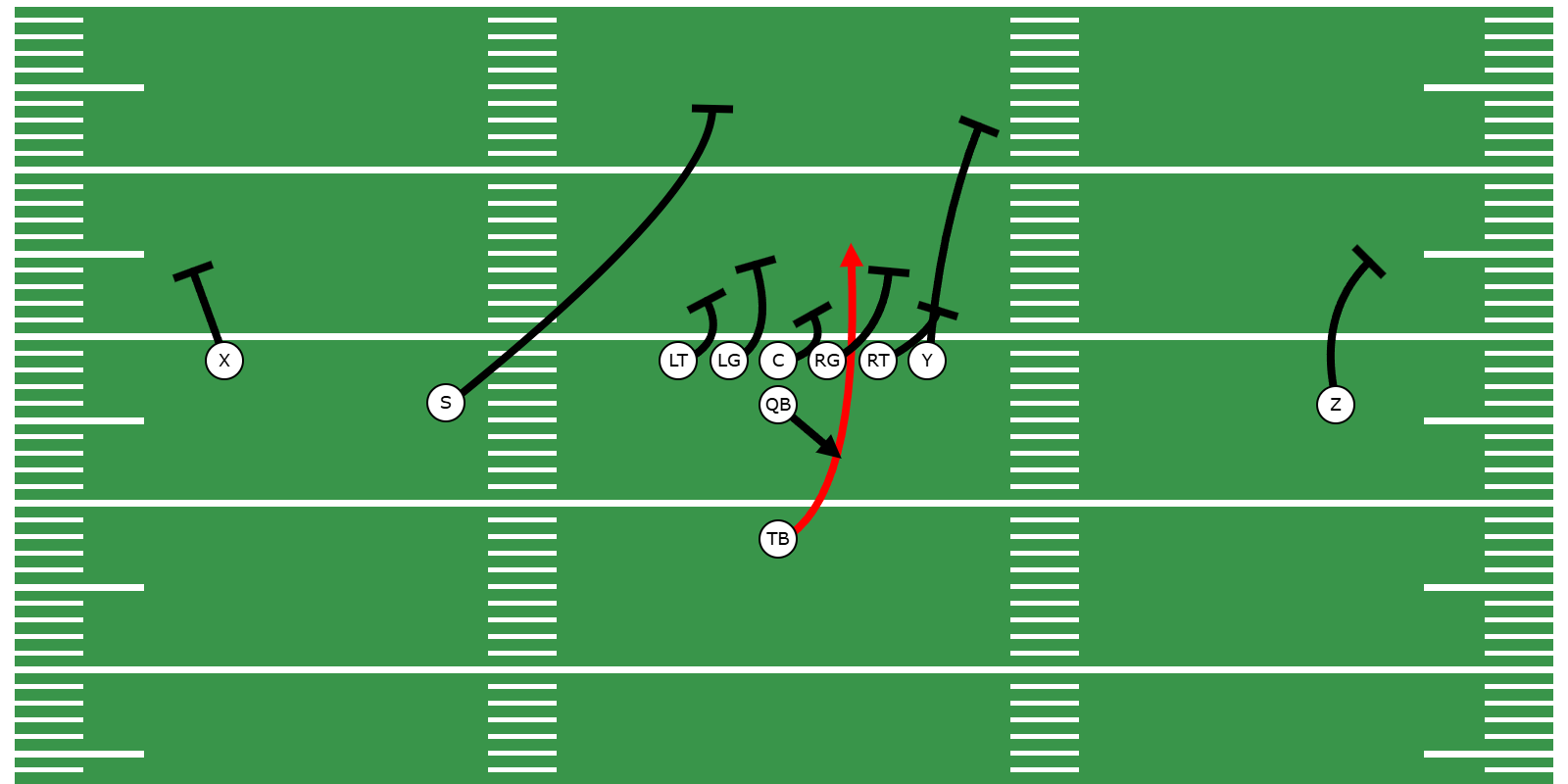
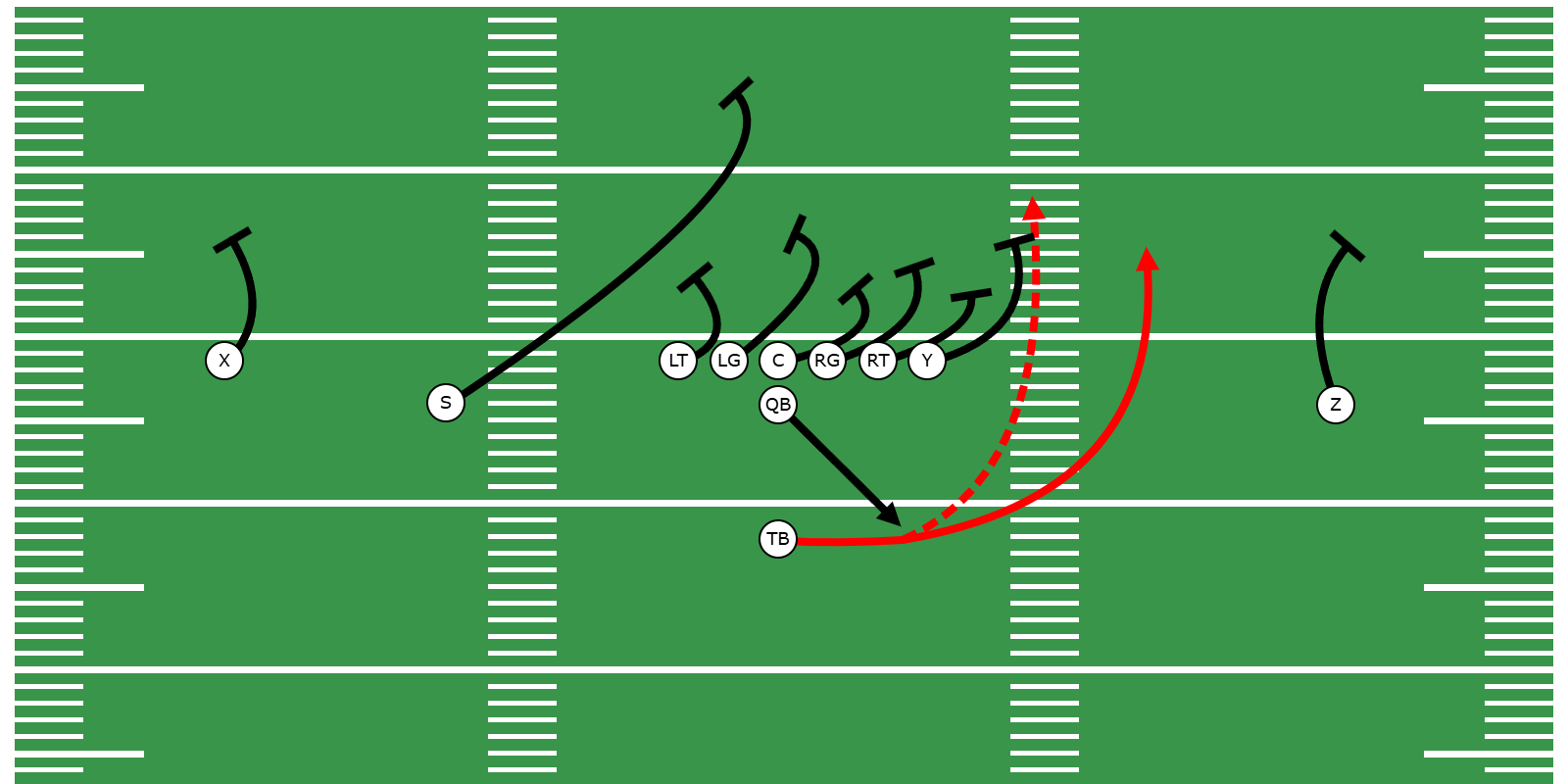
Stretch is an outside zone running concept that forces the defense to defend the entire width of the field before the running back makes a single decisive cut upfield. While many coaches use the terms Stretch and Outside Zone interchangeably, Stretch emphasizes pressing the perimeter to widen the defense before attacking the first available vertical crease.
Why Stretch Works
Stretch forces defensive linemen to move laterally while linebackers flow aggressively toward the sideline. As pursuit widens, natural cutback lanes develop inside. The offensive line blocks areas rather than specific defenders, allowing the play to adapt to different defensive fronts.
Best Formations
Singleback Formation is the classic alignment because it gives the running back depth to press the aiming point while maintaining downhill momentum. Stretch also adapts well to shotgun offenses using similar zone principles.
Personnel
11 Personnel provides an excellent balance of blocking strength and perimeter threats. The concept also works from 10 Personnel when defenses spread to defend additional receivers.
Try The Interactive Playbook Tool: Stretch Run Concept
Draw your own Stretch Run Concept concept based play diagram right here using our embedded interactive play designer demo:
GET STARTED: To get started simply click on any of the player icons in the diagram.
Start drawing your own plays like this and build your playbook with CoachYouths Playbook Designer.
Blocking Responsibilities
- Offensive line: Take synchronized play-side zone steps and create horizontal movement.
- Tight end: Reach or widen the edge defender.
- Wide receivers: Block the most dangerous perimeter support defender.
- Running back: Press the outside aiming point, read leverage, and make one decisive cut.
- Quarterback: Execute the handoff cleanly and carry out the bootleg fake when called.
Running Back Read
- Press the outside landmark.
- Read the first defender outside the tackle.
- Continue outside if the edge is available.
- Plant and cut vertically when a crease develops.
- Bend backside only if pursuit completely overruns the play.
Defensive Adjustments
Even Fronts
Create horizontal movement before climbing to linebackers.
Odd Fronts
Communicate combination blocks against the nose tackle.
Fast Flow Defenses
Remain patient and trust the cutback lane.
Coaching Points
- Every blocker takes the same first step.
- Reach leverage before climbing.
- Running backs make one cut and accelerate.
- Stay north-south after the decision.
Common Youth Mistakes
- Cutting too early.
- Running east-west without committing.
- Linemen chasing linebackers instead of securing combination blocks.
- Receivers failing to maintain perimeter blocks.
Installation Progression
Install offensive-line footwork first, then running back reads and aiming points. Progress through half-line drills, inside-run periods, and full-team practice while changing defensive fronts.
Practice Drill
Run Stretch against rotating fronts while emphasizing zone footwork, reach blocks, and one-cut decisions. Use cones to reinforce the aiming point and cutback landmarks.
Youth Coaching Tips
Young running backs often panic when the initial lane is unavailable. Teach them to trust the aiming point and allow the blocking to develop before making their cut.
Why Stretch Succeeds
Stretch succeeds because it widens the defense, creates natural running lanes, and gives the running back a simple, repeatable progression based on defensive leverage.
Related Articles
Published by CoachYouths Staff on 07/21/2026
You are NOT currently logged in, you may login or signup for FREE at any time: