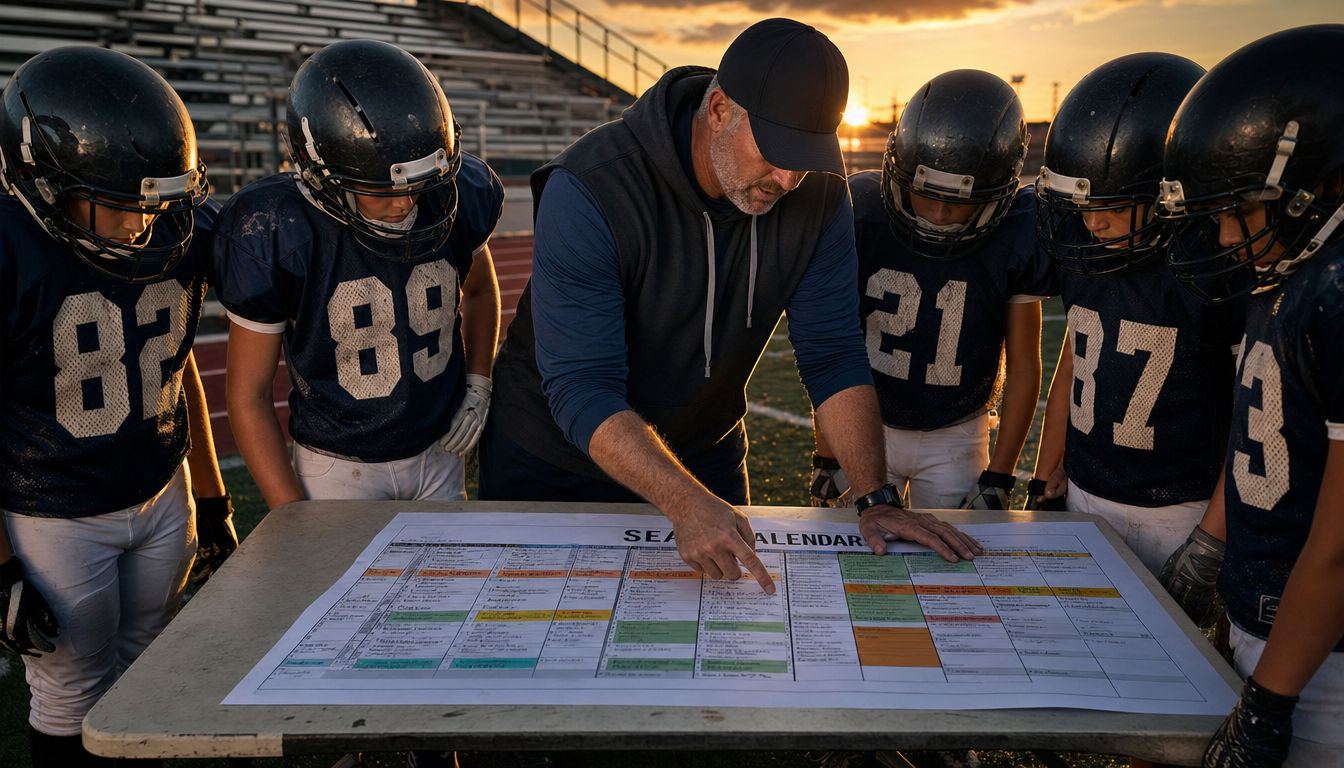
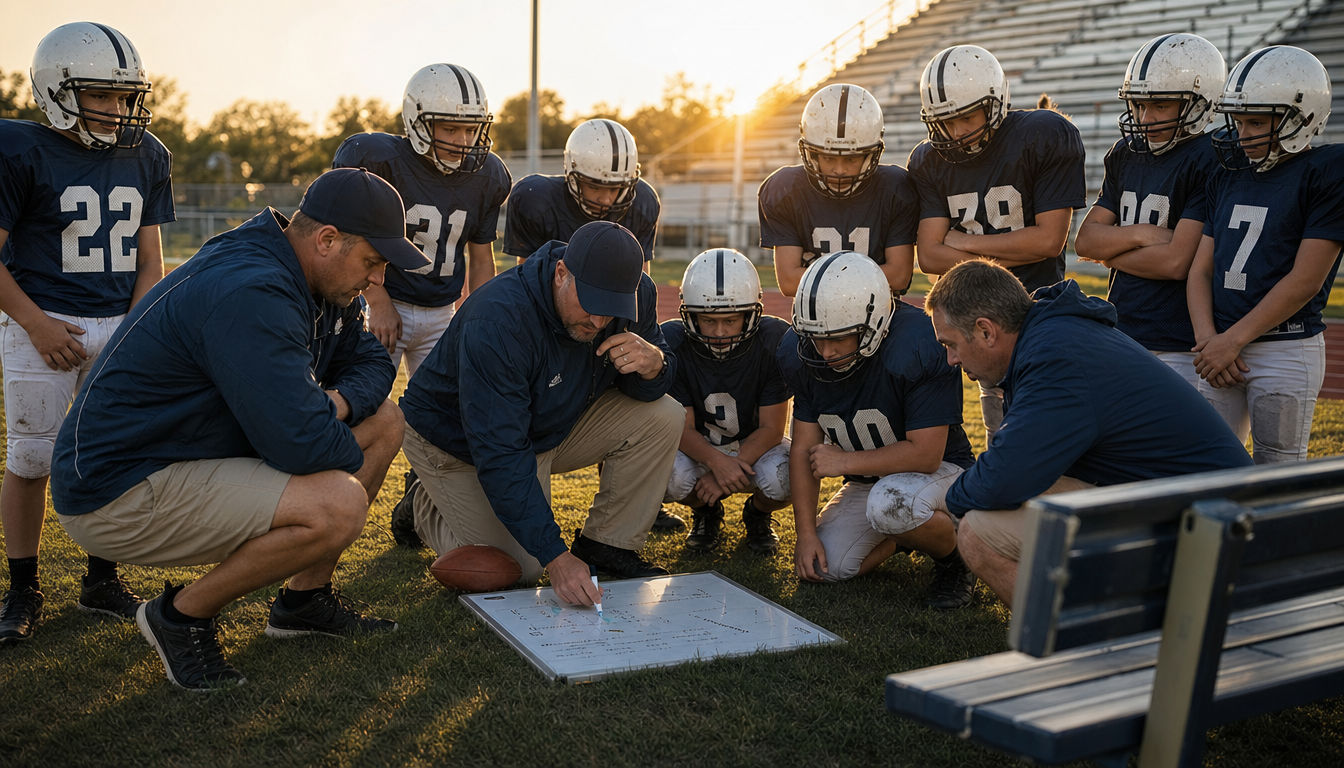
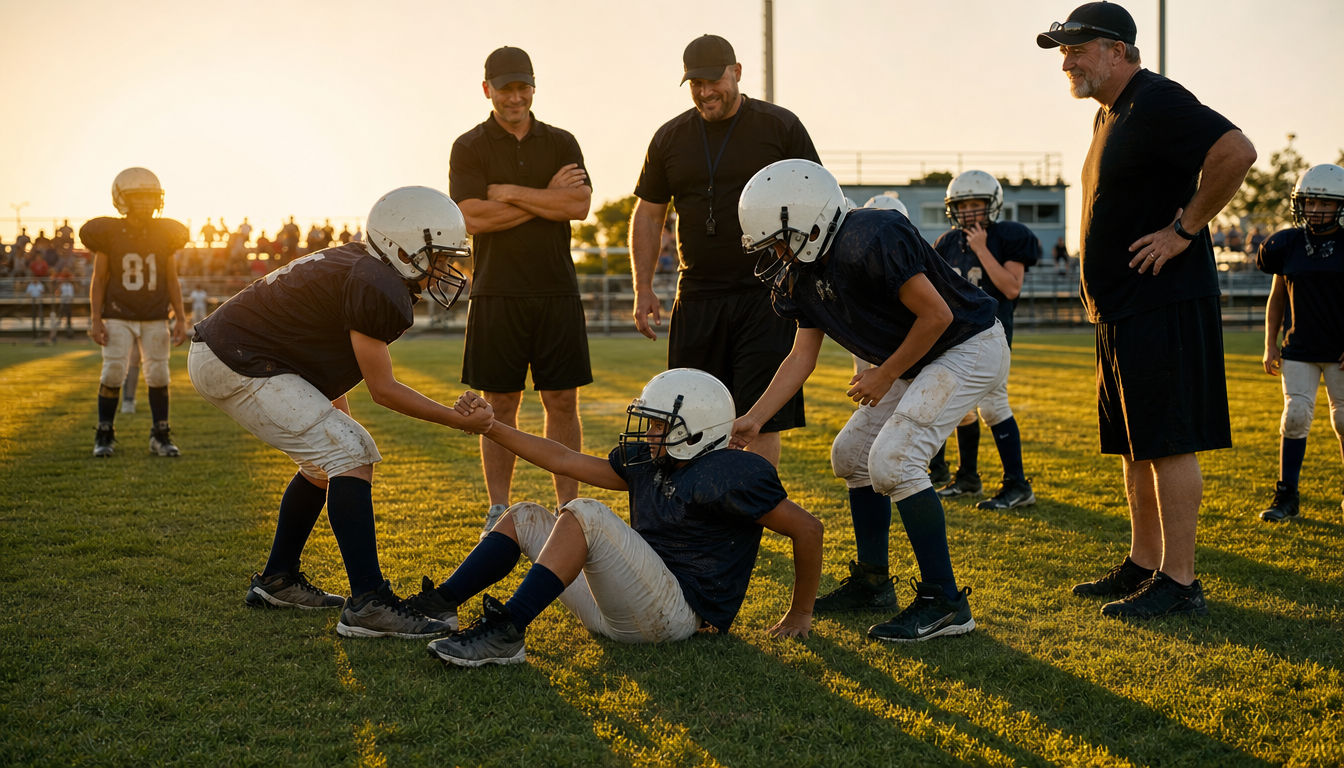
Setting Team Goals for the Season
Every successful season begins with a clear vision of what your team wants to accomplish. While winning games is exciting, the best youth football goals focus on player development, teamwork, sportsmanship, and steady improvement. Goals give players something positive to work toward throughout the season.
Strong goals inspire effort without creating unnecessary pressure.
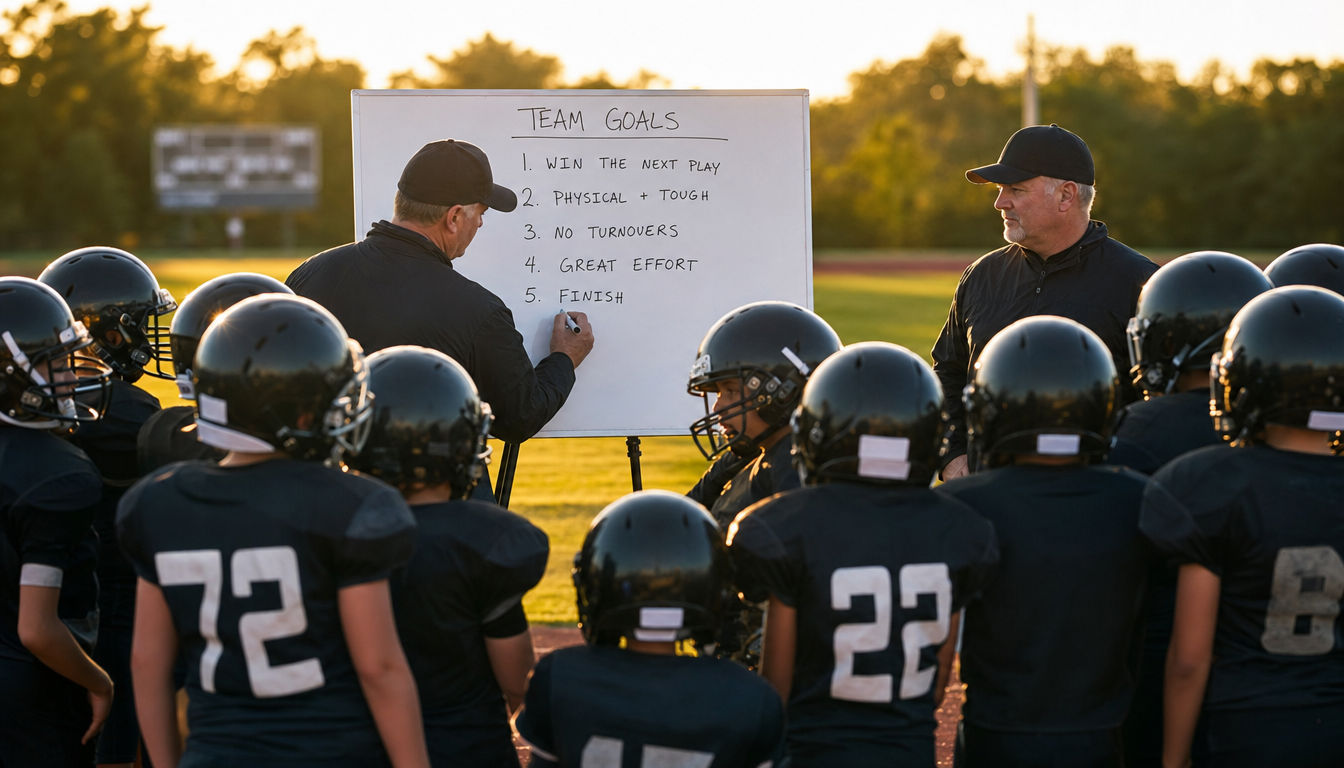
Start with Purpose
Before setting goals, ask:
- What do we want our players to learn?
- What kind of teammates do we want them to become?
- What values will define our team?
- How will we measure improvement?
The answers should shape every goal you establish.
Focus on Controllable Goals
Choose goals players can influence through effort and preparation.
Examples include:
- Improve tackling fundamentals.
- Reduce penalties.
- Increase attendance and effort.
- Communicate better on every play.
- Finish every practice with great energy.
Process goals are more valuable than outcome goals.
Involve Your Players
When appropriate, ask players:
- What do you want to improve?
- What kind of teammate do you want to be?
- How can we help each other succeed?
Player ownership increases commitment.
Keep Goals Visible
Review goals regularly.
Discuss them:
- Before practices.
- During games.
- At halftime.
- After games.
- At the end of each week.
Goals only matter if they remain part of the conversation.
Celebrate Progress
Recognize improvement by celebrating:
- Better effort.
- Strong teamwork.
- Positive attitudes.
- Improved execution.
- Personal growth.
Progress builds motivation.
Revisit Goals Throughout the Season
As your team develops:
- Celebrate completed goals.
- Adjust goals when appropriate.
- Reinforce your core values.
- Keep challenging players to improve.
Goals should evolve with the team.
Common Mistakes
Avoid:
- Focusing only on wins and losses.
- Setting unrealistic expectations.
- Forgetting to review goals.
- Comparing players unfairly.
- Ignoring small improvements.
Frequently Asked Questions
Should every team have the same goals?
No. Goals should match your team’s experience, age, and needs.
How many goals should we set?
A few meaningful goals are easier to remember and achieve.
What is the most important goal?
Helping every player improve while enjoying the game.
Key Takeaways
- Build goals around player development.
- Focus on controllable behaviors.
- Involve players when appropriate.
- Review goals consistently.
- Celebrate progress throughout the season.
Published by CoachYouths Staff on 07/15/2026
You are NOT currently logged in, you may login or signup for FREE at any time: