Y-Cross Passing Concept
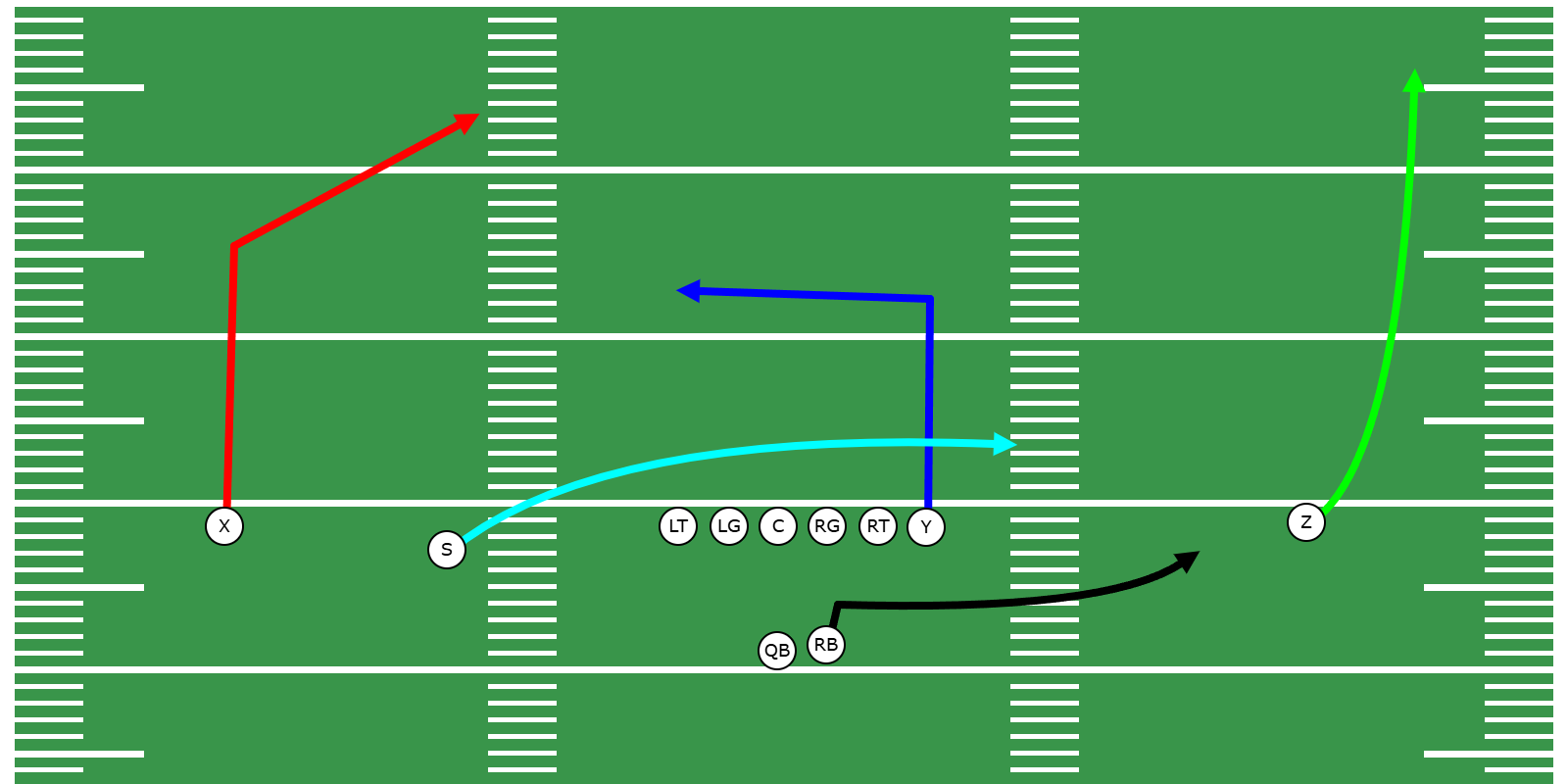
Y-Cross is a progression-based passing concept built around a tight end or slot receiver crossing the field at intermediate depth. It combines horizontal movement with vertical route distribution, giving the quarterback answers against nearly every coverage while creating explosive-play potential.
Why Y-Cross Works
The crossing route naturally works away from leverage while complementary routes stretch the defense vertically. Linebackers are forced to expand with underneath routes, safeties must respect vertical threats, and the crossing receiver often finds space behind the second level.
Best Formations
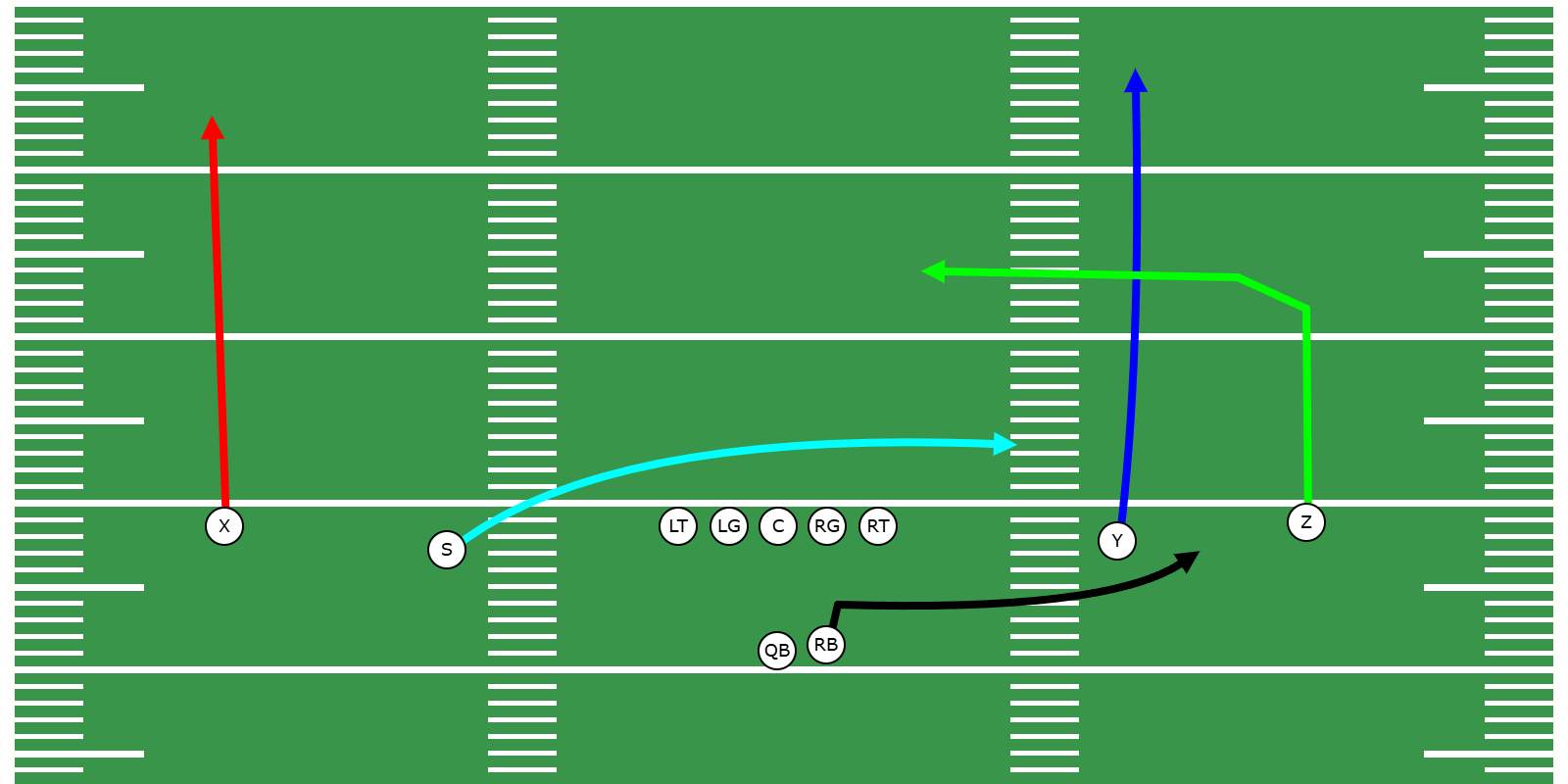
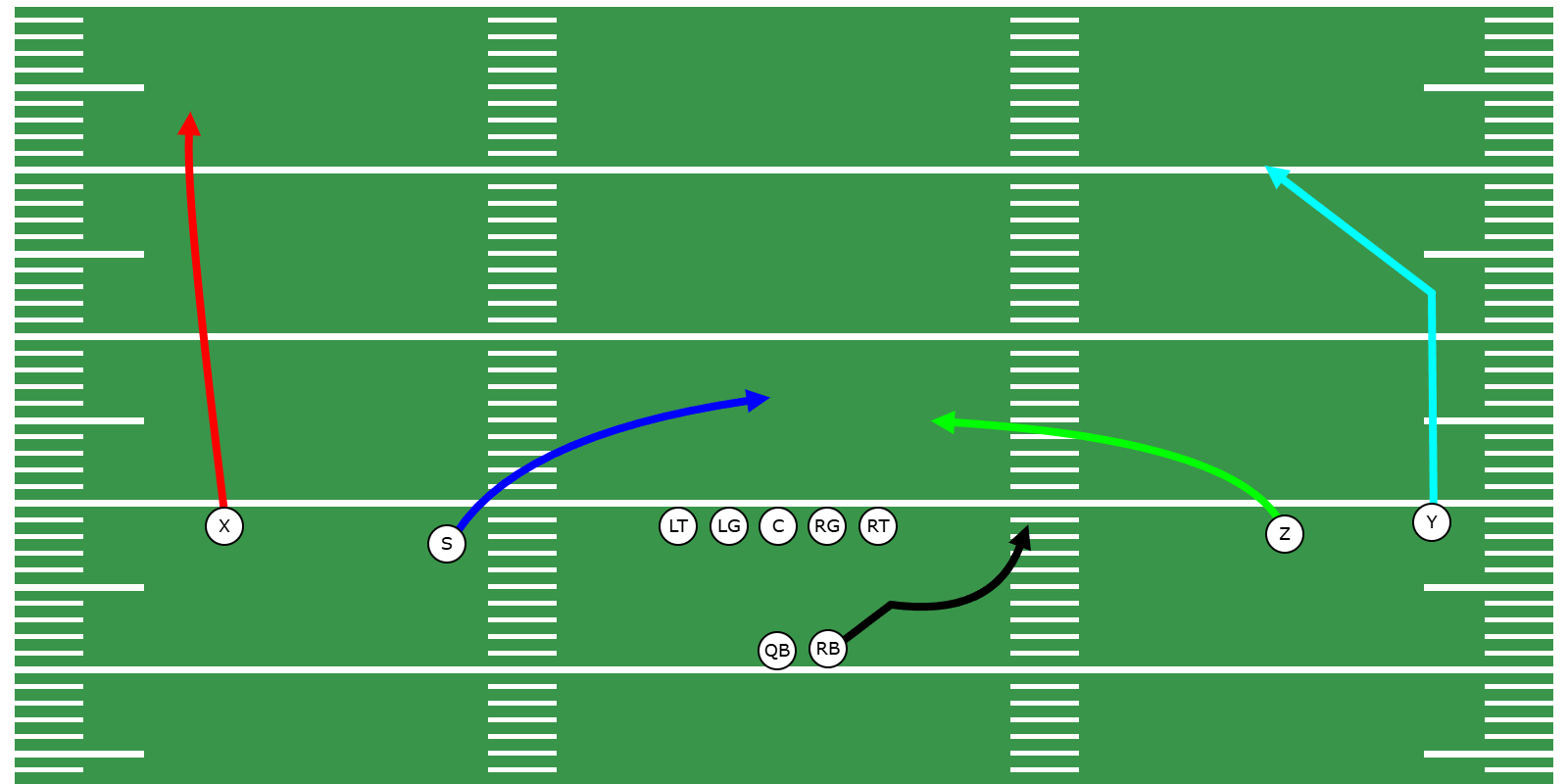
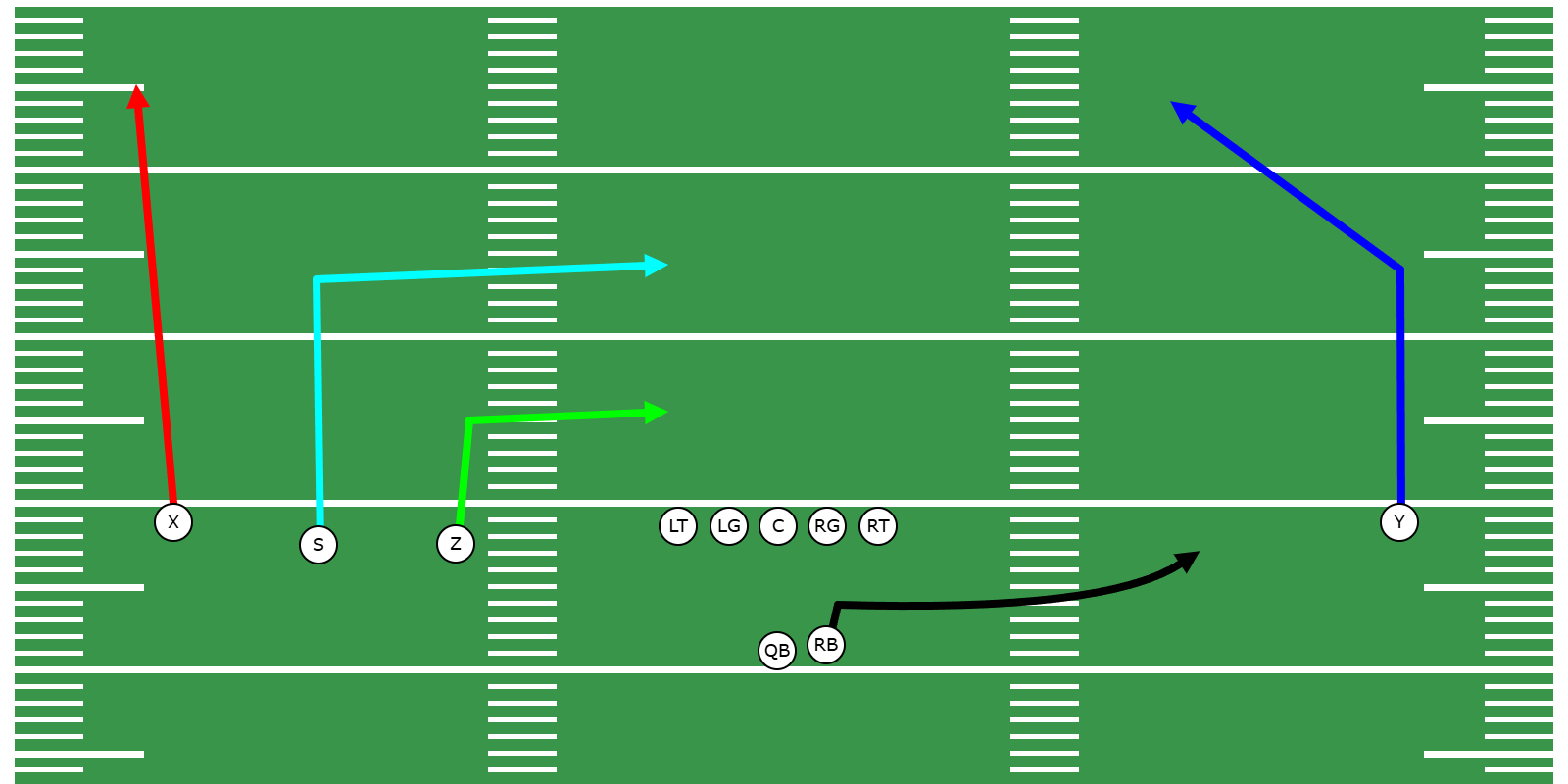
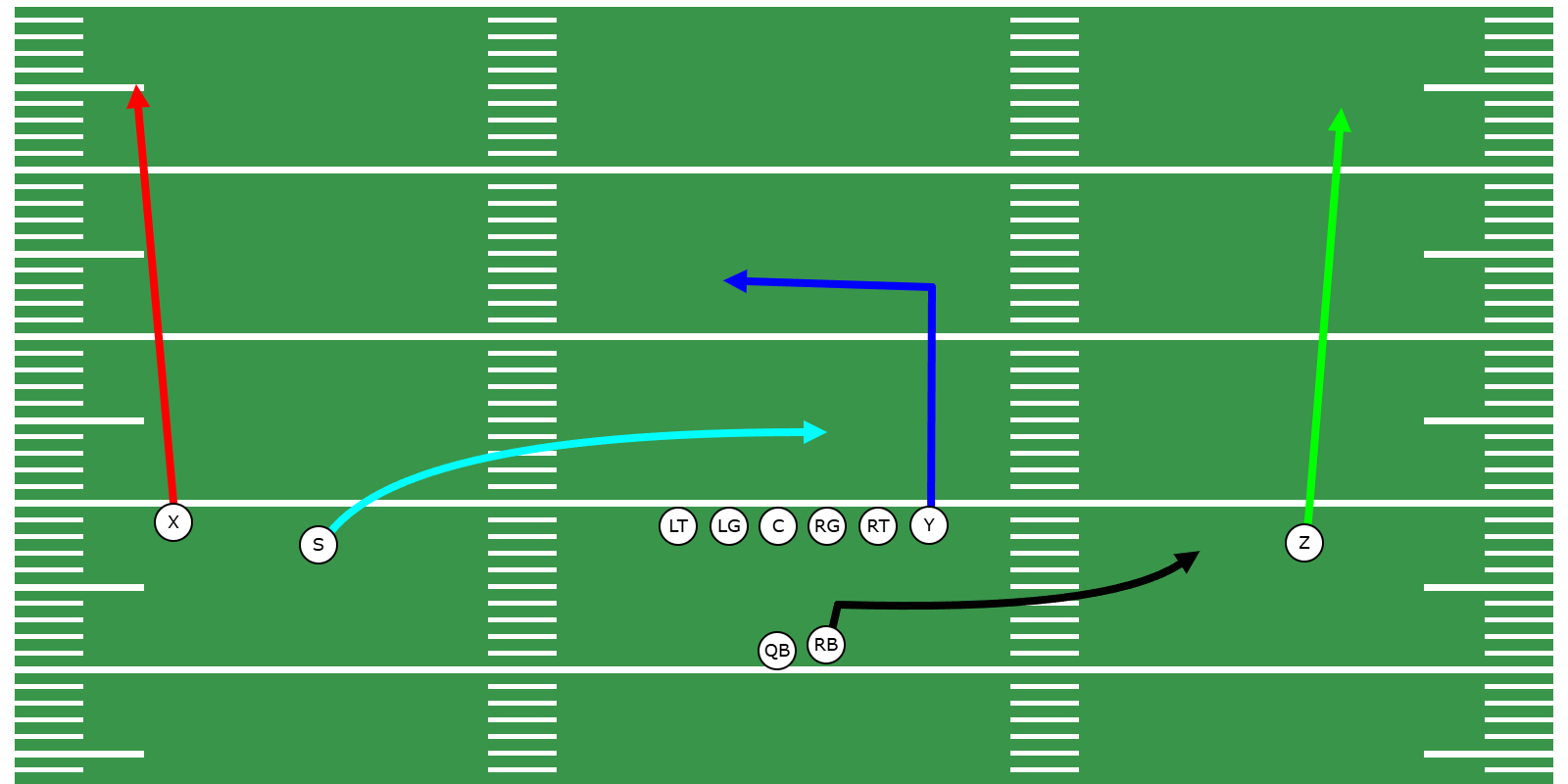
Trips is the traditional teaching formation because it naturally positions the Y receiver for the crossing route. Spread formations also provide excellent spacing and clear landmarks.
Personnel
11 Personnel is ideal because the tight end often serves as the crossing receiver, although athletic slot receivers can fill the role in 10 Personnel.
Try The Interactive Playbook Tool: Y-Cross Passing Concept
Draw your own Y-Cross Passing Concept concept based play diagram right here using our embedded interactive play designer demo:
GET STARTED: To get started simply click on any of the player icons in the diagram.
Start drawing your own plays like this and build your playbook with CoachYouths Playbook Designer.
Route Responsibilities
- Y receiver: Intermediate crossing route aiming for open grass across the field.
- Outside receiver: Vertical clear or post route to remove deep coverage.
- Slot receiver: Flat, shallow, or sit route to occupy underneath defenders.
- Backside receiver: Dig, comeback, or post depending on the variation.
- Running back: Protect first, then release as the outlet.
Quarterback Progression
- Identify the safety structure before the snap.
- Read the Y-Cross as it develops.
- Move to the backside dig or comeback if the crossing route is capped.
- Finish with the outlet rather than forcing a contested throw.
Coverage Adjustments
Cover 2
Expect the crossing route to settle between the linebackers and safeties.
Cover 3
Throw the crossing route after it clears the hook defenders.
Man Coverage
Lead the crossing receiver into open grass and let him outrun trailing defenders.
Quarters
Read the safeties patiently and work underneath if they stay deep.
Coaching Points
- The crossing receiver should maintain speed without drifting upfield.
- Vertical routes must clear space rather than hunt the football.
- Quarterbacks should trust landmarks and throw with anticipation.
- Keep the pocket clean by stepping up instead of drifting.
Common Youth Mistakes
- Crossing routes too shallow or too deep.
- Quarterbacks waiting until the receiver is obviously open.
- Receivers bunching in the middle of the field.
- Ignoring the outlet when the defense covers the crossing route.
Installation Progression
Install the crossing route first, then add the vertical clear, underneath route, and quarterback progression before advancing to 7-on-7 and full-team periods.
Practice Drill
Run repeated progression periods with rotating coverages, forcing the quarterback to read the crossing route first before progressing through the remaining options.
Youth Coaching Tips
Teach the crossing receiver to run to landmarks instead of chasing the football. Younger quarterbacks gain confidence when they know exactly where the receiver will appear.
Why Y-Cross Succeeds
Y-Cross succeeds because it attacks multiple coverage levels at once while giving the quarterback a logical progression built around one dependable intermediate route.
Published by CoachYouths Staff on 07/21/2026
You are NOT currently logged in, you may login or signup for FREE at any time: