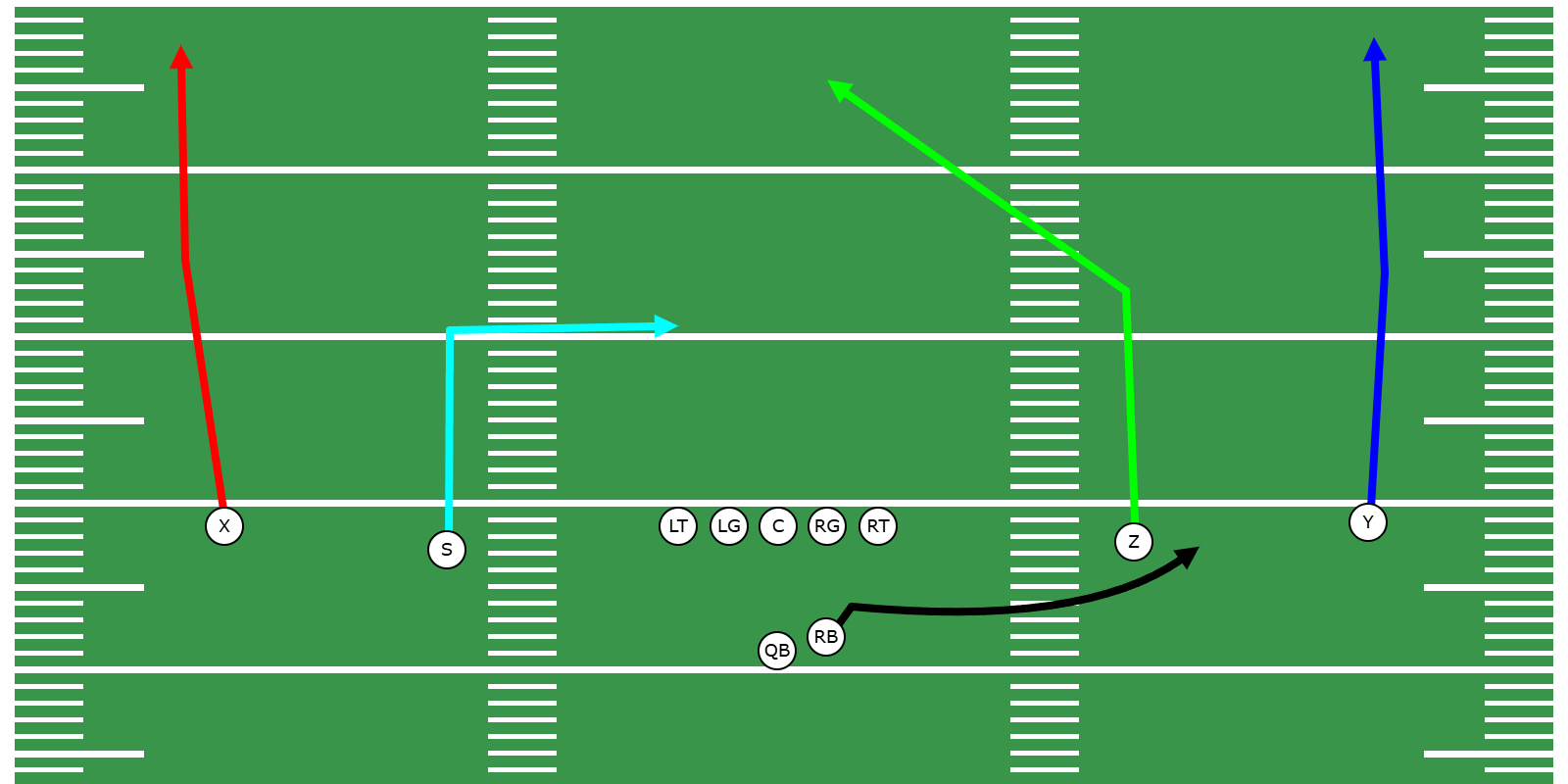
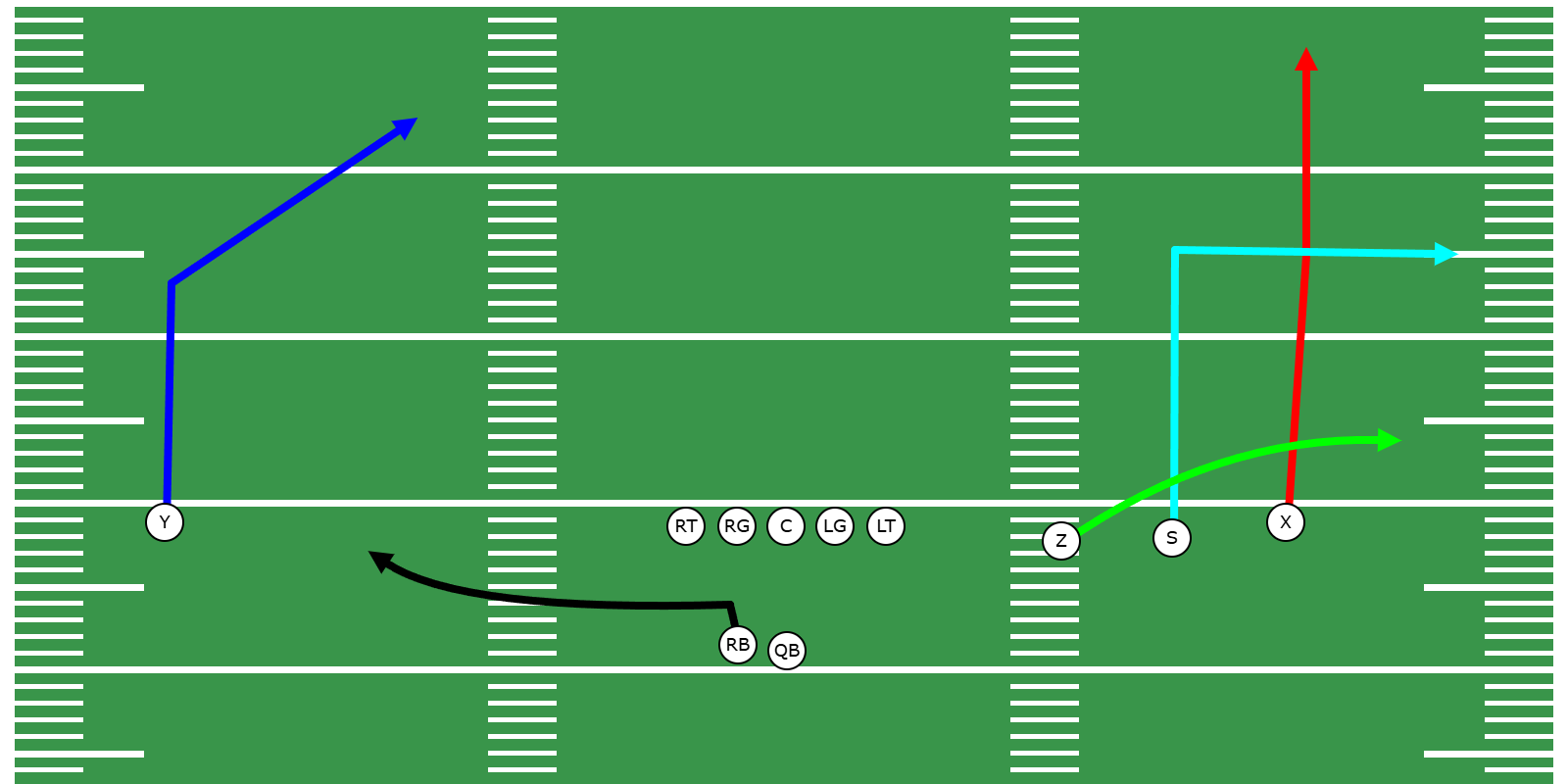
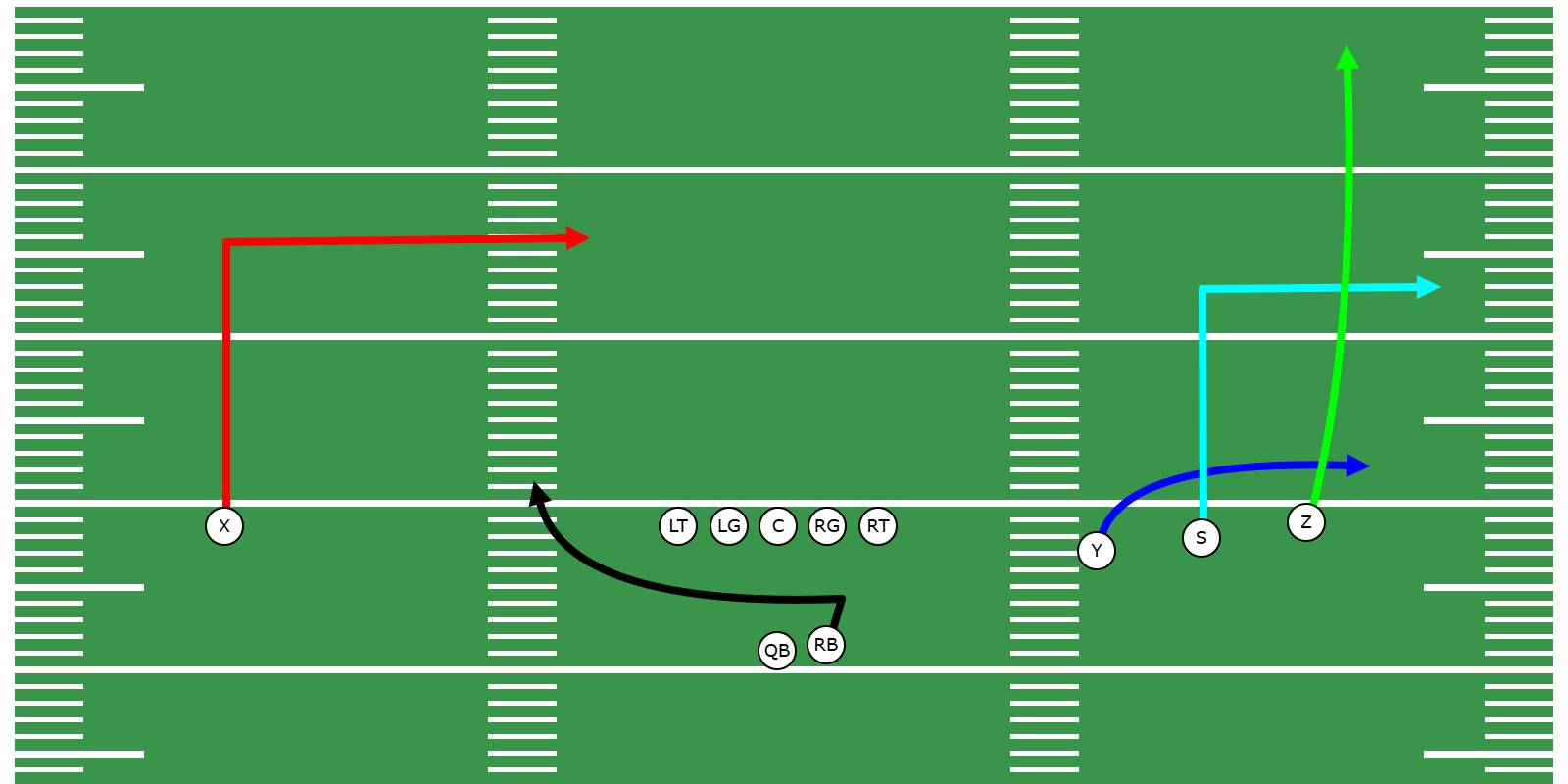
Wheel Passing Concept
The Wheel concept is built around a receiver or running back initially releasing toward the flat before turning vertically up the sideline. The early movement draws underneath defenders forward, creating separation as the receiver accelerates into open space. When timed correctly, the Wheel produces explosive plays while remaining easy for youth players to understand.
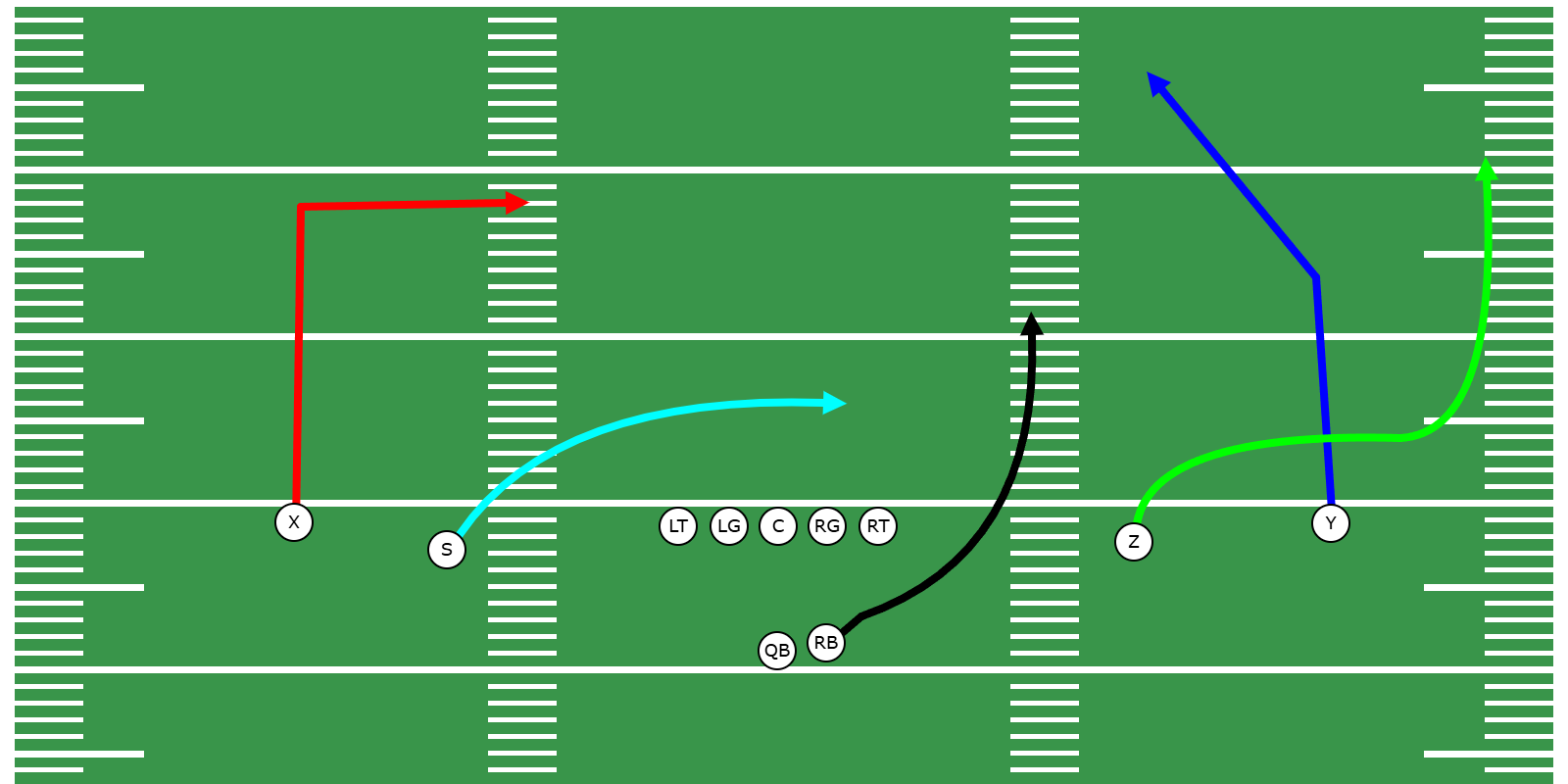
Why Wheel Works
The route begins like a short outlet pass, encouraging linebackers and flat defenders to attack downhill. As the receiver turns upfield, those defenders are suddenly out of position while safeties must cover significant ground to recover. The route is especially effective when paired with concepts that naturally pull defenders inside.
Best Formations
Spread and Trips formations provide excellent spacing for Wheel routes. Empty formations can isolate the Wheel receiver against a linebacker, while shotgun alignments improve quarterback timing.
Personnel
11 Personnel is an excellent fit because running backs frequently run the Wheel route. Athletic slot receivers can also execute the concept effectively from 10 Personnel.
Try The Interactive Playbook Tool: Wheel Passing Concept
Draw your own Wheel Passing Concept concept based play diagram right here using our embedded interactive play designer demo:
GET STARTED: To get started simply click on any of the player icons in the diagram.
Start drawing your own plays like this and build your playbook with CoachYouths Playbook Designer.
Route Responsibilities
- Wheel receiver: Release to the flat, gain width, then turn vertically up the sideline.
- Outside receiver: Clear the cornerback with a fade, post, or inside release.
- Inside receivers: Run complementary routes that occupy linebackers and safeties.
- Running back: If not the Wheel runner, protect before releasing as the outlet.
Quarterback Progression
- Identify the matchup before the snap.
- Confirm defender movement after the snap.
- Allow the Wheel receiver to clear underneath coverage.
- Throw with anticipation to the sideline landmark.
- Progress underneath if the vertical window never develops.
Coverage Adjustments
Cover 2
Look for the Wheel behind the cornerback and before the safety closes.
Cover 3
Throw only after the Wheel clears the flat defender.
Man Coverage
Expect favorable matchups against linebackers or trailing defenders.
Quarters
Take the underneath progression if safeties remain over the top.
Coaching Points
- Sell the flat release before turning upfield.
- Accelerate through the turn instead of slowing down.
- Quarterbacks should throw to space rather than waiting for separation.
- Outside receivers must clear coverage at full speed.
Common Youth Mistakes
- Turning upfield too early.
- Drifting inside after the turn.
- Quarterbacks throwing before the receiver clears the defender.
- Receivers looking back too soon.
Installation Progression
Teach the flat release first, then the vertical turn, followed by quarterback timing. Progress through routes on air, one-on-ones, 7-on-7, and full-team practice.
Practice Drill
Pair a running back with a linebacker and repeat Wheel routes against both man and zone coverage. Emphasize release technique, acceleration, and throwing to the proper landmark.
Youth Coaching Tips
Many young players reveal the Wheel by turning upfield too quickly. Reinforce selling the flat route first. The more believable the initial release, the more separation the receiver will create.
Why Wheel Succeeds
The Wheel succeeds because it changes the receiver’s path after defenders commit downhill, producing explosive opportunities while complementing many popular quick-game concepts.
Related Articles
Published by CoachYouths Staff on 07/21/2026
You are NOT currently logged in, you may login or signup for FREE at any time: