Sail Passing Concept
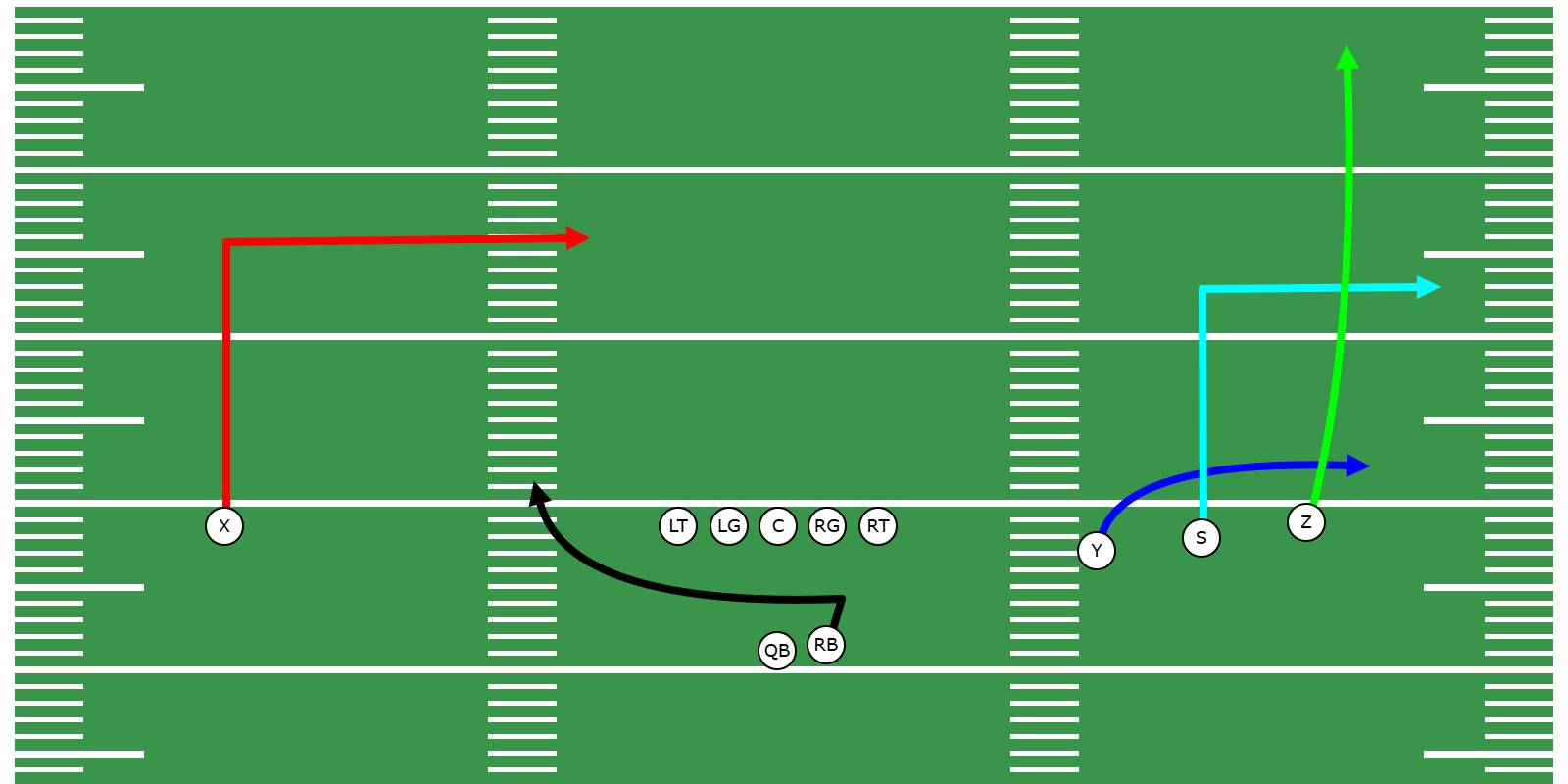
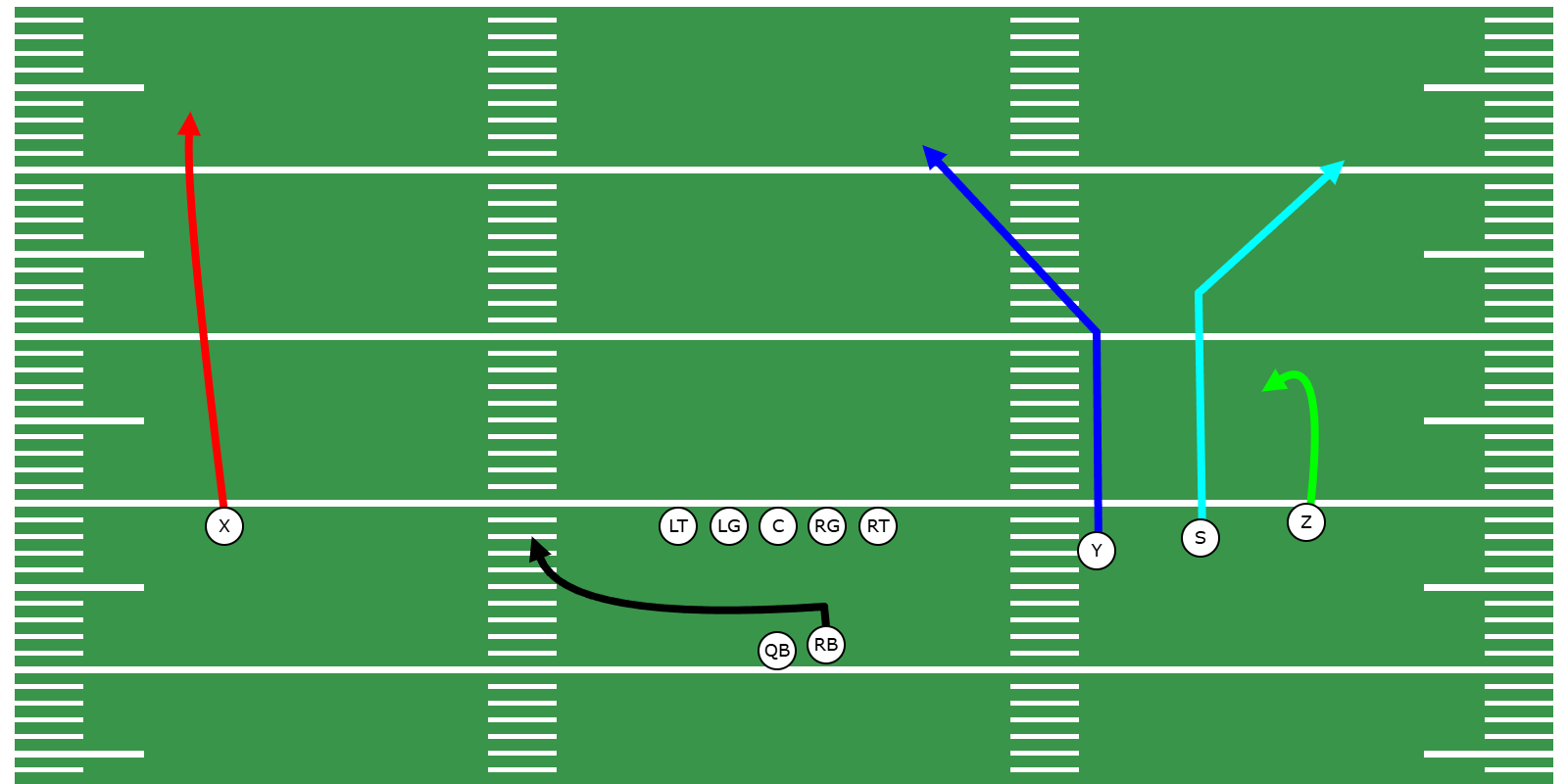
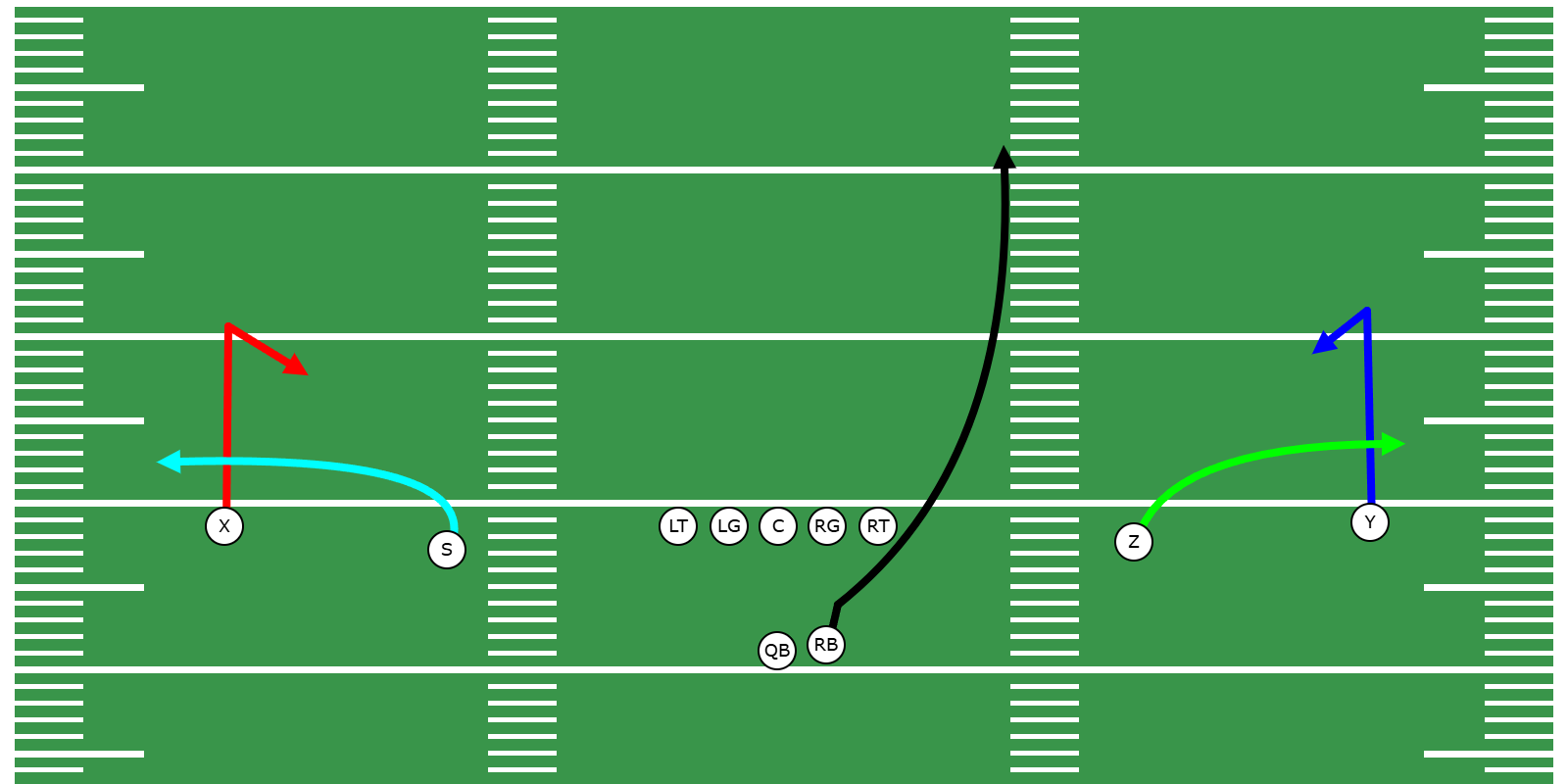
Sail is a three-level passing concept that attacks one sideline by combining a deep route, an intermediate out-breaking route, and a short flat route. It gives quarterbacks a clean progression while forcing one outside defender to defend multiple receivers at different depths.
Why Sail Works
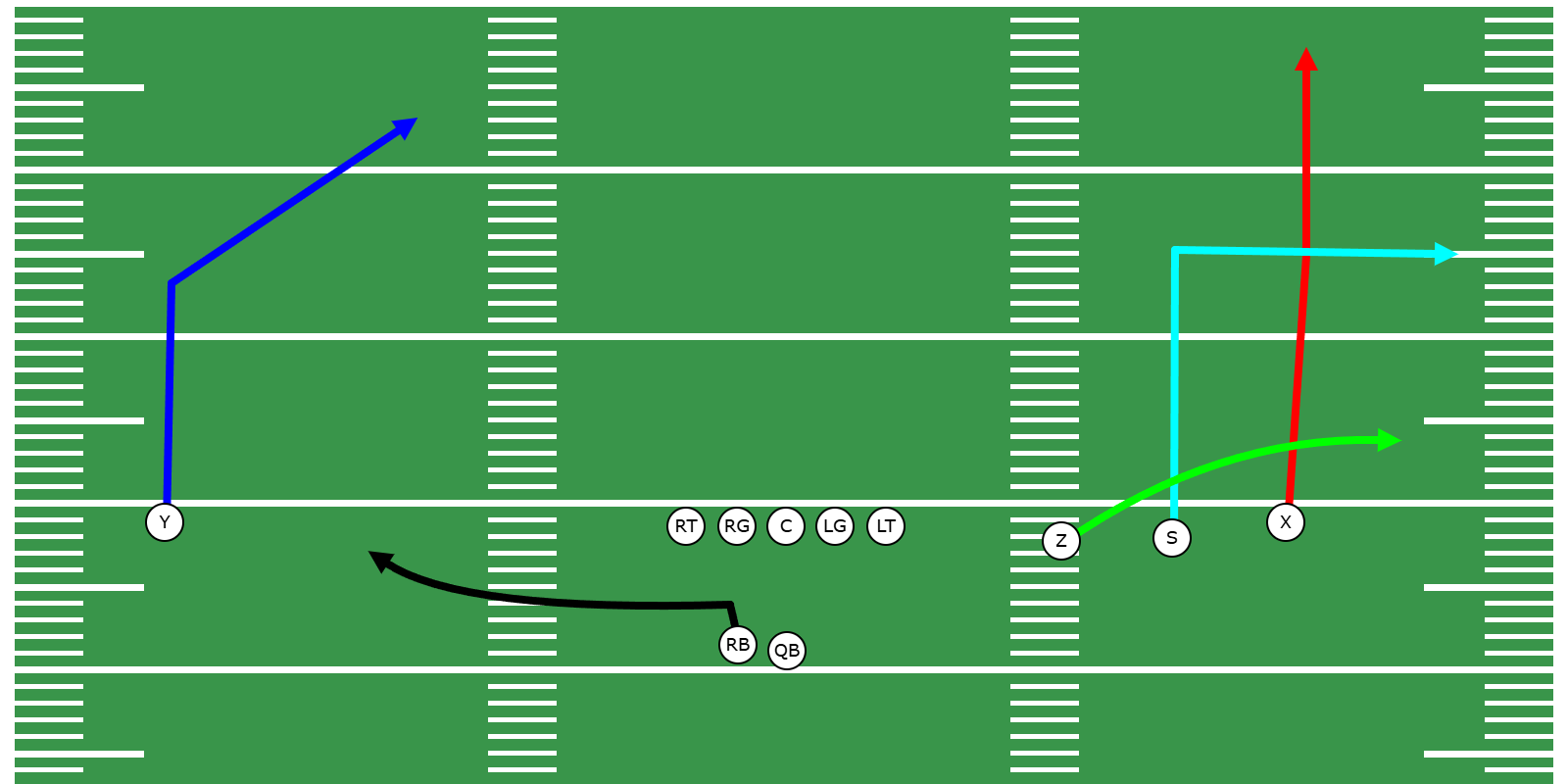
The vertical route removes deep coverage, the sail route attacks the intermediate sideline, and the flat route widens the underneath defender. When each receiver reaches the proper landmark, the defense is stretched vertically and horizontally at the same time.
Best Formations
Trips is the classic teaching formation because it naturally creates a three-receiver surface. Spread formations also provide excellent spacing and work well with play-action or sprint-out variations.
Personnel
11 Personnel is an ideal starting point, although Sail adapts well to 10 Personnel and formations with athletic slot receivers.
Try The Interactive Playbook Tool: Sail Passing Concept
Draw your own Sail Passing Concept concept based play diagram right here using our embedded interactive play designer demo:
GET STARTED: To get started simply click on any of the player icons in the diagram.
Start drawing your own plays like this and build your playbook with CoachYouths Playbook Designer.
Route Responsibilities
- Outside receiver: Vertical clear route or fade.
- Slot receiver: Sail (10–12 yard out-breaking route).
- Flat receiver: Immediate release to the sideline.
- Backside receiver: Dig, comeback, or post as the backside answer.
- Running back: Protect first, then release if not assigned to the flat.
Quarterback Progression
- Identify coverage before the snap.
- Read the deep outside defender.
- Throw the sail route if the defender gains depth.
- Throw the flat if the defender expands.
- Progress backside only if the flood side is covered.
Coverage Adjustments
Cover 2
Attack the intermediate window between the corner and safety.
Cover 3
Read the curl/flat defender and throw opposite his movement.
Man Coverage
Throw with anticipation and lead receivers toward the sideline.
Quarters
Take the underneath completion if deep defenders stay over the top.
Coaching Points
- The sail route must reach full depth before breaking.
- Flat routes should gain width immediately.
- Vertical routes must clear coverage at full speed.
- Quarterbacks should read defenders instead of choosing a receiver before the snap.
Common Youth Mistakes
- Sail routes breaking too early.
- Flat routes drifting upfield.
- Quarterbacks forcing deep throws.
- Receivers bunching together on the sideline.
Installation Progression
Teach each route independently, combine the three-level stretch on air, then introduce defender reads before advancing to 7-on-7 and full-team periods.
Practice Drill
Use one curl/flat defender and one deep defender. Change their reactions every repetition so quarterbacks learn to throw away from coverage instead of guessing.
Youth Coaching Tips
Stress landmarks before adjustments. When every receiver consistently reaches the correct depth, Sail becomes one of the easiest concepts for young quarterbacks to read.
Why Sail Succeeds
Sail succeeds because it overloads one side of the field with three receivers at different depths, forcing defenders into impossible leverage decisions.
Related Articles
Published by CoachYouths Staff on 07/21/2026
You are NOT currently logged in, you may login or signup for FREE at any time: