Snag Passing Concept
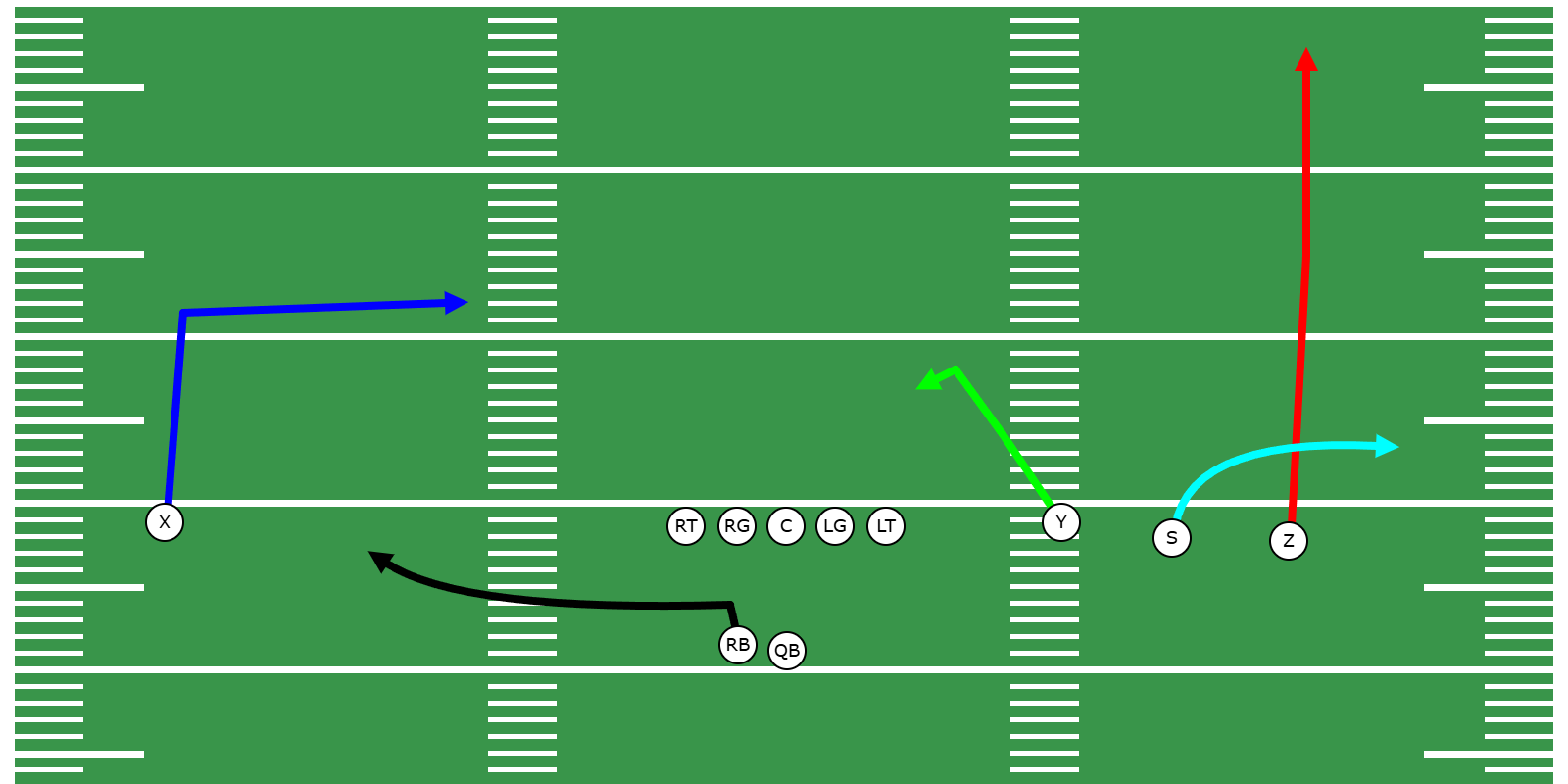
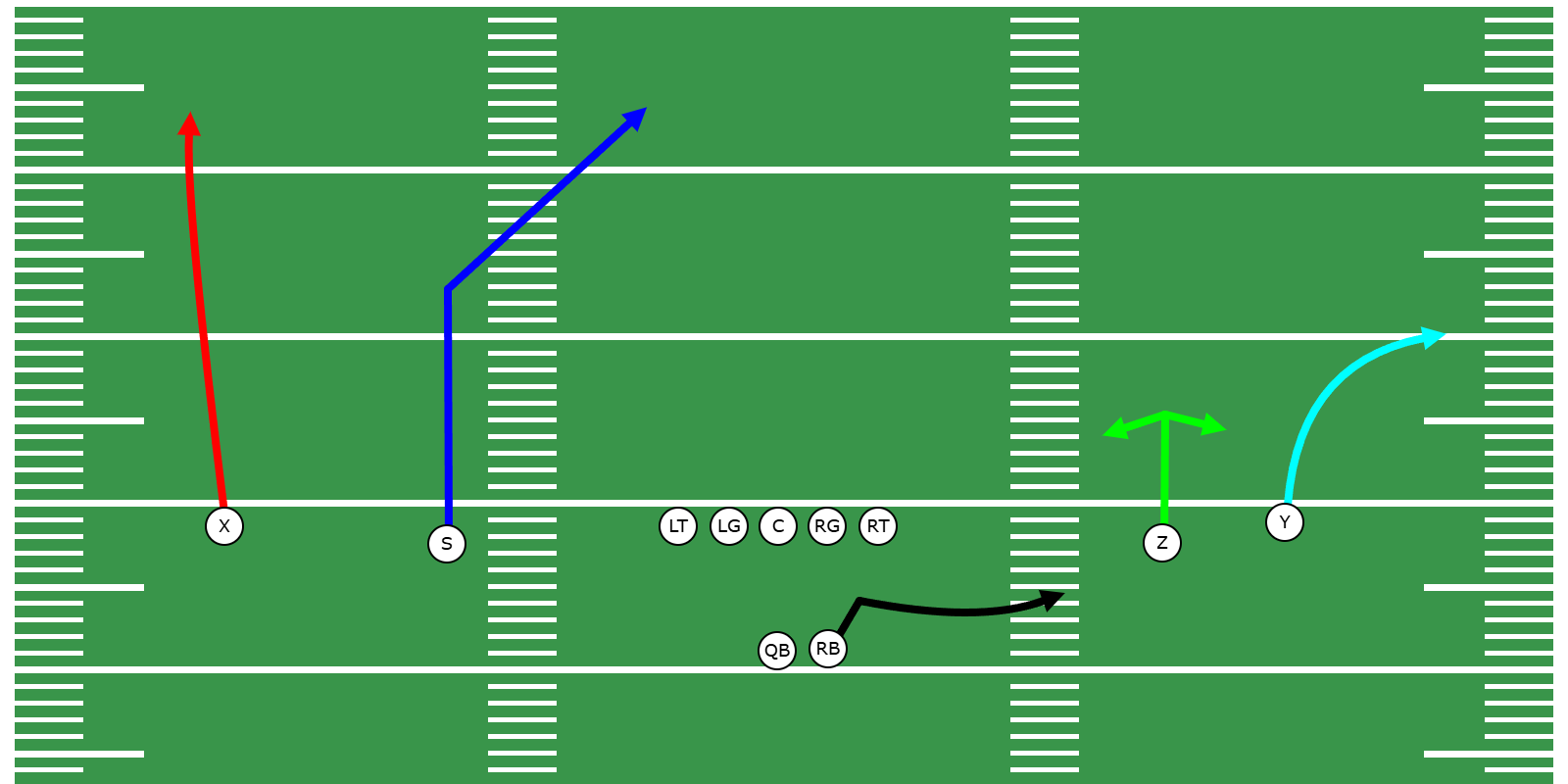
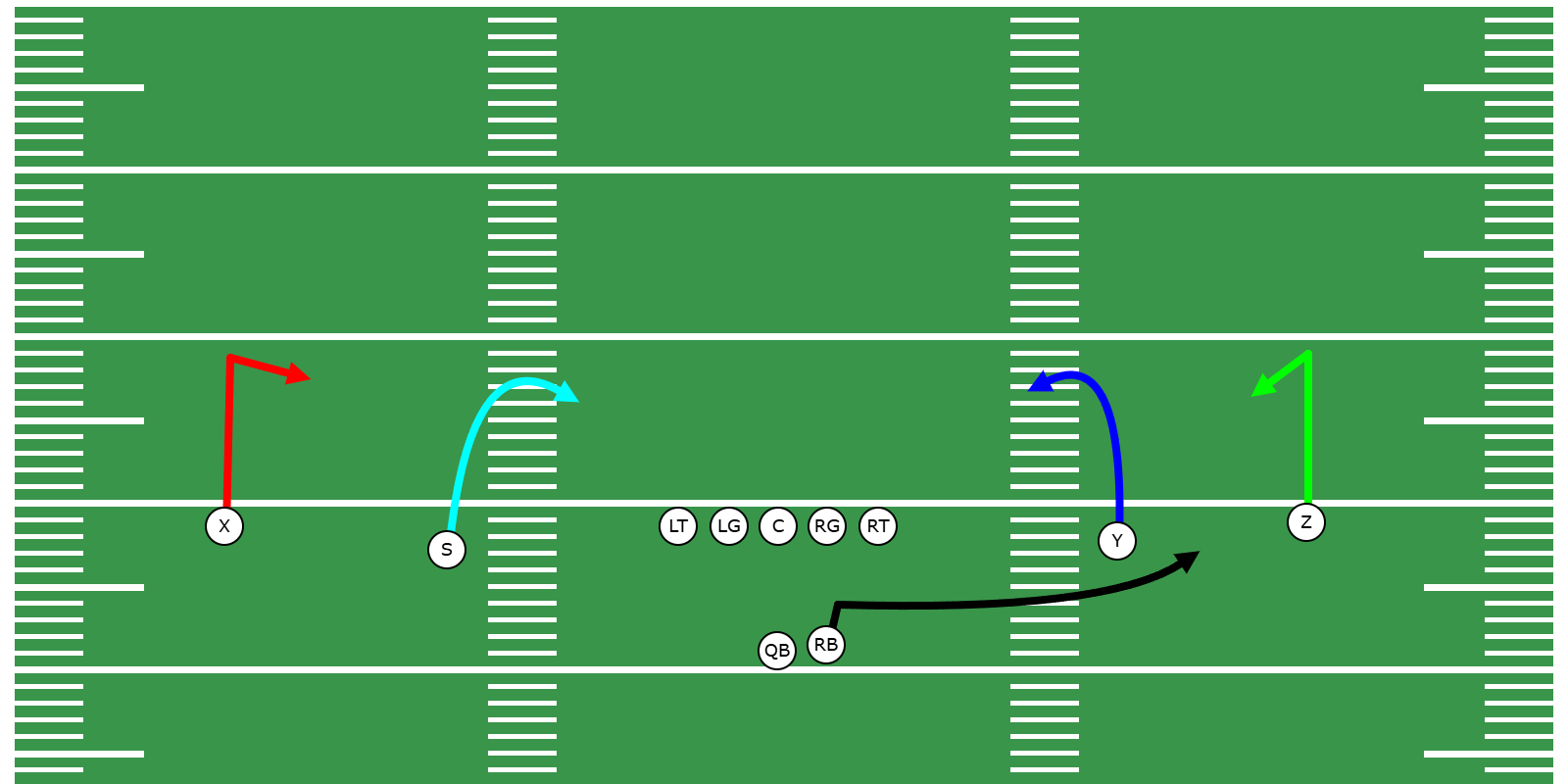
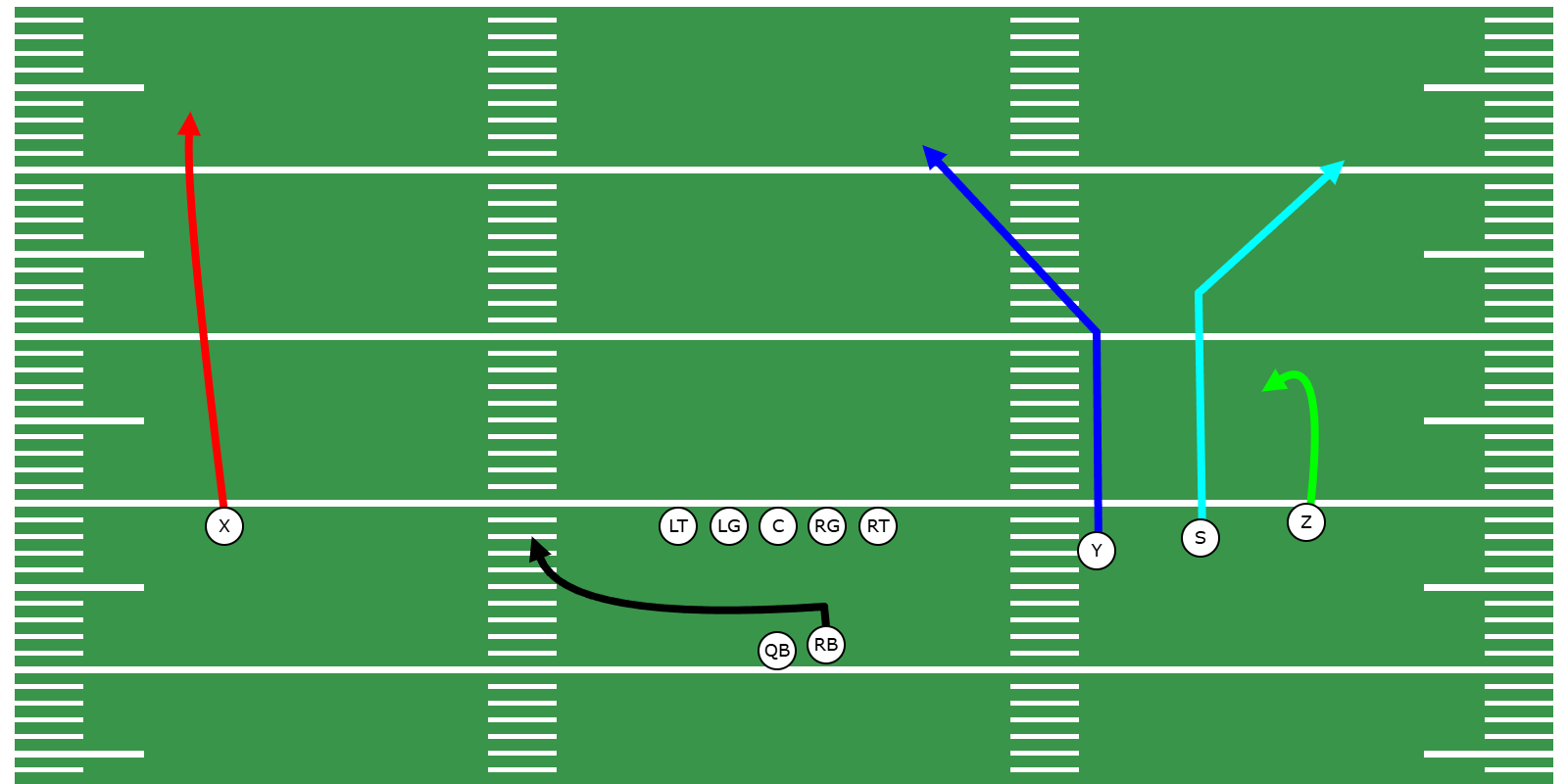
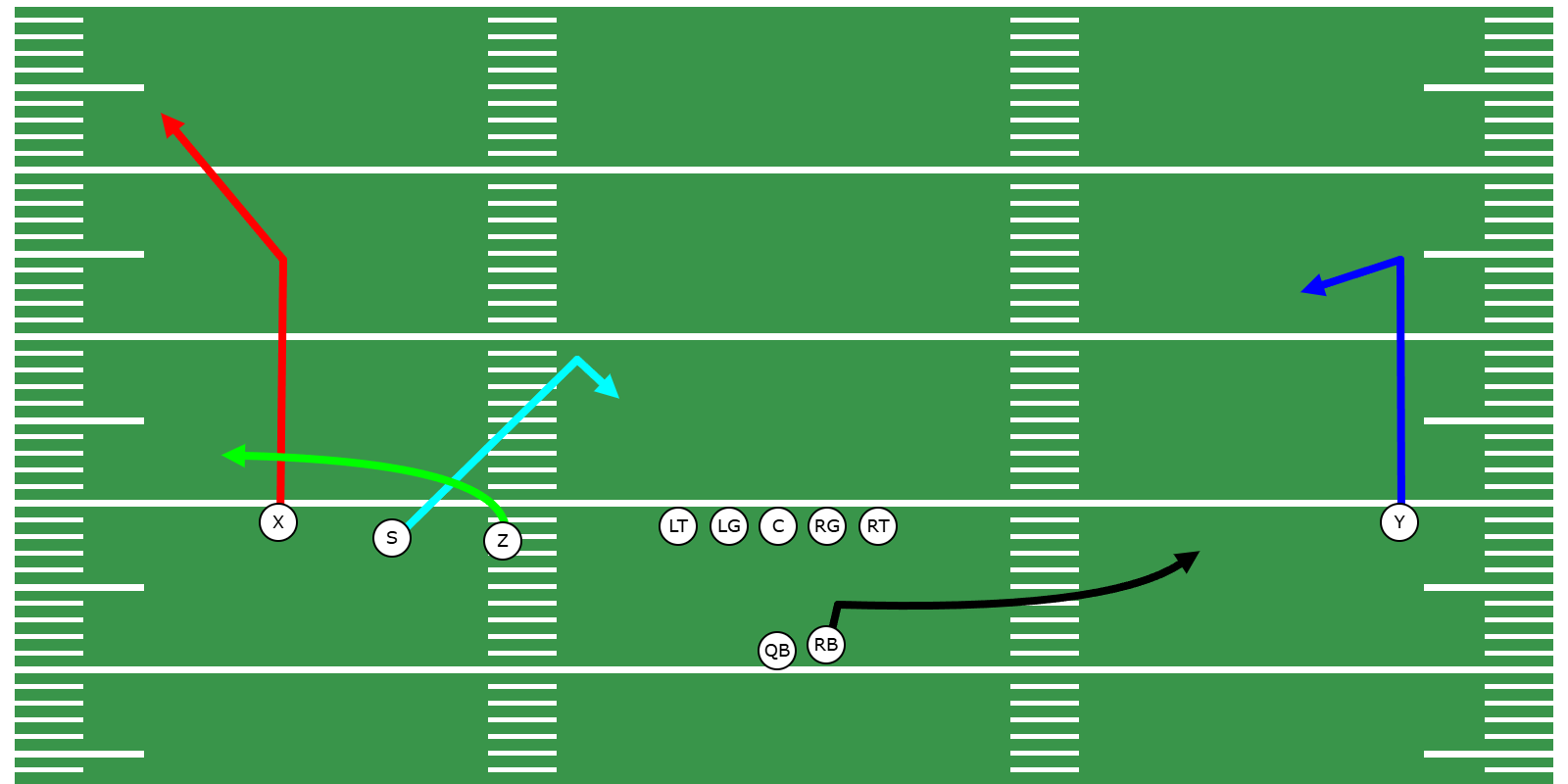
Snag is a triangle-read passing concept that combines a quick snag (spot) route, a flat route, and a vertical corner route to stress underneath defenders. It is popular because it gives the quarterback a simple progression while creating answers against both man and zone coverage.
Why Snag Works
The flat route widens the curl/flat defender, the snag route settles in the space he leaves behind, and the corner route stretches the defense vertically. Together, these three routes create a triangle that is difficult for one side of the defense to cover.
Best Formations
Trips is the classic formation because it naturally places three eligible receivers on one side of the field. Spread formations also execute the concept well when aligned to create the same triangle.
Personnel
11 Personnel is the preferred starting point, but 10 Personnel gives additional spacing and often creates larger passing windows.
Try The Interactive Playbook Tool: Snag Passing Concept
Draw your own Snag Passing Concept concept based play diagram right here using our embedded interactive play designer demo:
GET STARTED: To get started simply click on any of the player icons in the diagram.
Start drawing your own plays like this and build your playbook with CoachYouths Playbook Designer.
Route Responsibilities
- Outside receiver: Corner route attacking the deep outside third.
- Inside receiver: Snag route at 5–6 yards, settling in open grass.
- Flat receiver: Immediate release to the sideline.
- Backside receiver: Slant, dig, or comeback as the secondary progression.
- Running back: Protect first before releasing if not assigned to the flat.
Quarterback Progression
- Identify the curl/flat defender before the snap.
- Read the flat route first.
- Throw the snag if the defender widens.
- Throw the corner if the underneath defender drives downhill and the deep route gains leverage.
- Finish with the backside or outlet if necessary.
Coverage Adjustments
Cover 2
The corner route often develops behind the cornerback while the snag settles between underneath defenders.
Cover 3
Read the curl/flat defender and throw opposite his movement.
Man Coverage
Trust timing and let the snag receiver separate through body position.
Quarters
Take the snag or flat if safeties stay over the top.
Coaching Points
- The snag receiver should stop under control and present a clear target.
- The flat route must gain width immediately.
- The corner route should maintain vertical stem before breaking.
- Quarterbacks should progress quickly without predetermining the throw.
Common Youth Mistakes
- Snag routes drifting too deep.
- Flat routes turning upfield too early.
- Corner routes flattening before reaching depth.
- Quarterbacks skipping the progression.
Installation Progression
Teach the snag route first, then add the flat route and corner route before introducing the quarterback progression. Finish with routes on air, 7-on-7, and full-team repetitions.
Practice Drill
Use one coach as the curl/flat defender and another as the cornerback. Alternate their reactions while quarterbacks learn to throw the correct point of the triangle.
Youth Coaching Tips
The snag receiver should think “sit in the window,” not “keep running.” Emphasize landmarks and patience over athletic ability.
Why Snag Succeeds
Snag succeeds because it creates three complementary options that isolate one side of the defense, giving the quarterback an efficient, repeatable read.
Published by CoachYouths Staff on 07/21/2026
You are NOT currently logged in, you may login or signup for FREE at any time: