Lead Run Concept
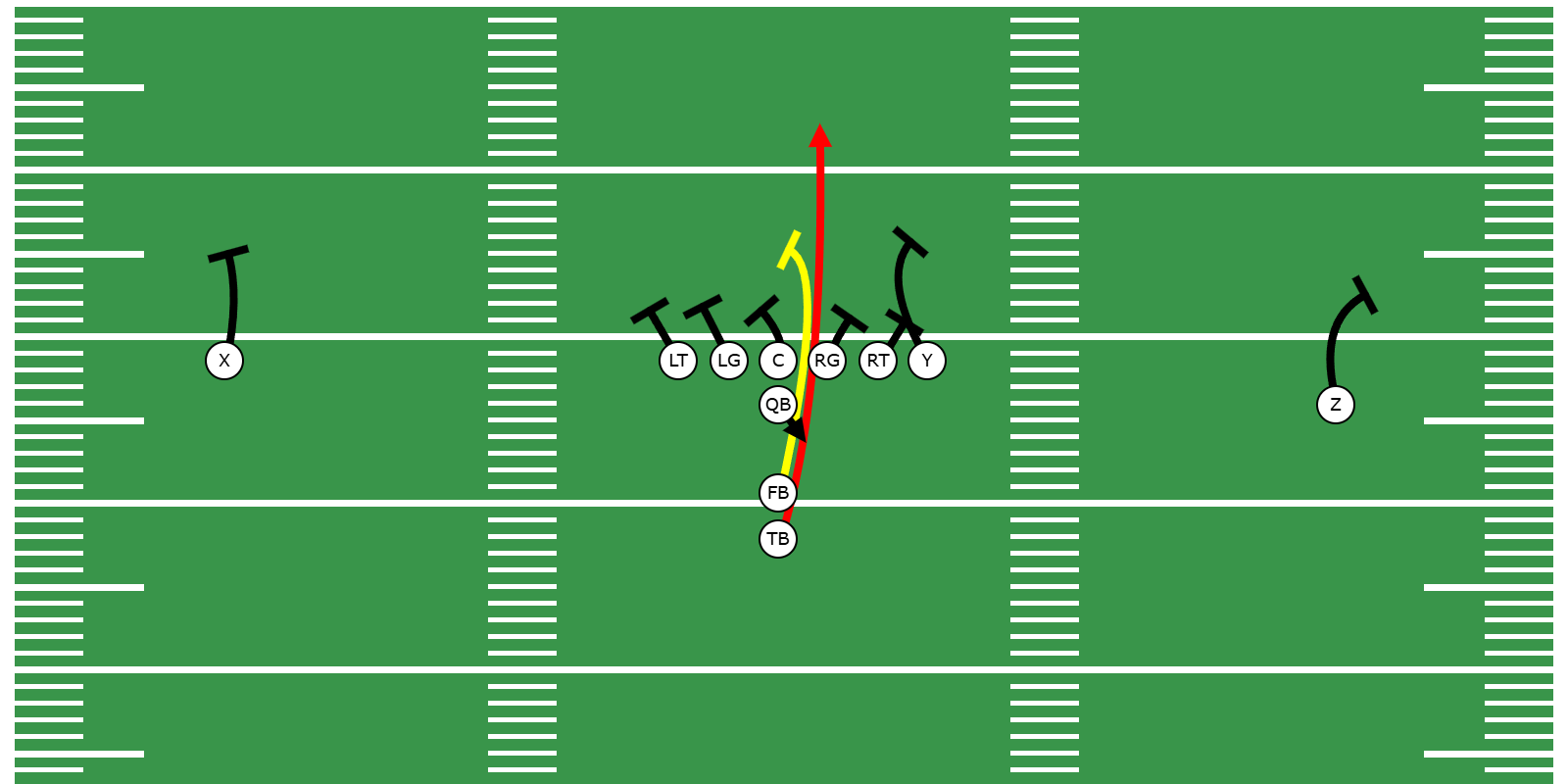
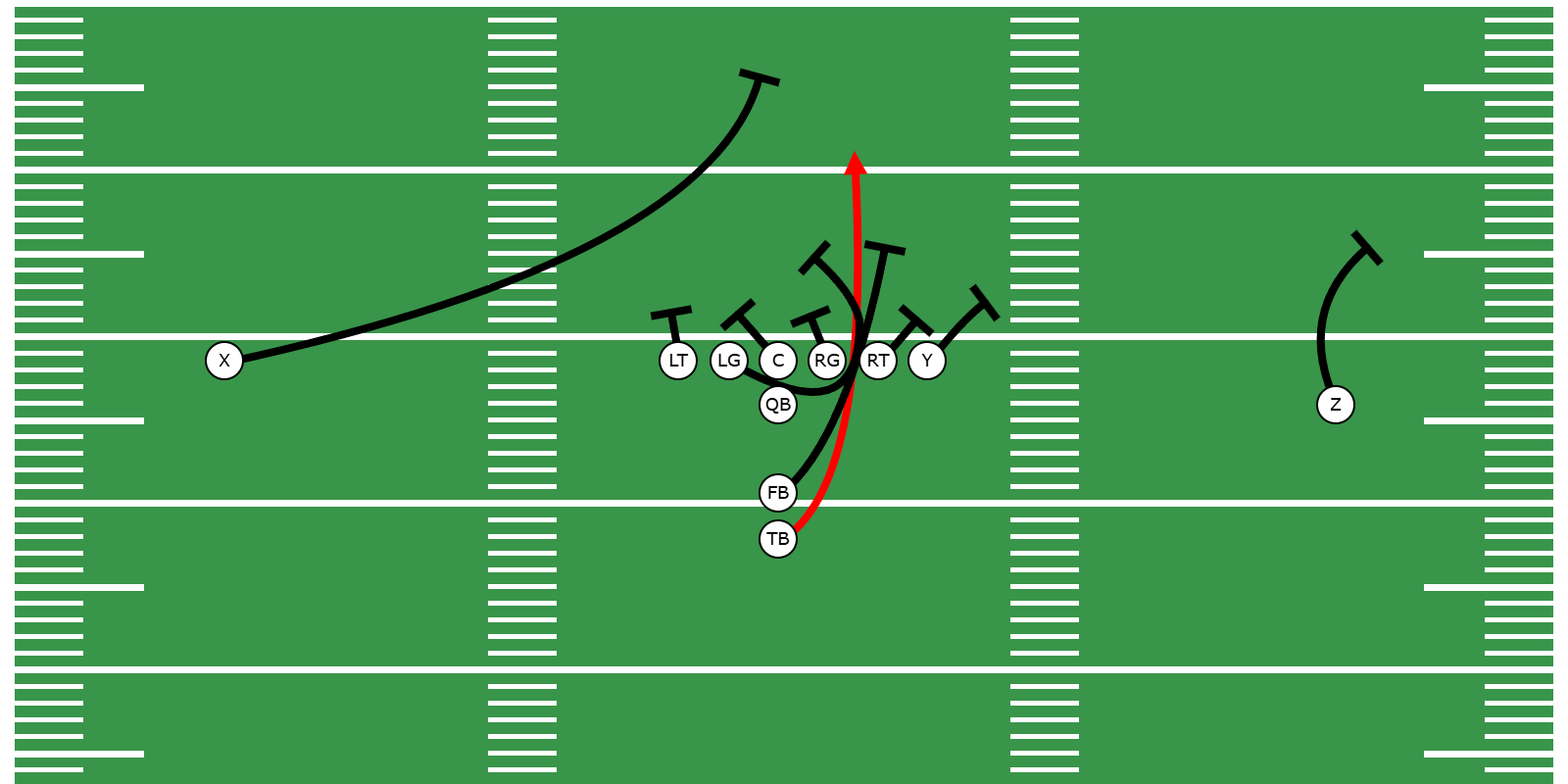
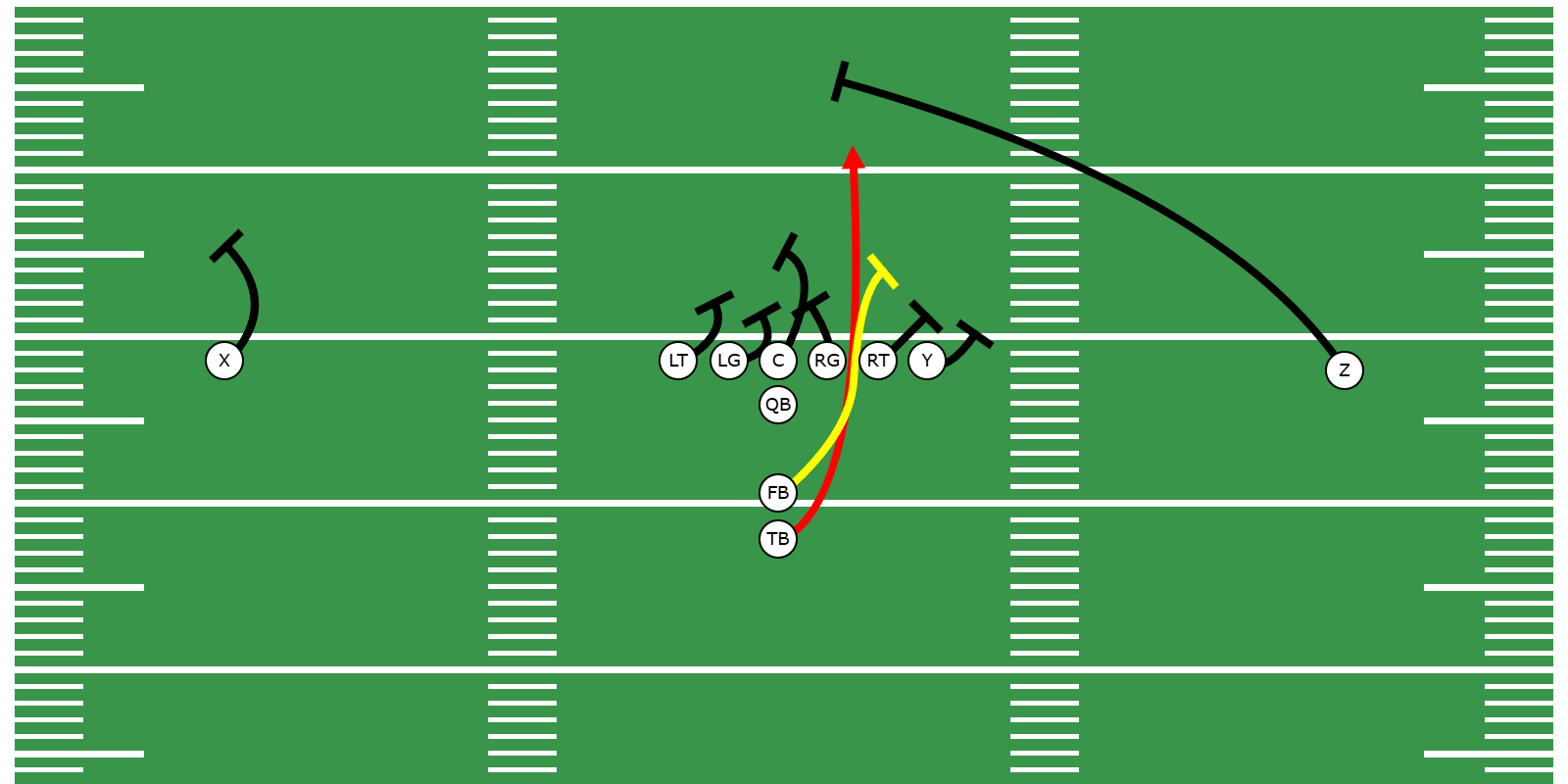
Lead is a downhill running concept that places a designated blocker in front of the ball carrier to create an extra blocker at the point of attack. Unlike misdirection runs, Lead emphasizes physical execution, disciplined footwork, and winning individual matchups. It is one of the simplest concepts to install and one of the most effective for teaching young players how to run behind a blocker.
Why Lead Works
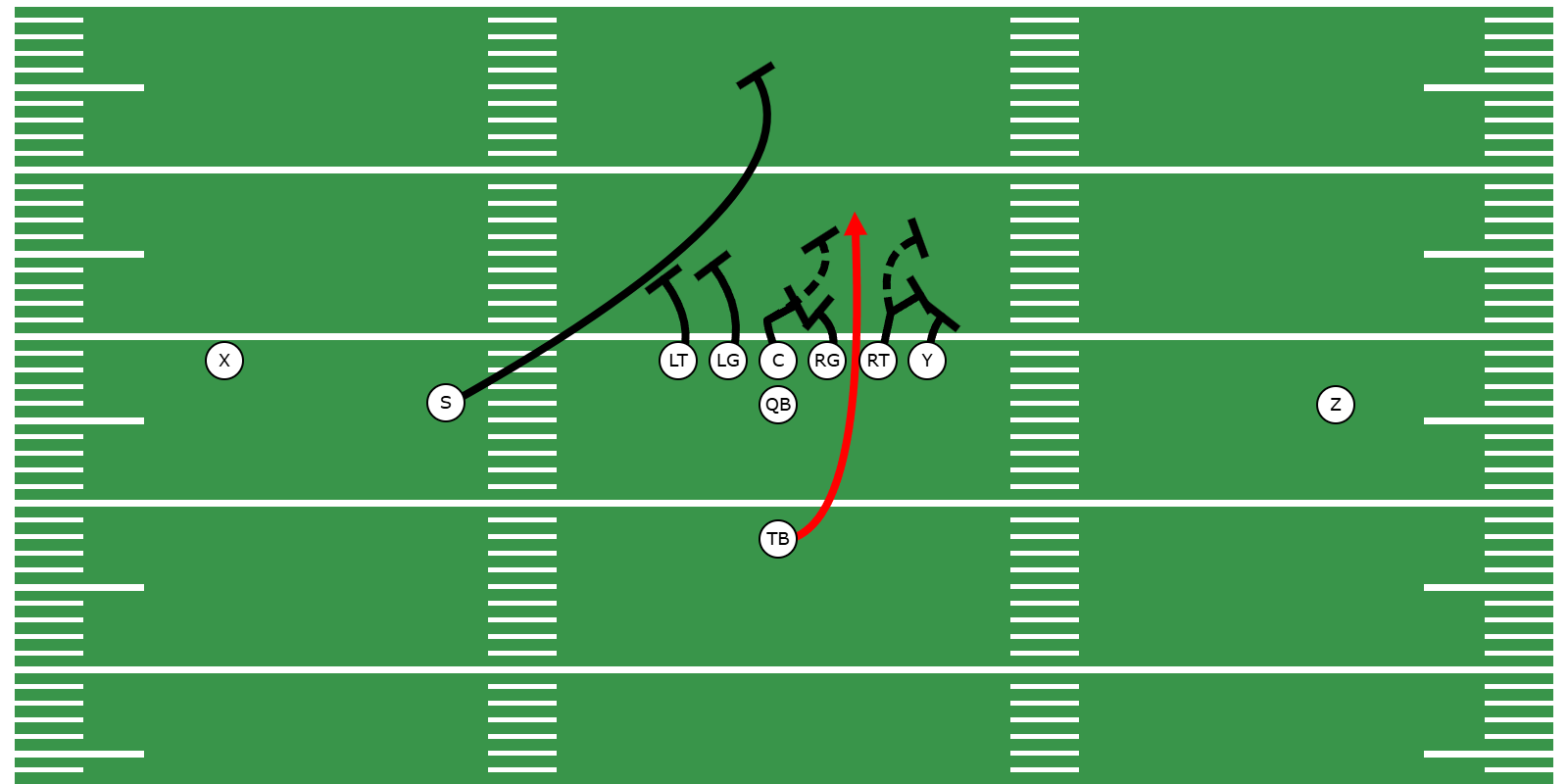
Lead creates favorable numbers by inserting a fullback, H-back, or pulling blocker into the hole ahead of the running back. The offensive line accounts for the defensive front while the lead blocker attacks the first linebacker to appear in the running lane. This gives the ball carrier a clearly defined read and encourages decisive north-south running.
Best Formations
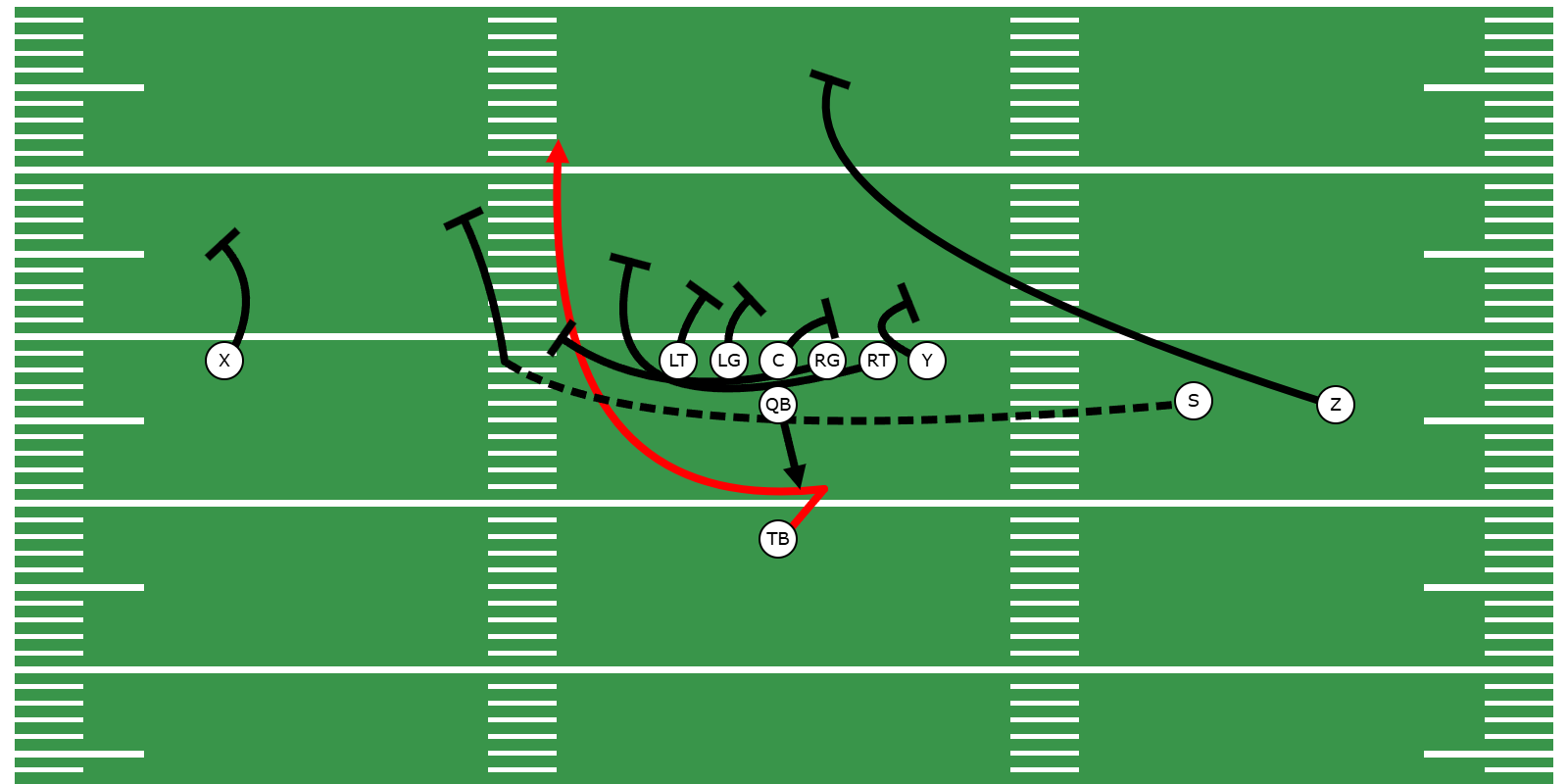
The I Formation is the traditional home for Lead because the fullback naturally aligns in front of the tailback. Pro and Singleback formations also execute the concept effectively with an H-back or motion player serving as the lead blocker. Modern shotgun offenses often adapt Lead using offset backs.
Personnel
21 Personnel is the classic grouping because it includes a fullback, but 11 Personnel can run Lead successfully by using a tight end or H-back as the lead blocker.
Try The Interactive Playbook Tool: Lead Run Concept
Draw your own Lead Run Concept concept based play diagram right here using our embedded interactive play designer demo:
GET STARTED: To get started simply click on any of the player icons in the diagram.
Start drawing your own plays like this and build your playbook with CoachYouths Playbook Designer.
Blocking Responsibilities
- Offensive line: Base block the defensive front and prevent penetration.
- Lead blocker: Attack the first play-side linebacker with inside-out leverage.
- Tight end: Secure the edge when aligned to the play side.
- Wide receivers: Block the most dangerous perimeter defenders.
- Running back: Stay directly behind the lead blocker and explode through the first available crease.
- Quarterback: Execute a clean handoff and carry out the fake.
Running Back Read
- Press behind the lead blocker.
- Read the lead blocker’s leverage.
- Cut off the block without hesitation.
- Stay vertical after committing.
- Finish every run by falling forward.
Defensive Adjustments
Even Fronts
Identify the Mike linebacker before the snap and anticipate his fit.
Odd Fronts
Communicate responsibilities against stacked linebackers and interior movement.
Blitz Pressure
Trust the lead blocker and stay on the designed path rather than bouncing outside early.
Coaching Points
- The lead blocker should strike with leverage and keep his feet moving.
- Running backs must remain patient until the block develops.
- Offensive linemen should maintain their base blocks before climbing.
- The objective is vertical yardage, not unnecessary cuts.
Common Youth Mistakes
- Running backs outrunning the lead blocker.
- Lead blockers attacking the wrong defender.
- Bouncing outside instead of trusting the design.
- Linemen allowing early penetration.
Installation Progression
Teach offensive-line base blocks first, then lead-block technique, followed by running back footwork and reads. Progress from walk-throughs to half-line drills before finishing with inside-run and full-team periods.
Practice Drill
Pair the lead blocker against rotating linebackers while the running back practices reading leverage and making one decisive cut off the block. Finish every repetition with five yards of acceleration after clearing the hole.
Youth Coaching Tips
Lead is an outstanding teaching concept because it helps young running backs learn patience. Encourage runners to keep their eyes on the lead block instead of searching for a cutback before the play develops.
Why Lead Succeeds
Lead succeeds because it creates an extra blocker at the point of attack while giving the running back a simple, repeatable read that builds confidence and consistency.
Related Articles
Published by CoachYouths Staff on 07/21/2026
You are NOT currently logged in, you may login or signup for FREE at any time: