Defensive Philosophy for Youth Football
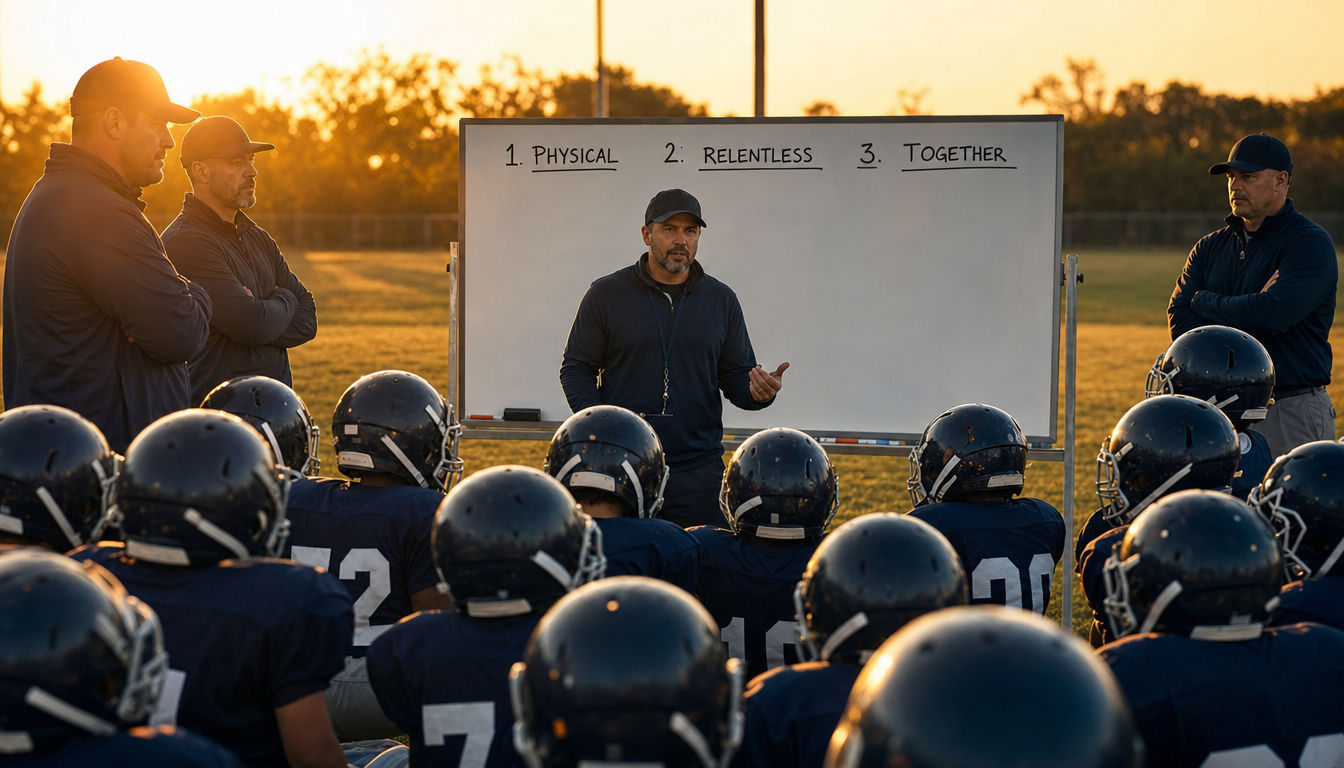
A great youth defense is built on discipline, effort, and teamwork—not complicated schemes. Volunteer coaches often believe they need dozens of blitzes or exotic alignments to stop an opponent, but the opposite is usually true. Players who understand their responsibilities and trust one another consistently outperform more complex defenses.
Your defensive philosophy should answer one simple question:
“What do we want our defense to be known for?”
Build Around Fundamentals
Every defensive system should emphasize:
- Proper tackling.
- Pursuit to the football.
- Gap responsibility.
- Clear communication.
- Consistent effort.
These fundamentals win far more games than complicated playbooks.
Keep Responsibilities Simple
Every player should know:
- Where to line up.
- Which gap or area they are responsible for.
- How to react after the snap.
- Where to pursue when the ball moves away.
Confident players react faster because they spend less time thinking.
Pursue as a Team
Rarely does one defender make every tackle.
Coach players to:
- Take proper pursuit angles.
- Run to the football every play.
- Trust teammates to do their jobs.
- Finish the play together.
A defense with eleven players pursuing the ball creates very few big plays for the offense.
Force the Offense to Earn Everything
Do not give away easy yards.
Encourage your defense to:
- Tackle securely.
- Limit missed assignments.
- Keep plays in front of them.
- Make offenses execute multiple successful plays to score.
Patience is a defensive strength.
Practice Situations
Include defensive periods that simulate:
- Goal-line defense.
- Third-and-long.
- Short-yardage.
- Outside runs.
- Play-action.
Players gain confidence when they have already experienced these situations in practice.
Evaluate the Right Things
Do not judge your defense only by points allowed.
Also ask:
- Did everyone line up correctly?
- Were players in the correct gaps?
- Did everyone pursue?
- Were tackles fundamentally sound?
Correct process usually leads to better results.
Common Mistakes
Avoid:
- Installing too many defensive calls.
- Asking players to memorize complex adjustments.
- Blaming effort when assignments were unclear.
- Chasing turnovers instead of making secure tackles.
- Forgetting to teach pursuit.
Frequently Asked Questions
What is the most important defensive skill?
Consistent tackling and pursuit.
Should younger teams blitz often?
Only after players consistently understand their normal responsibilities.
How do I know if our defense is improving?
Look for fewer missed assignments, better pursuit, and more reliable tackling—not just fewer points.
Key Takeaways
- Build your defense on fundamentals.
- Keep responsibilities simple.
- Teach relentless pursuit.
- Evaluate execution before results.
- Create a defensive identity your players understand.
Related Articles
Published by CoachYouths Staff on 07/15/2026
You are NOT currently logged in, you may login or signup for FREE at any time: