What Is the 4-3 Defense?
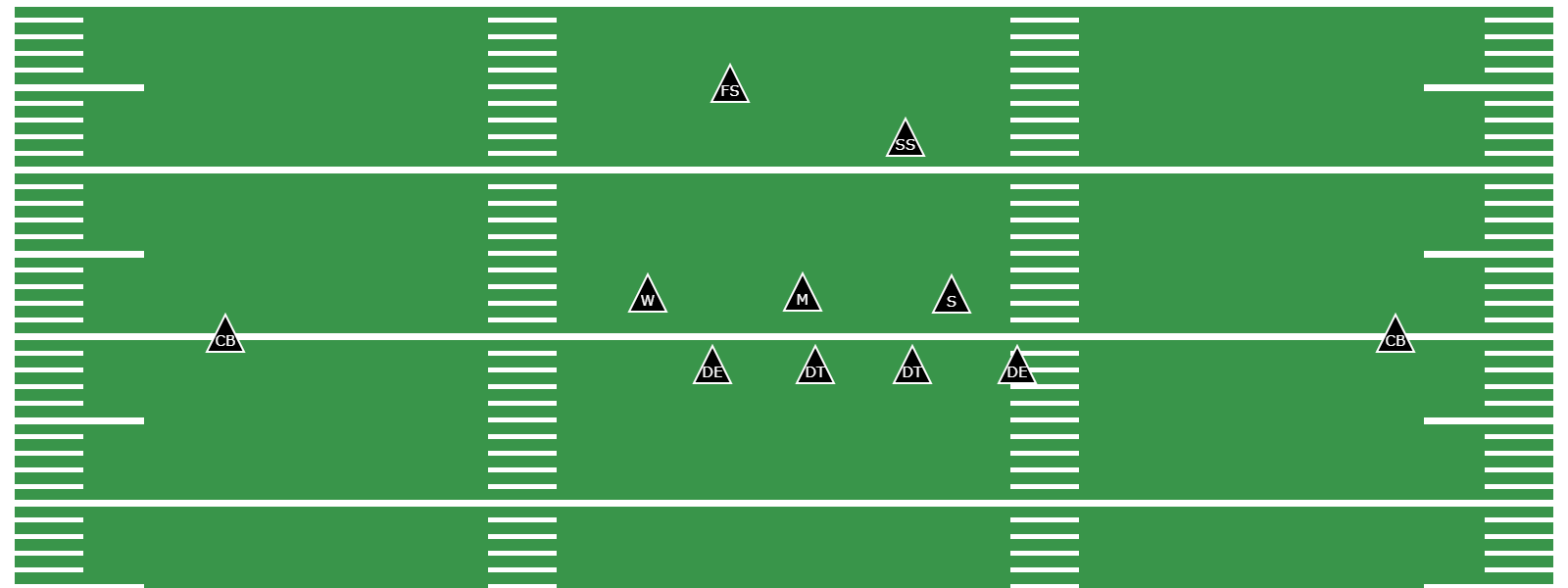
The 4-3 Defense is one of the most successful and recognizable defensive formations in football. It aligns four defensive linemen in front of three linebackers, creating a balanced front capable of stopping the run while generating consistent pass pressure.
Its simplicity, flexibility, and balanced responsibilities have made the 4-3 Defense a staple from youth football through the professional level.
History
The 4-3 Defense became popular during the middle of the twentieth century as defenses searched for a balanced front that could defend both the running and passing game. Over time, it evolved into one of football’s foundational defensive systems.
Alignment
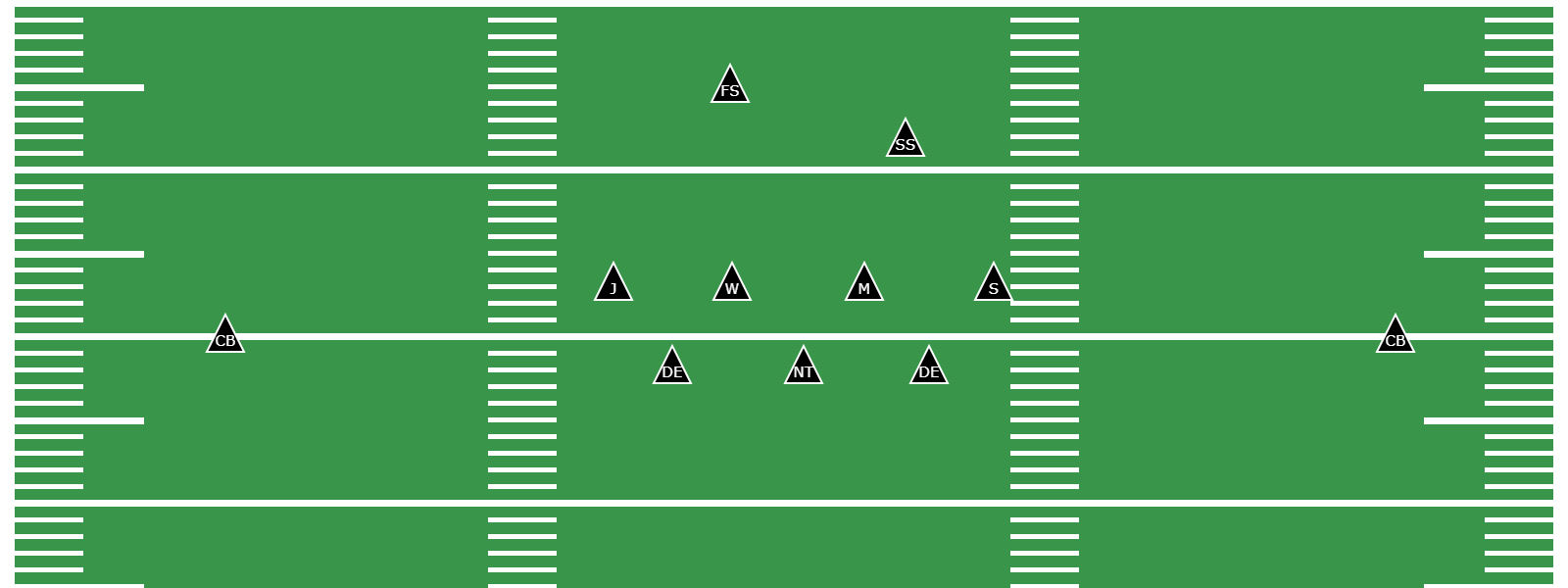
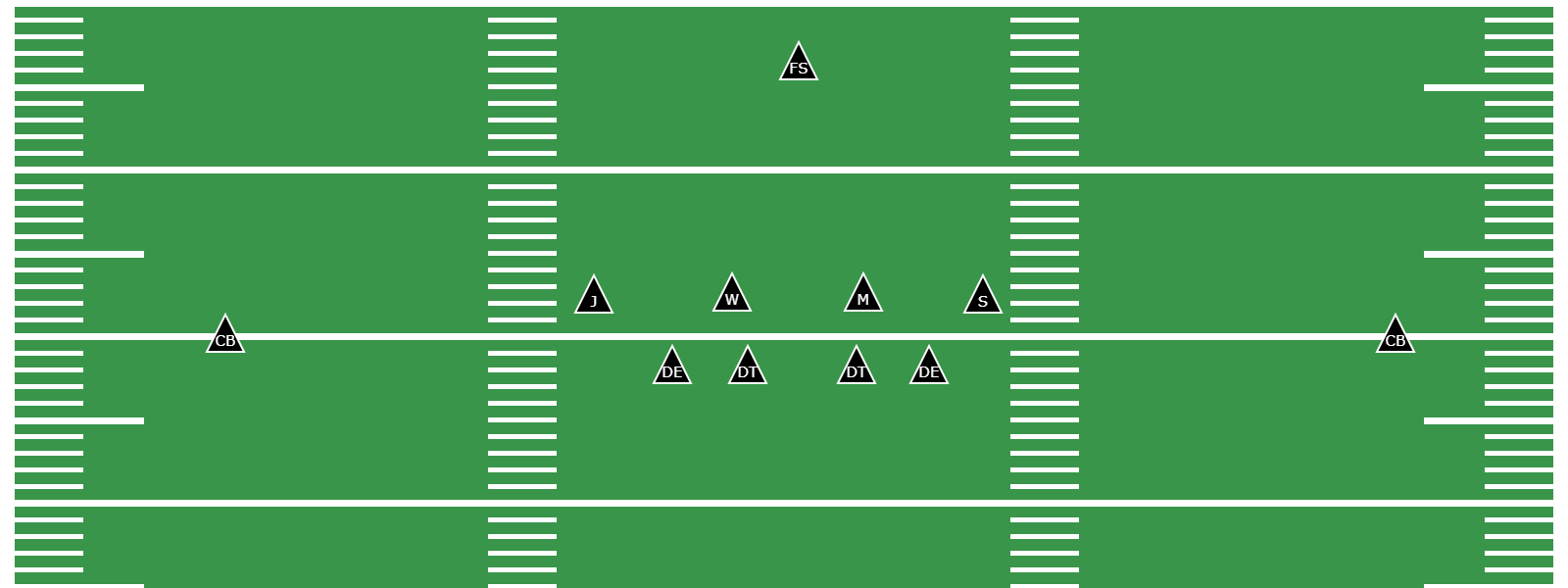
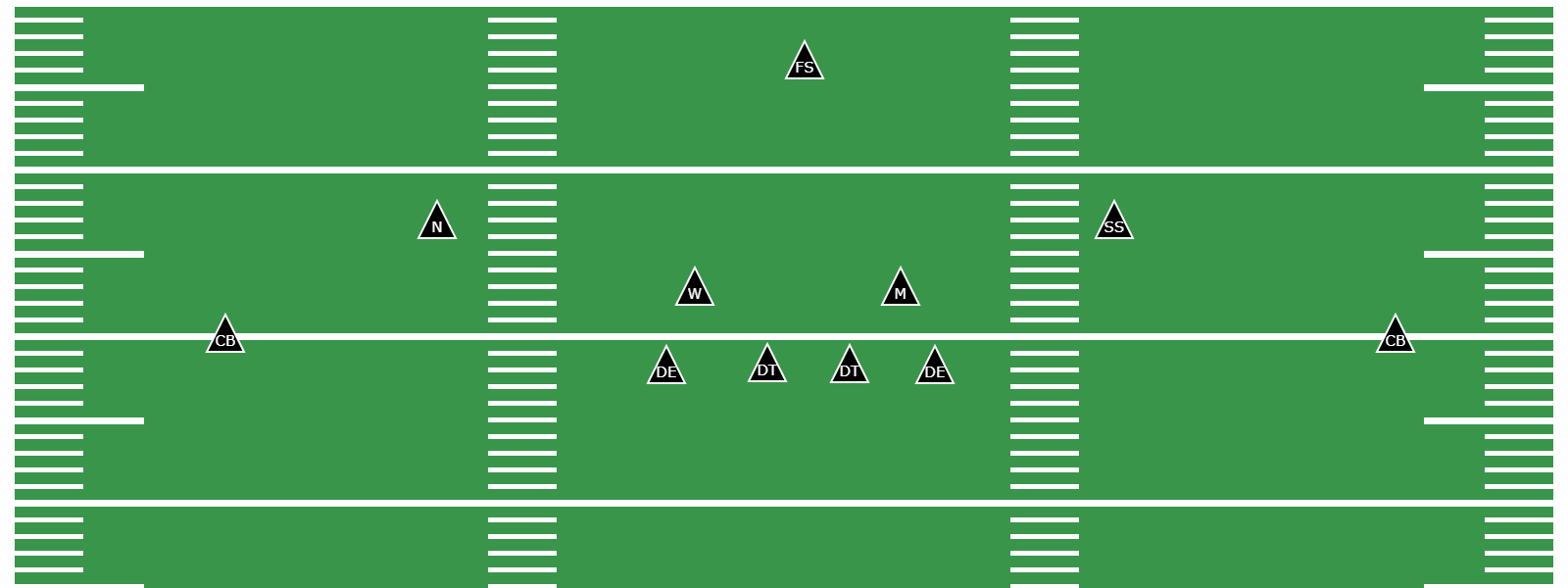
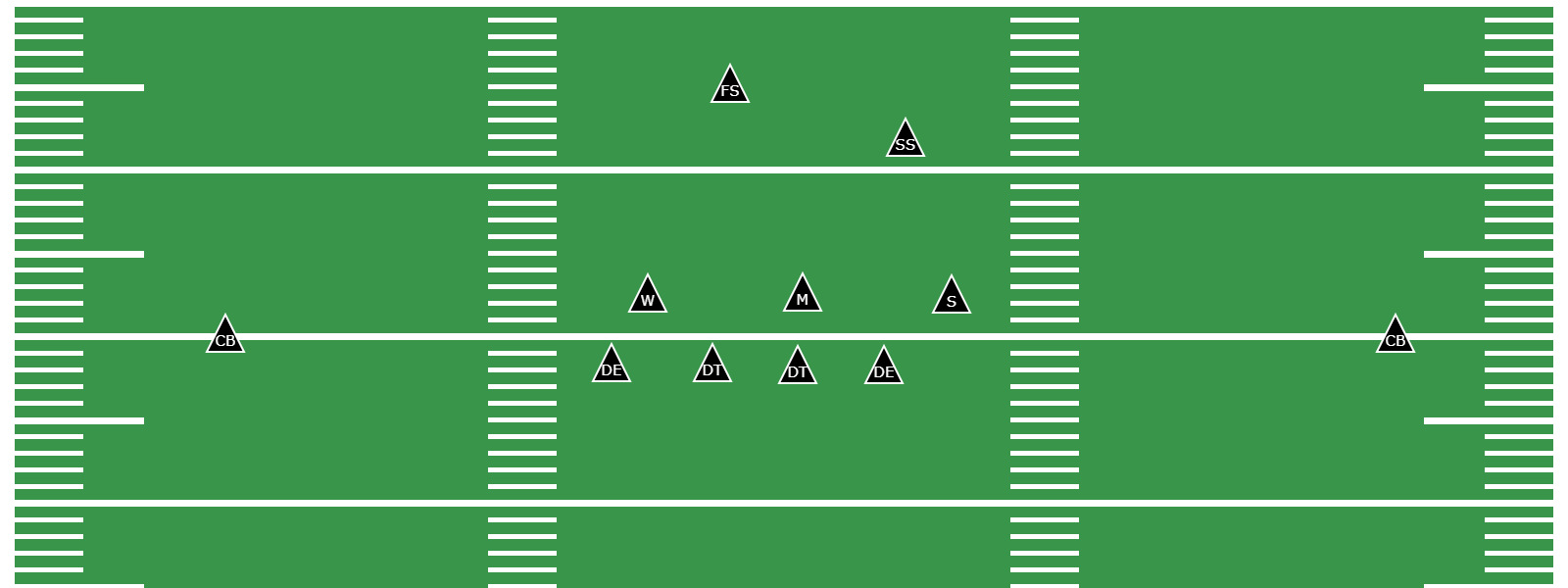
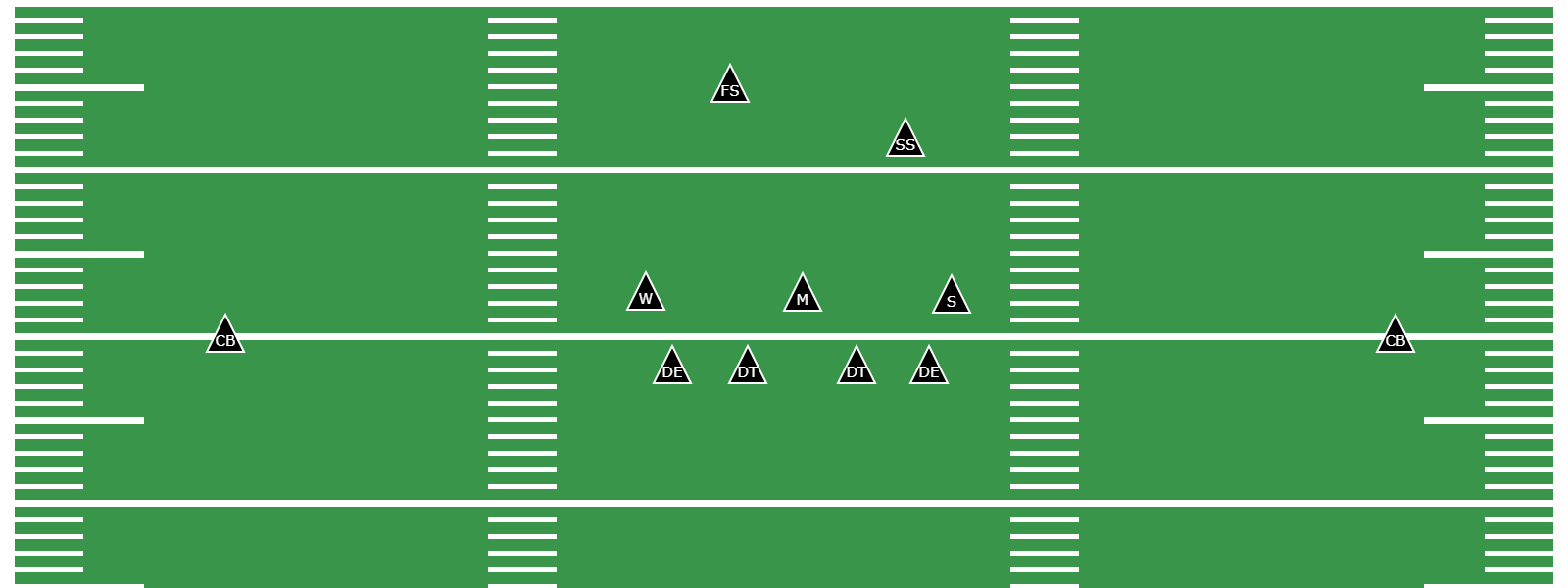
A typical 4-3 Defense includes:
- Four defensive linemen
- Three linebackers
- Two cornerbacks
- Two safeties
Try The Interactive Playbook Tool: 4-3 Defense
Draw your own 4-3 Defense play diagram right here using our embedded interactive play designer demo:
GET STARTED: To get started simply click on any of the player icons in the diagram.
Start drawing your own plays like this and build your playbook with CoachYouths Playbook Designer.
Strengths
- Balanced against the run and pass.
- Strong four-man pass rush.
- Simple player responsibilities.
- Flexible against multiple offensive formations.
- Well suited for youth football.
Weaknesses
- Requires capable defensive linemen.
- Can struggle if linebackers cannot cover in space.
- Interior run defense depends on disciplined gap control.
Best Personnel
The 4-3 Defense works best with athletic defensive ends, strong defensive tackles, instinctive linebackers, and defensive backs who communicate well.
Common Blitzes
- Mike Blitz
- Sam Blitz
- Corner Blitz
- Double A-Gap Blitz
Common Coverages
- Cover 2
- Cover 3
- Cover 1
- Cover 4
Offensive Matchups
The 4-3 Defense performs well against balanced offenses because it provides solid run support while maintaining consistent pass coverage.
Common Variations
- Under Front
- Over Front
- Wide 4-3
- Tight 4-3
Ideal Situations
- Balanced defensive game plans.
- Youth football.
- Teams seeking simple assignments.
- Defending multiple offensive formations.
When NOT to Use This Defense
It may not be the best choice if your roster lacks four dependable defensive linemen or your defensive philosophy relies heavily on hybrid fronts.
Youth Coaching Tips
Teach gap responsibility before introducing complex blitz packages. A disciplined 4-3 Defense is often more successful than an aggressive but unsound defense.
Common Mistakes
- Poor gap discipline.
- Over-pursuit.
- Weak linebacker communication.
- Excessive blitzing.
Frequently Asked Questions
Is the 4-3 Defense good for youth football?
Yes. It is one of the easiest defenses to teach while remaining effective against a wide variety of offenses.
What does “4-3” mean?
The numbers describe the front seven: four defensive linemen and three linebackers.
Coach’s Checklist
- □ Four capable defensive linemen
- □ Disciplined linebackers
- □ Strong communication
- □ Sound tackling fundamentals
Key Takeaways
The 4-3 Defense remains one of football’s premier defensive formations because it combines simplicity, flexibility, and balanced run-pass responsibilities into a system that can succeed at every level of the game.
The best way to truly understand a defense is to build it, experiment with it, and see how small alignment changes affect your players. Open this formation in Football Playbook Designer to customize it for your own team.
Related Articles
Published by CoachYouths Staff on 07/14/2026
You are NOT currently logged in, you may login or signup for FREE at any time: