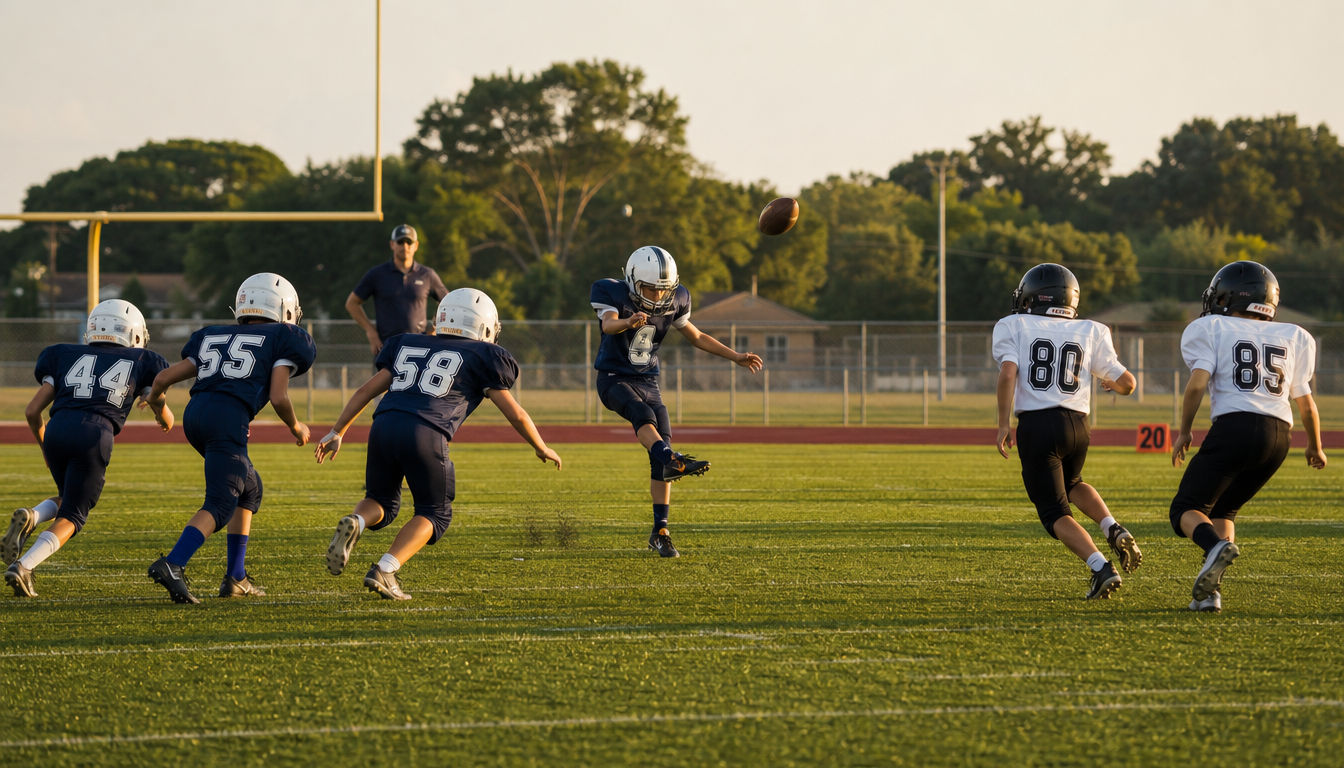
Punt Return Fundamentals
A successful punt return begins with securing possession of the football. While long returns are exciting, the primary objective is to give your offense good field position without risking a turnover. Smart decisions, disciplined blocking, and reliable ball security are the foundation of every good return unit.
Treat every punt as an opportunity to gain hidden yardage.

Understand Your League Rules
Before installing a return unit, know your league’s rules regarding:
- Fair catches.
- Live or dead-ball punts.
- Muffs and recoveries.
- Blocking restrictions.
- Special youth football modifications.
Teaching the correct rules prevents costly mistakes.
Secure the Football First
The returner’s first priority is possession.
Coach returners to:
- Track the football all the way into their hands.
- Catch it with confidence.
- Secure it immediately.
- Protect it through contact.
No return is worth a turnover.
Block with Purpose
Return team players should:
- Know their assignments.
- Stay under control.
- Sustain legal blocks.
- Create clear running lanes.
Good returns depend on coordinated blocking, not individual effort.
Be Decisive
After securing the punt:
- Identify the best running lane.
- Get north and south quickly.
- Avoid unnecessary lateral movement.
- Protect the football.
Decisive runners create more positive returns.
Know When Not to Return
Sometimes the best decision is securing possession or allowing the ball to become dead when appropriate under your league’s rules.
Teach players to value:
- Ball security.
- Field position.
- Smart decisions.
Winning hidden yards does not require taking unnecessary risks.
Practice the Entire Return
Include practice periods that emphasize:
- Fielding punts.
- Communication.
- Blocking assignments.
- Running lanes.
- Ball security.
Confidence comes from repetition.
Common Mistakes
Avoid:
- Looking upfield before securing the ball.
- Freelancing away from the return design.
- Risking turnovers for extra yards.
- Missing blocking assignments.
- Assuming every punt should be returned.
Frequently Asked Questions
What is the most important part of a punt return?
Securing possession of the football.
Should every punt be returned?
No. The correct decision depends on your league rules, field position, and game situation.
How often should we practice punt returns?
Review catching, blocking, and decision-making every week.
Key Takeaways
- Know your league’s punt rules.
- Secure the football first.
- Block with discipline.
- Make smart return decisions.
- Win the field-position battle without unnecessary risk.
Related Articles
Published by CoachYouths Staff on 07/15/2026
You are NOT currently logged in, you may login or signup for FREE at any time: